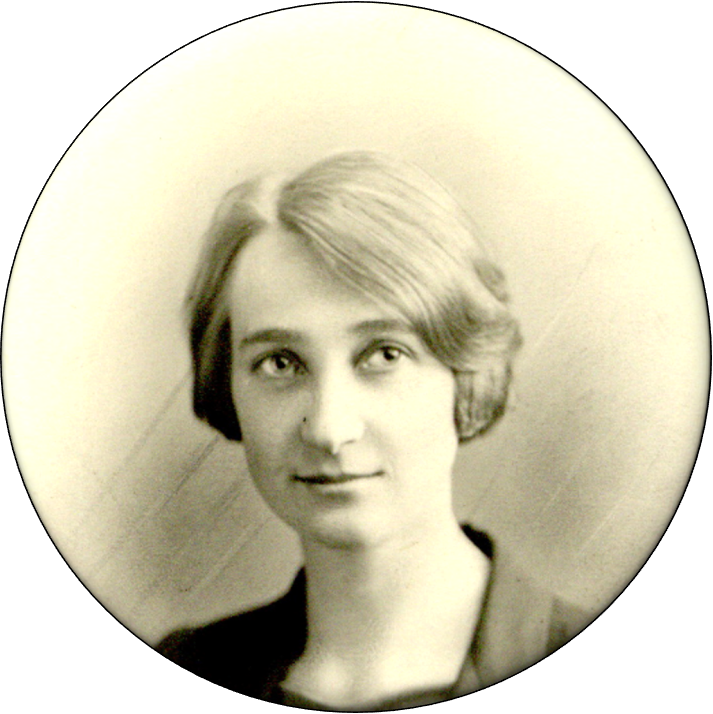
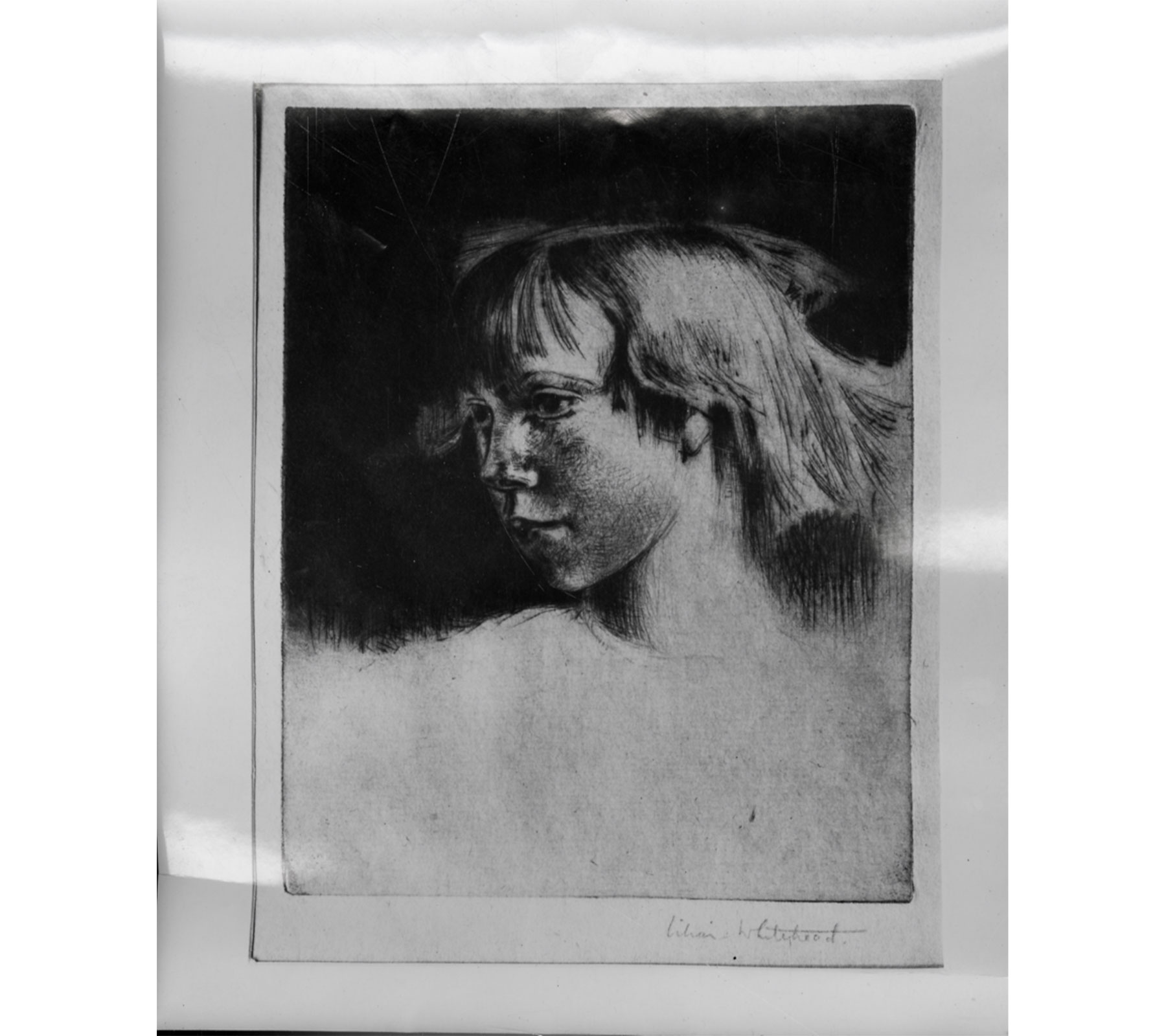
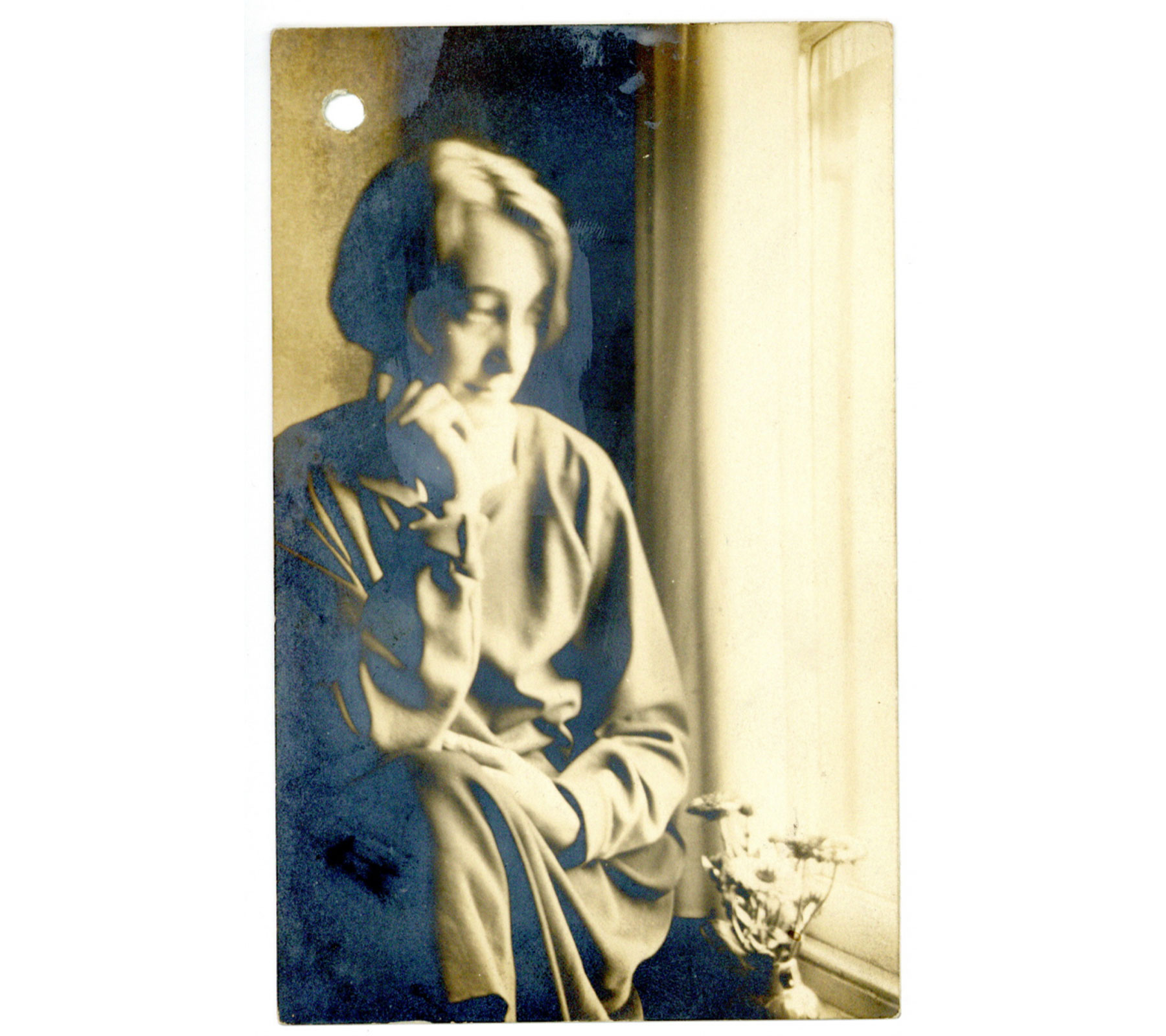
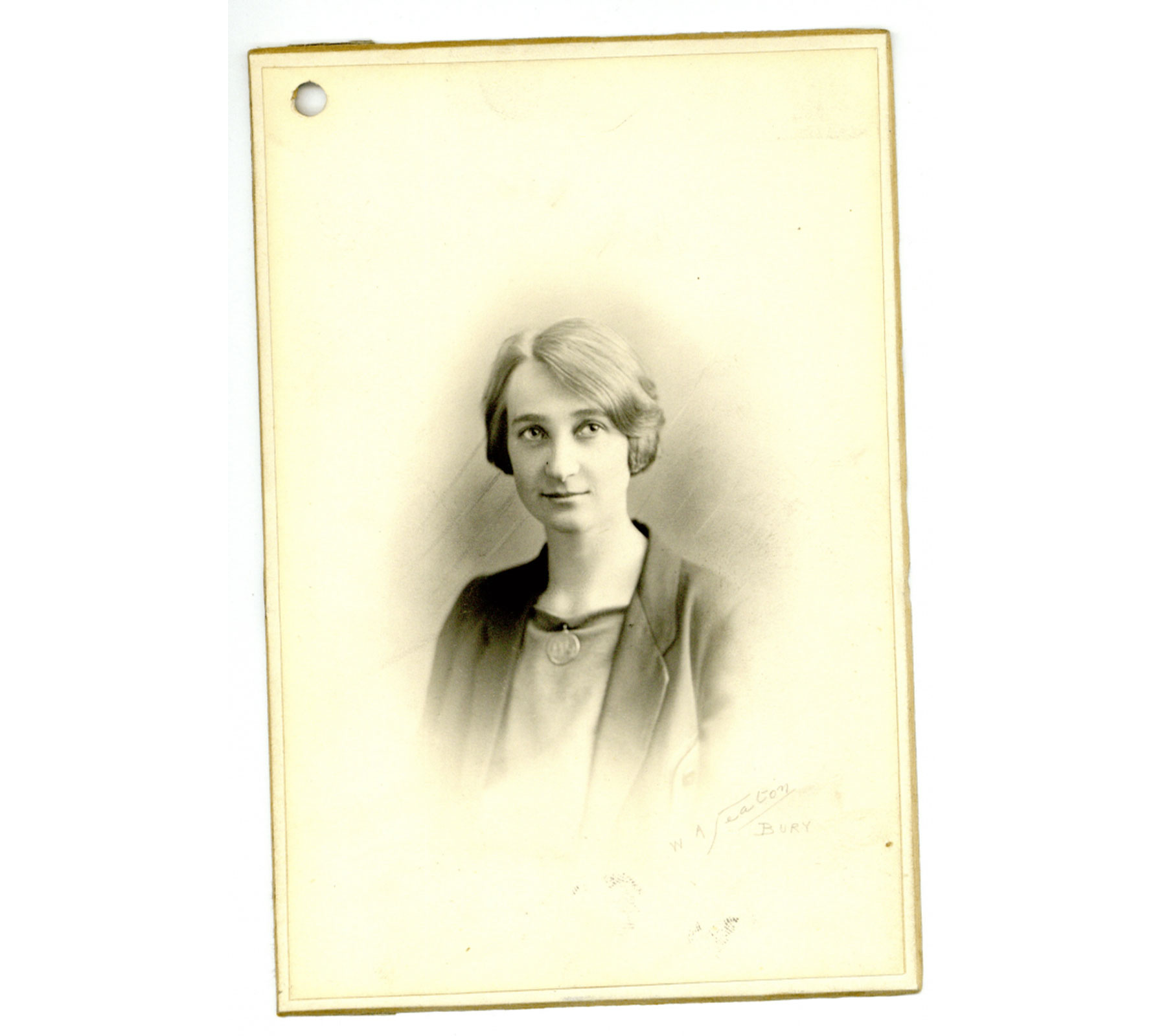
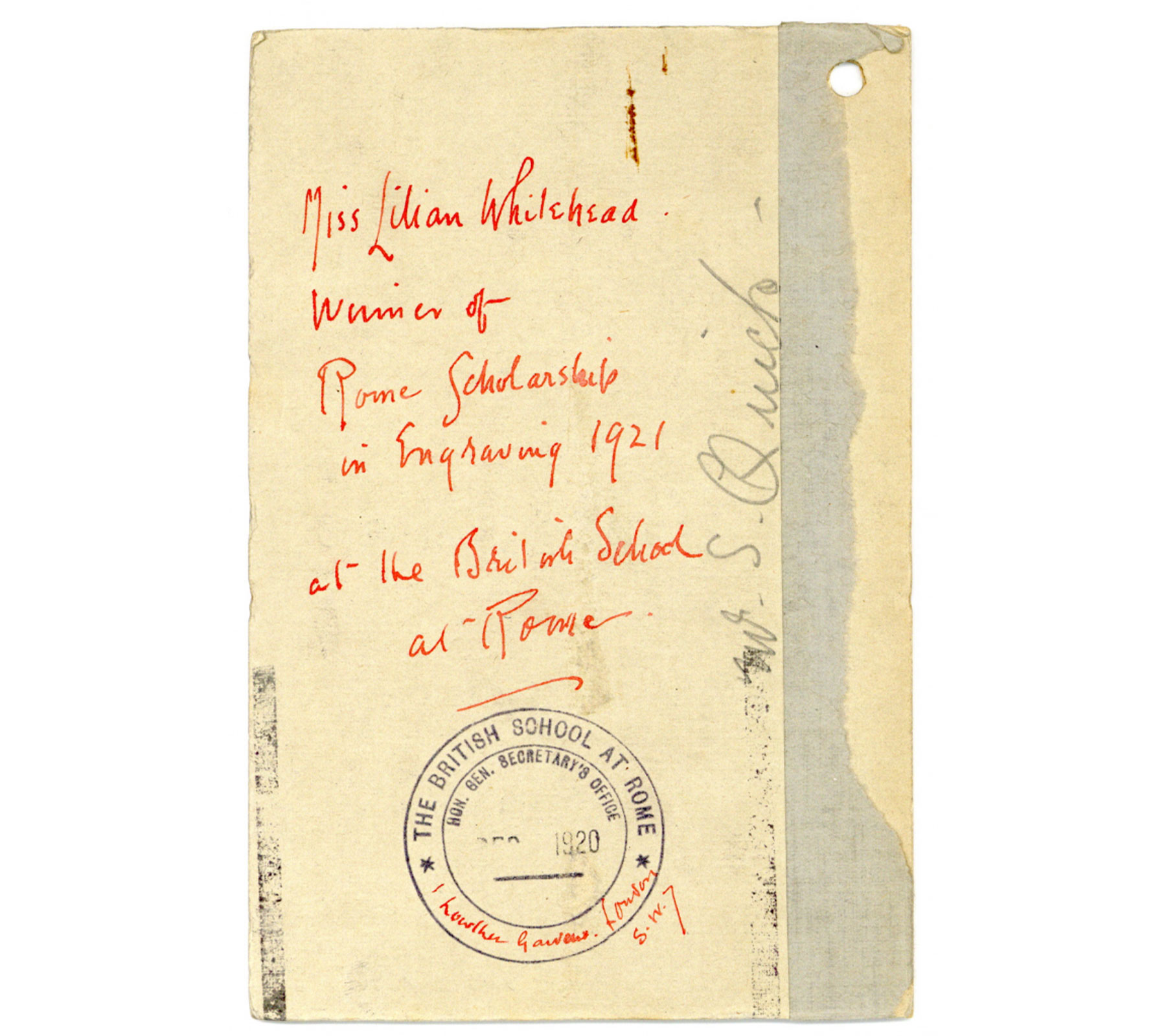
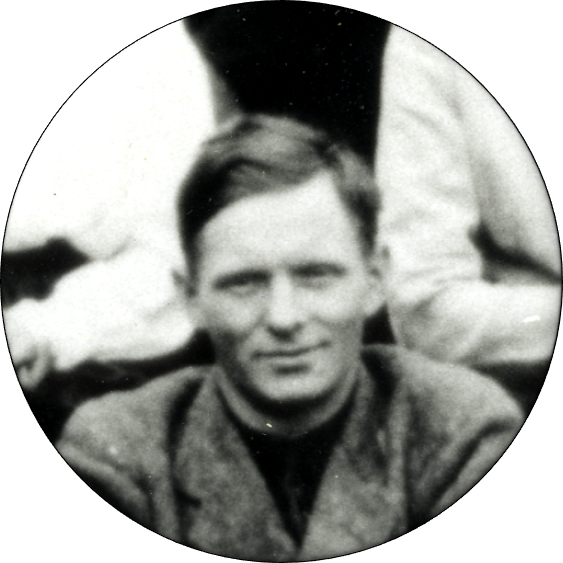
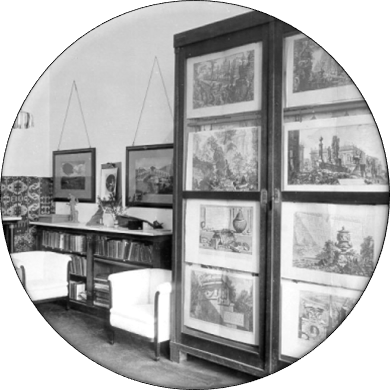
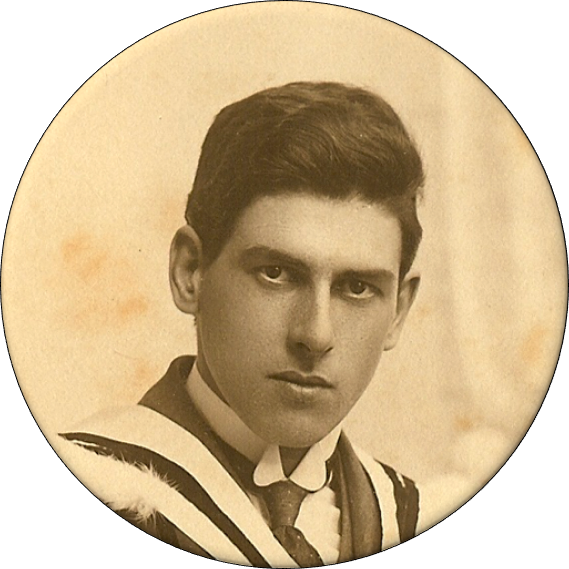
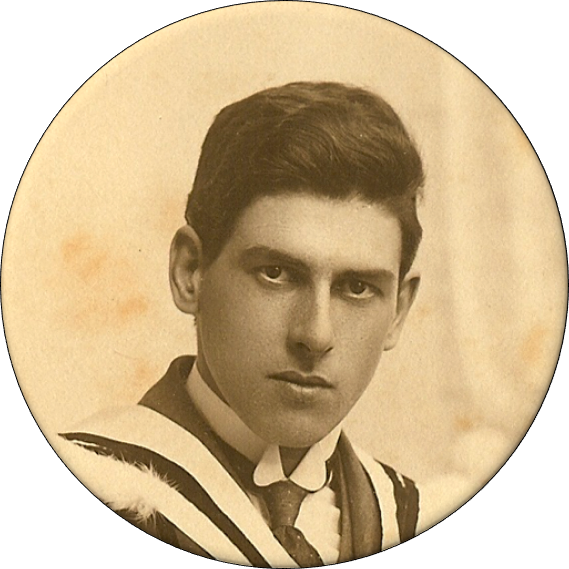
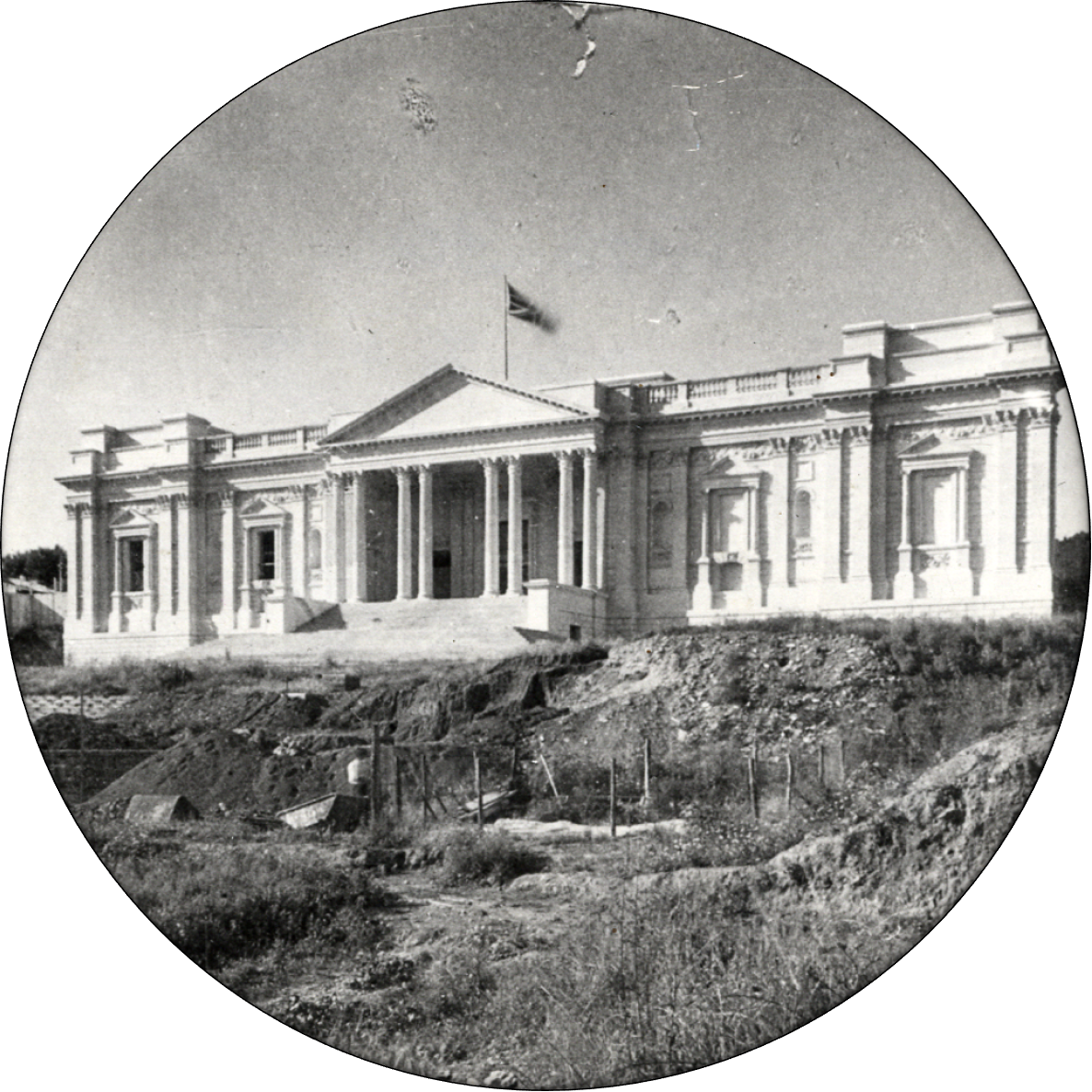
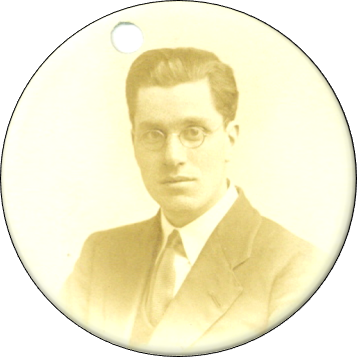
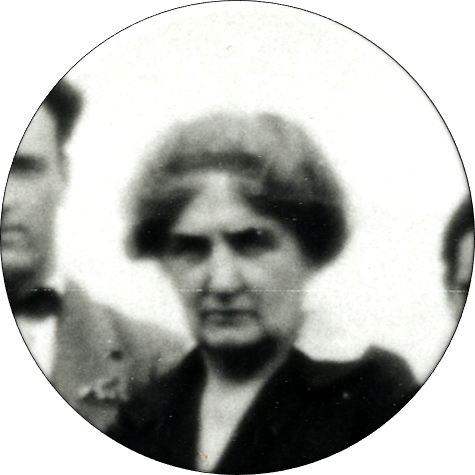
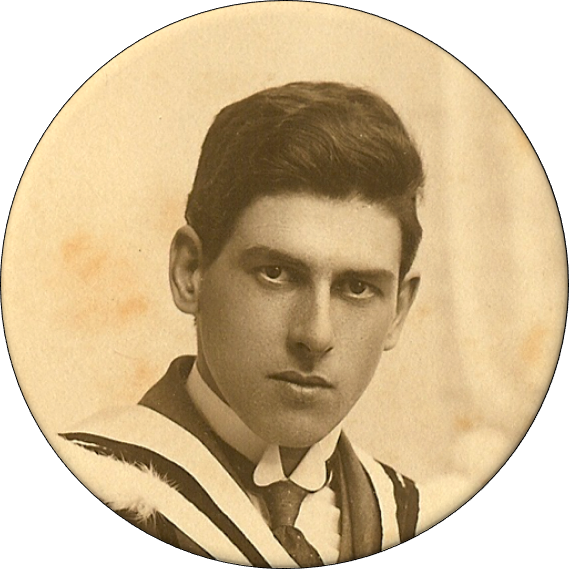
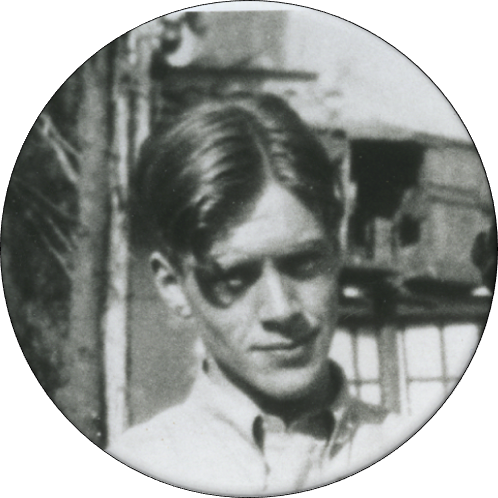
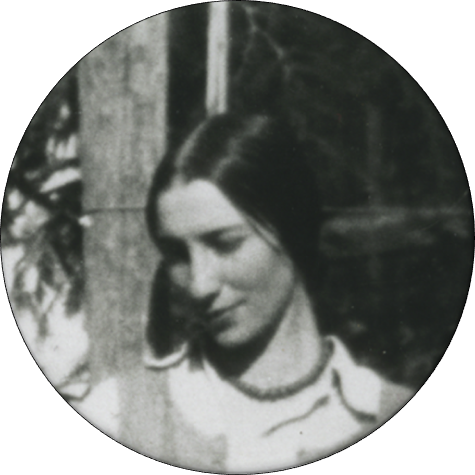
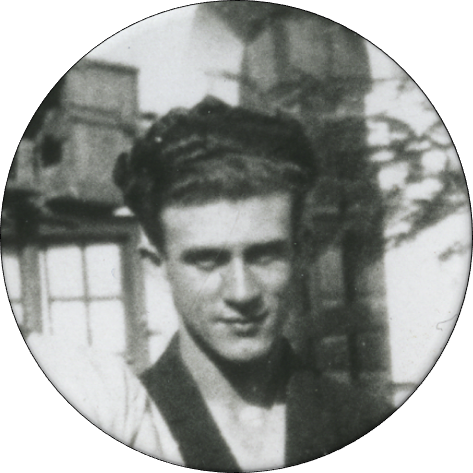
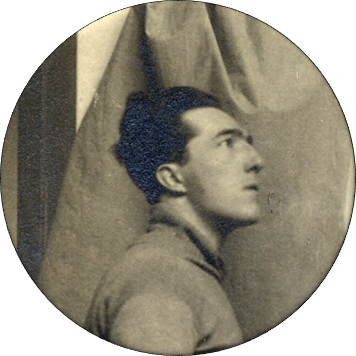
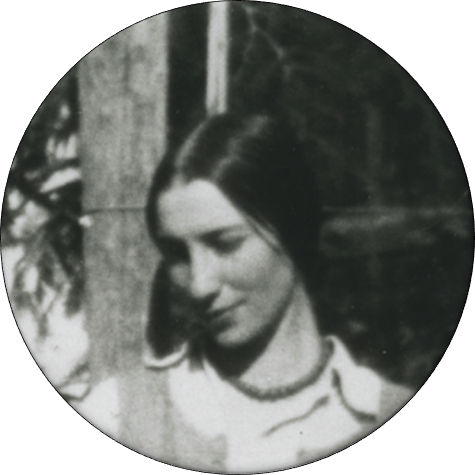
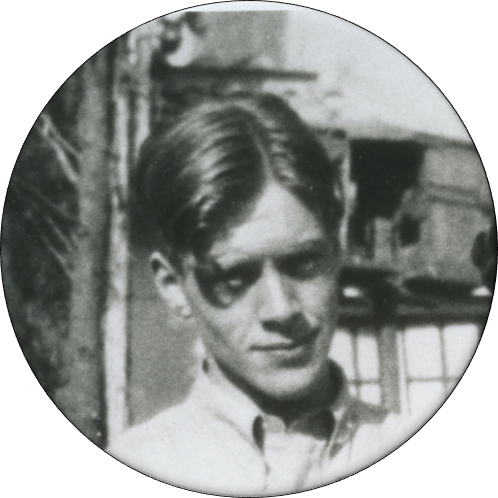
Lilian Whitehead (1894-1959) was a British printmaker and painter. She was born in Bury, Lancashire, to the family of a newspaper proprietor and publisher. Whitehead studied at Bury School of Arts (1912-1914), Manchester School of Art (1914-1917), and the Slade School of Fine Art (1917-1918). Her works were exhibited at the Baillie Gallery, New English Art Club, the Royal Society of Painter-Etchers and Engravers in London and the Royal Scottish Academy in Edinburgh. In 1921, at the age of 27, Lilian Whitehead was awarded the Rome Scholarship by the BSR’s Faculty of Engraving, becoming the first woman to hold this award. She joined Job Nixon, the Rome Scholar for Engraving of 1920. Many copies of her prints and engravings, along with photo portraits, and correspondence are held in the BSR archives.
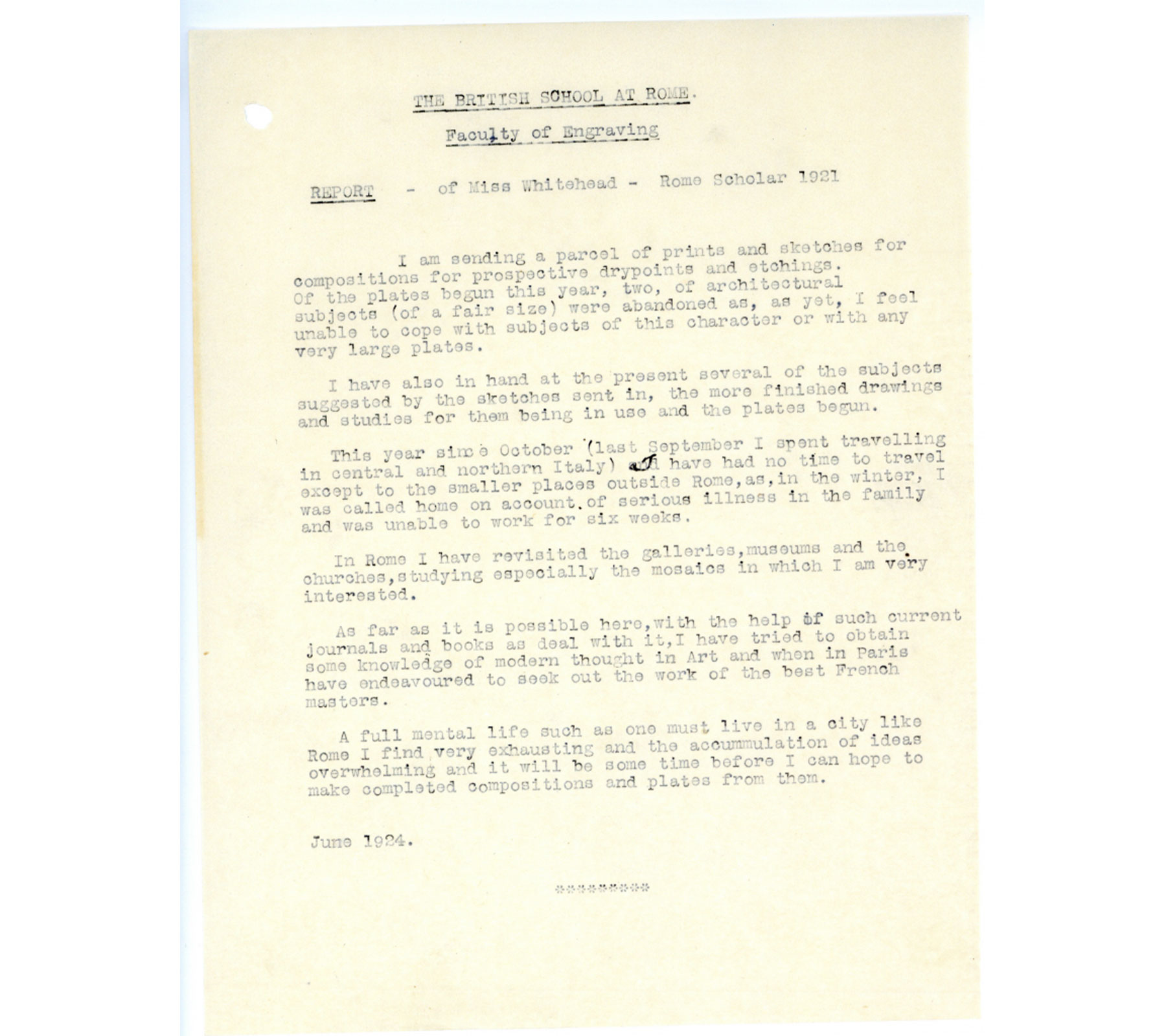
During the first two years of the scholarship, Whitehead did preparatory drawings and designs for engraving plates, travelling across central and northern Italy. The files at the BSR’s archive allow us to map her itinerary: Whitehead’s sketches and drawings were made in Orvieto, Subiaco, Perugia, and Siena. In one of her reports, Whitehead notes that, while in Rome, the artist enjoyed visiting “galleries, museums, and the churches, studying especially the mosaics” in which she was “very interested”. After preparatory sketches, studies and designs were complete, Whitehead moved on to finalise compositions for the etching plates and drypoints during the third and final year of her tenure at the BSR.
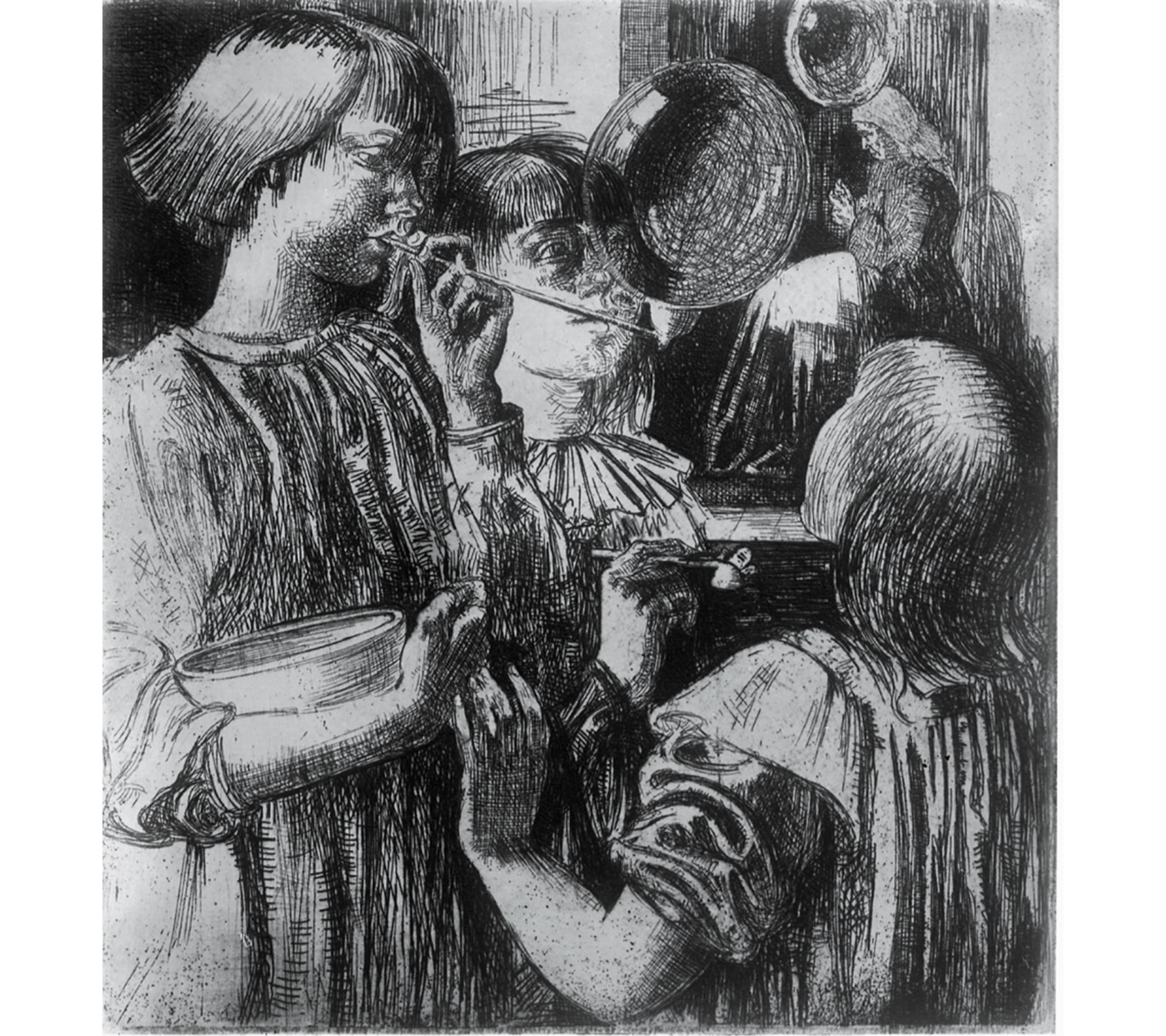
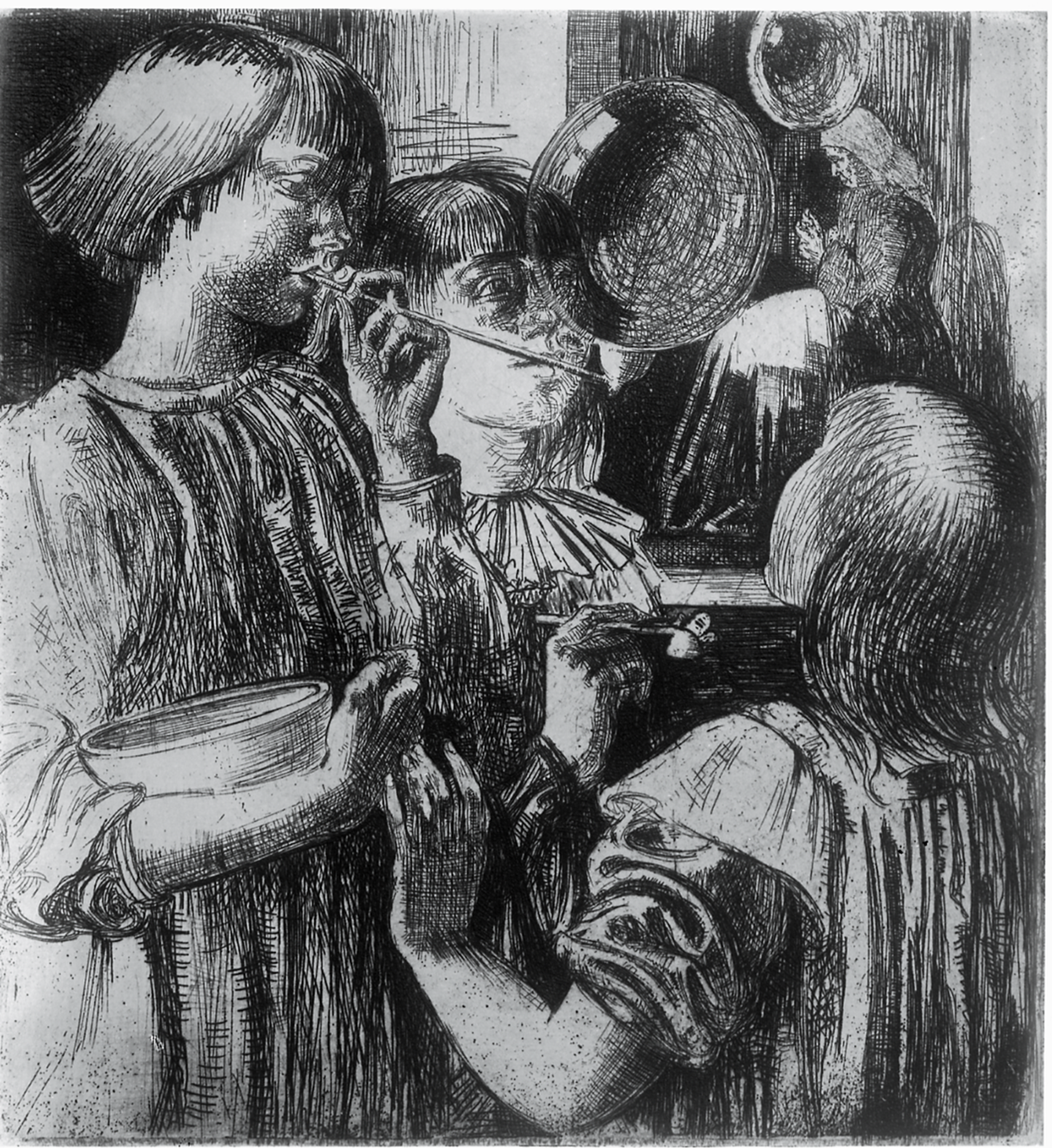
L Whitehead, Etching, The Soap Bubble, circa 1923 (BSR Fine Arts Archive)
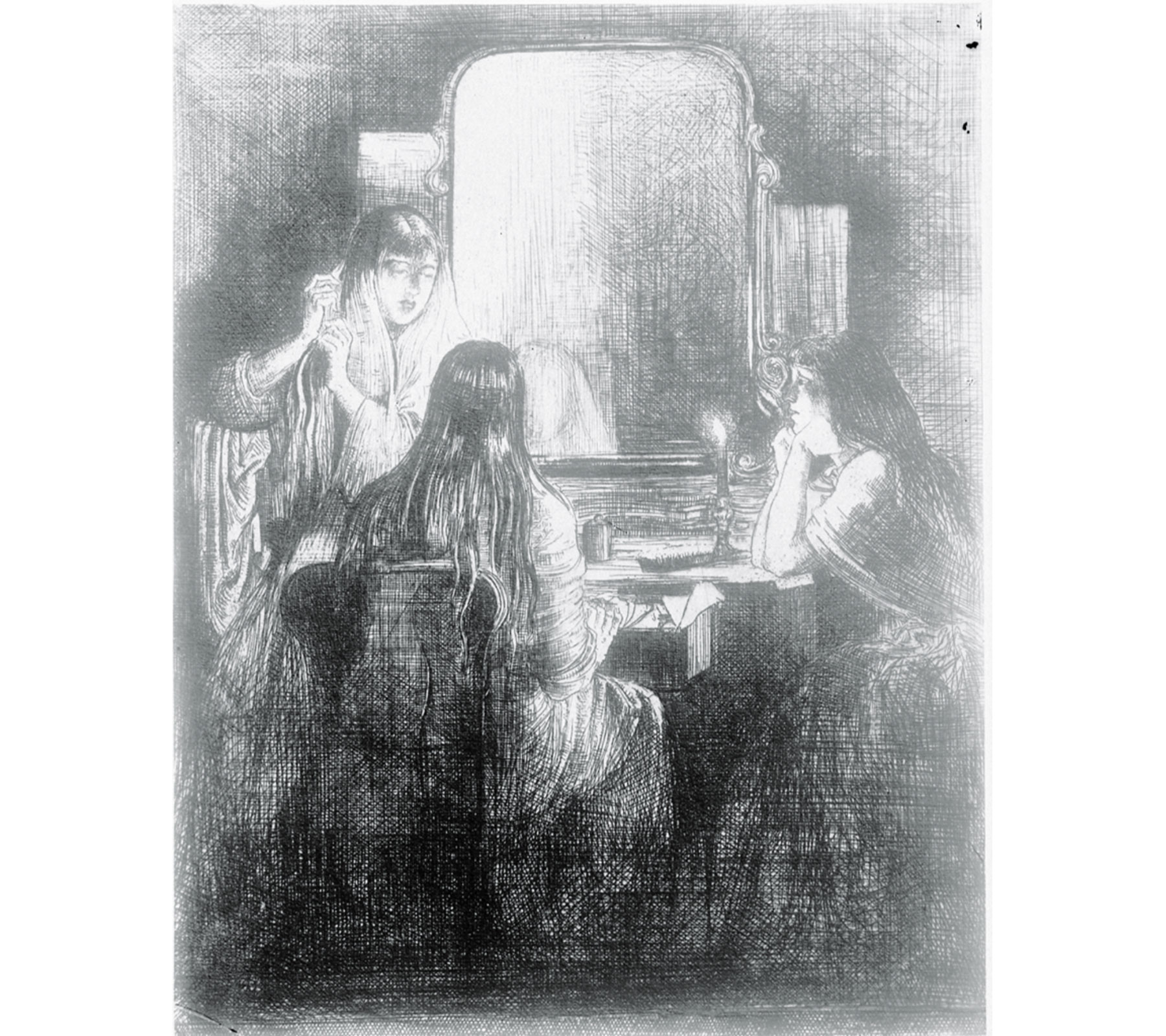
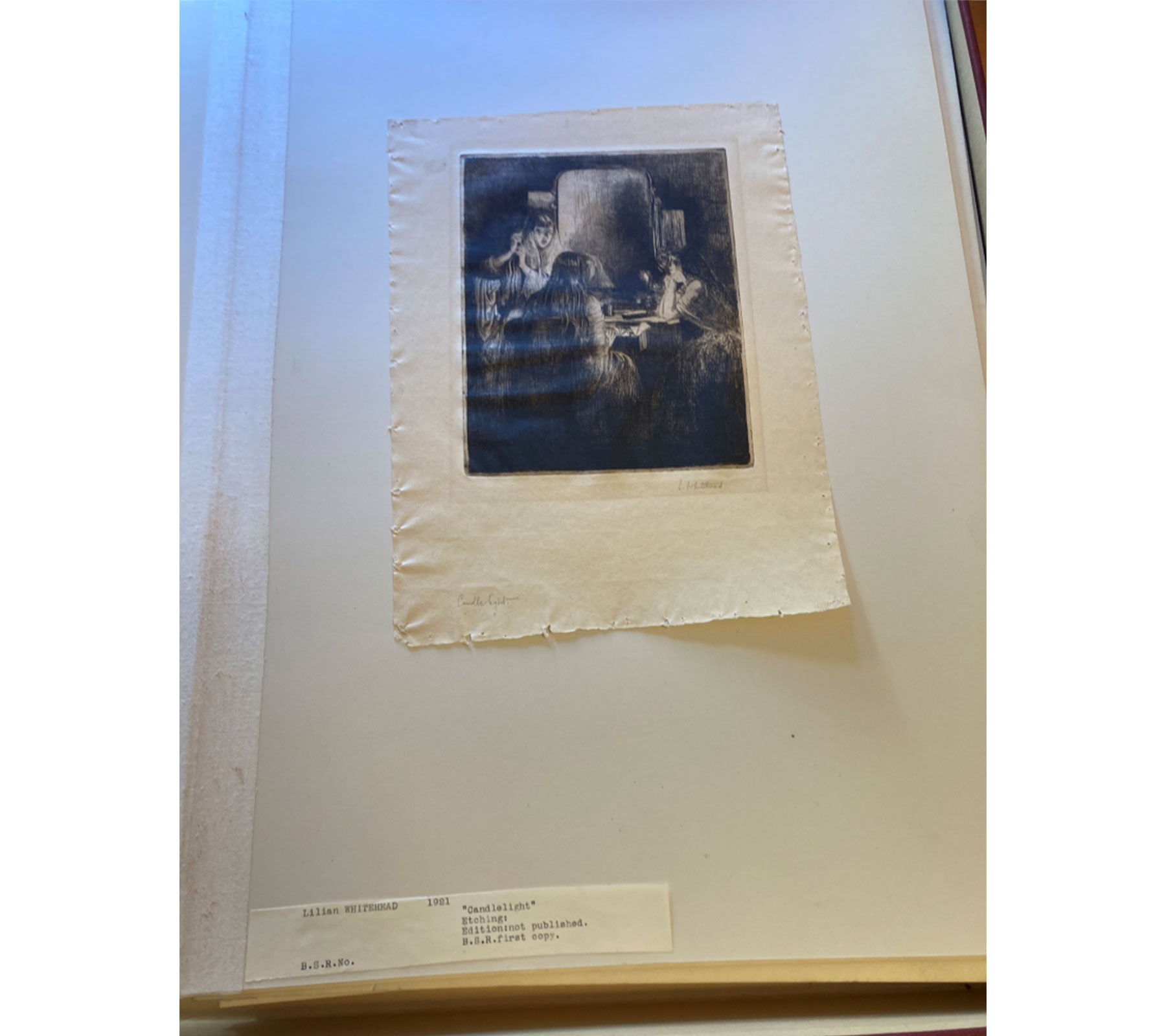
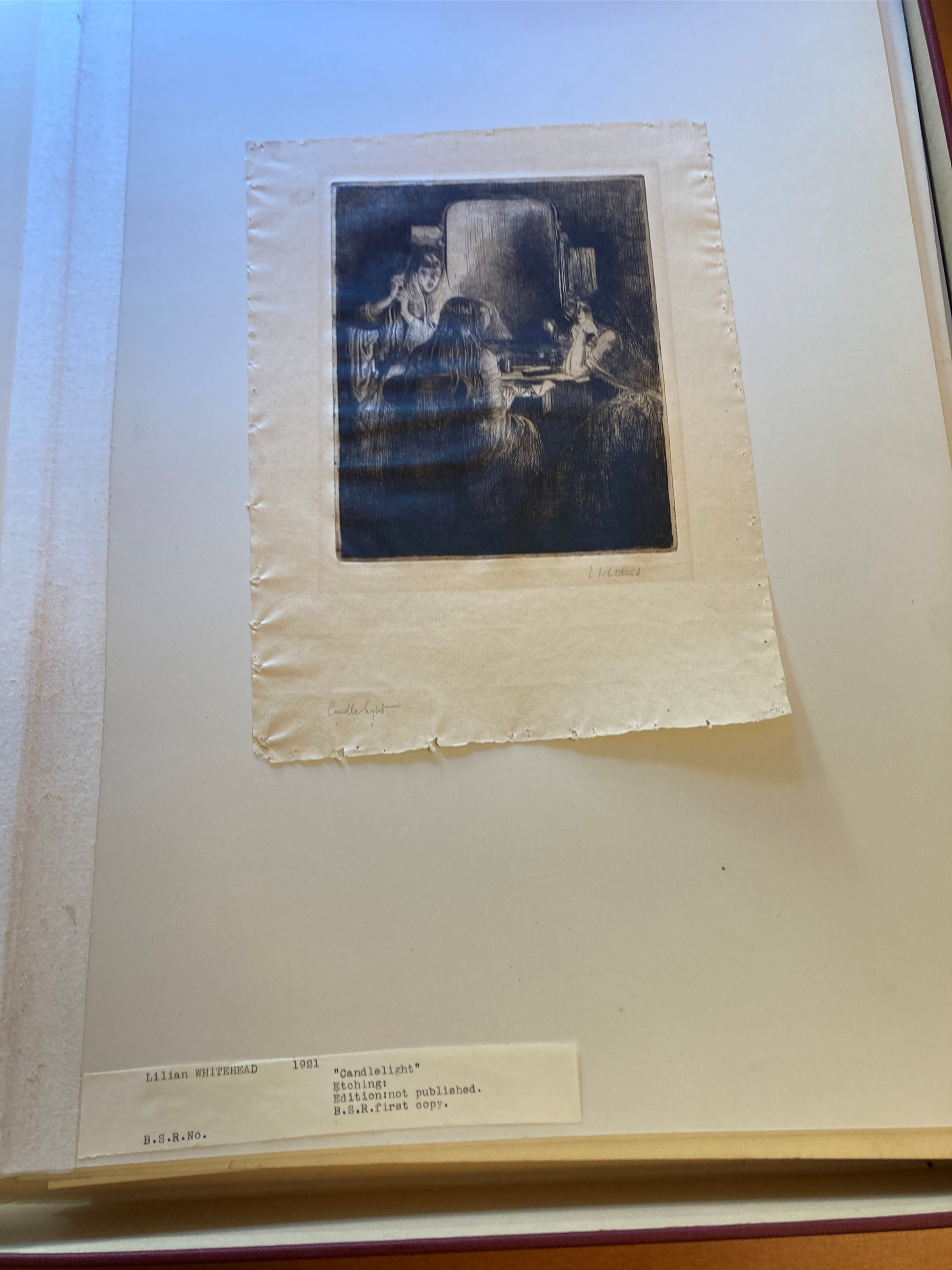
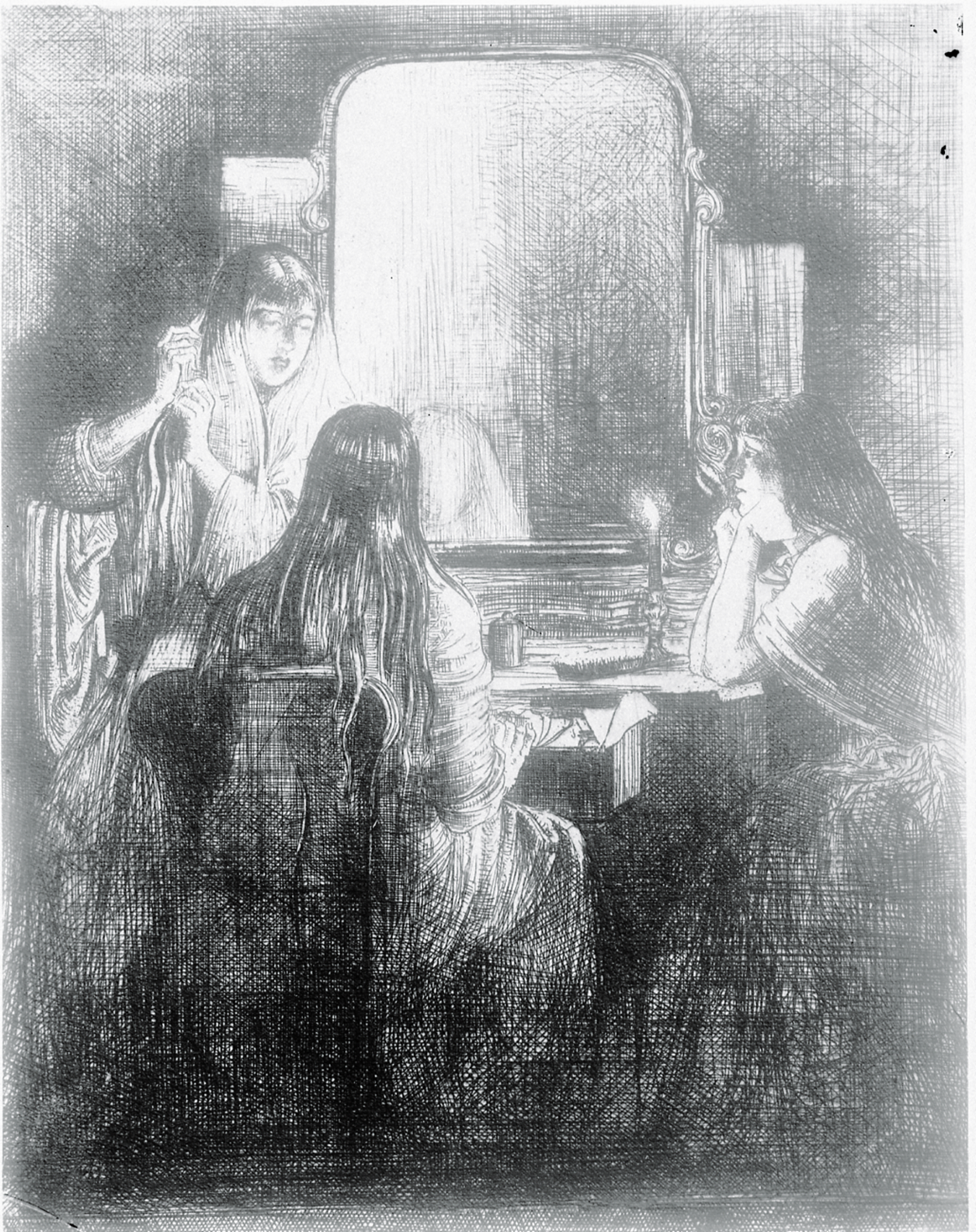
L Whitehead, Etching, Candlelight, circa 1923 (BSR Fine Arts Archive)
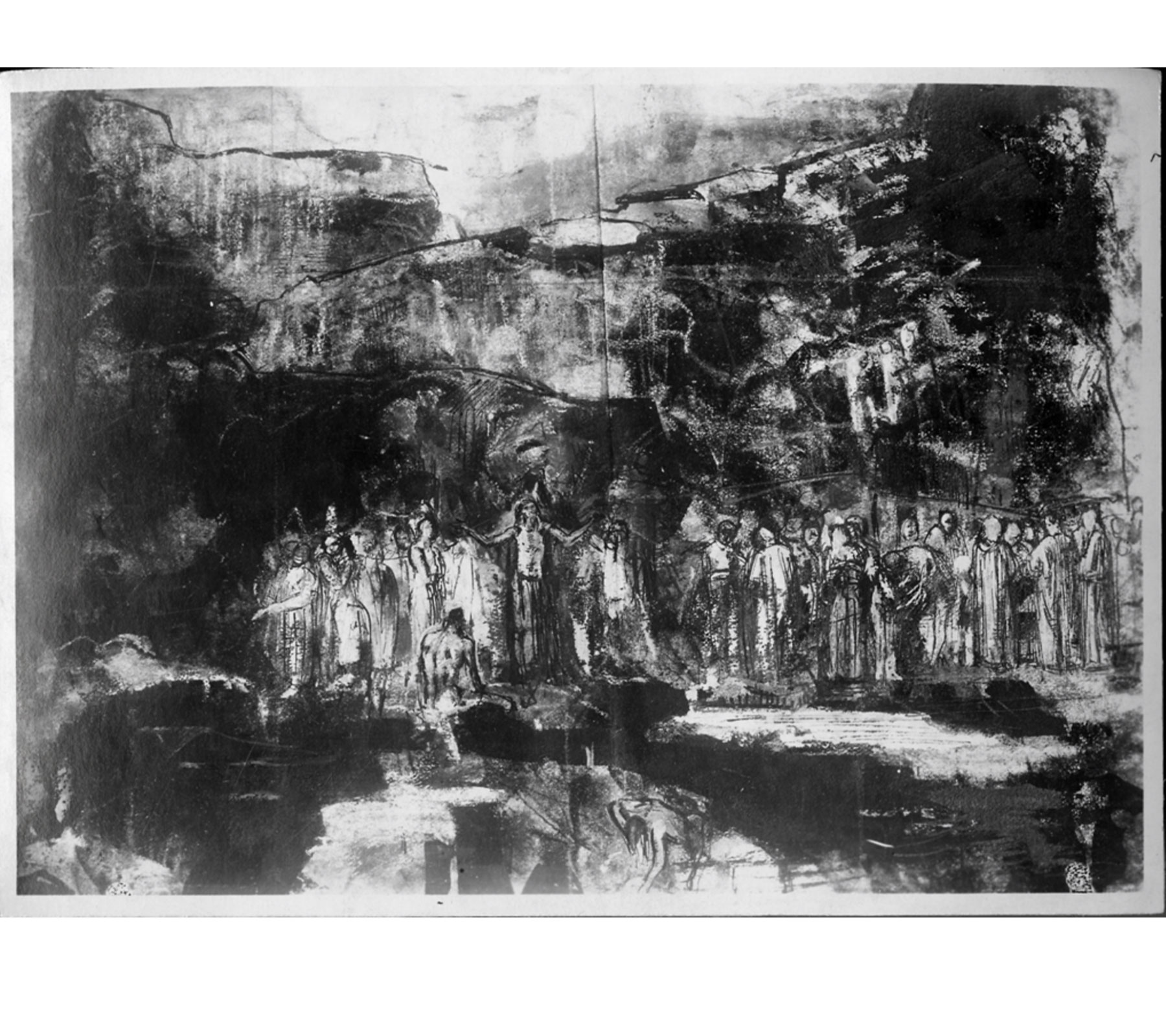
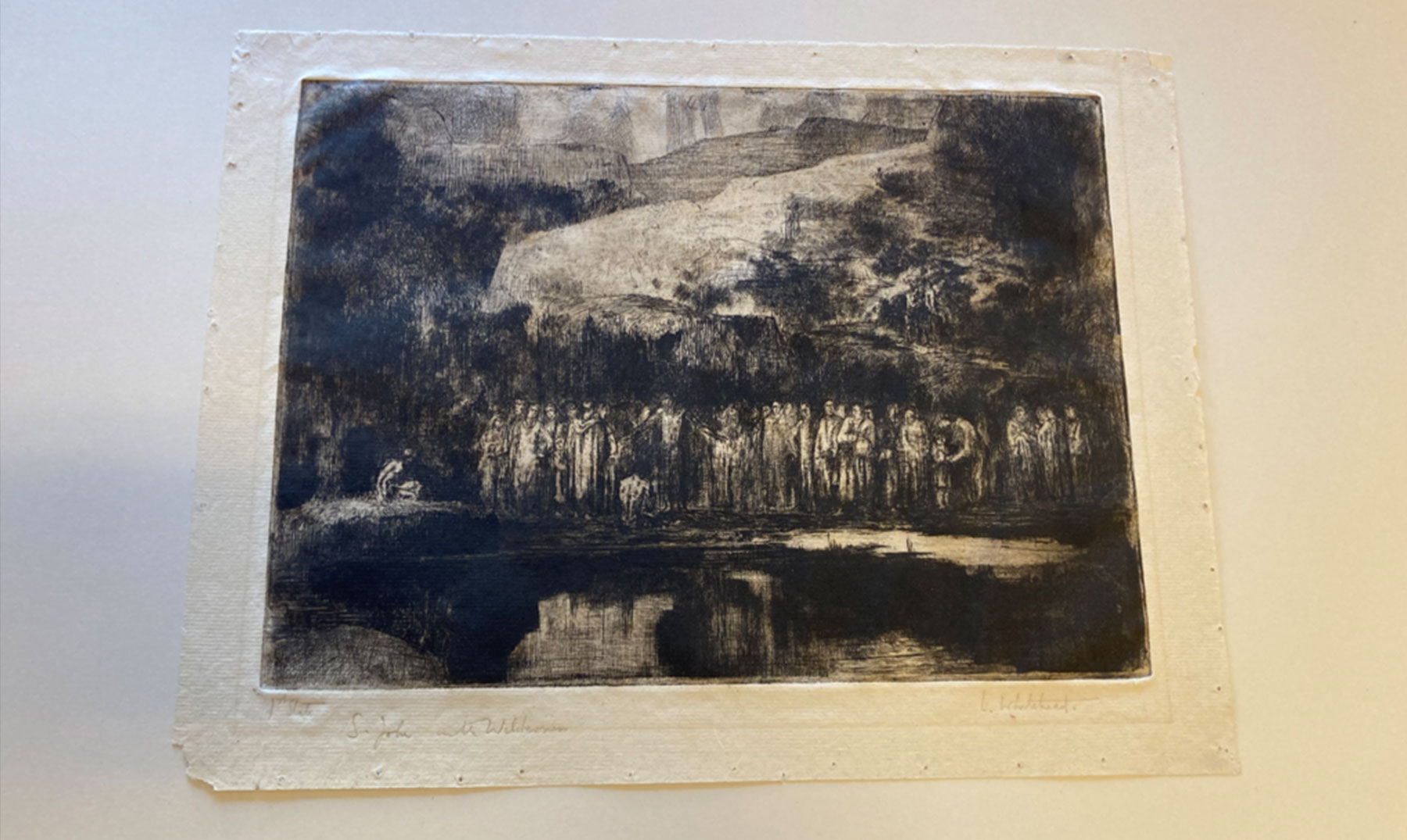
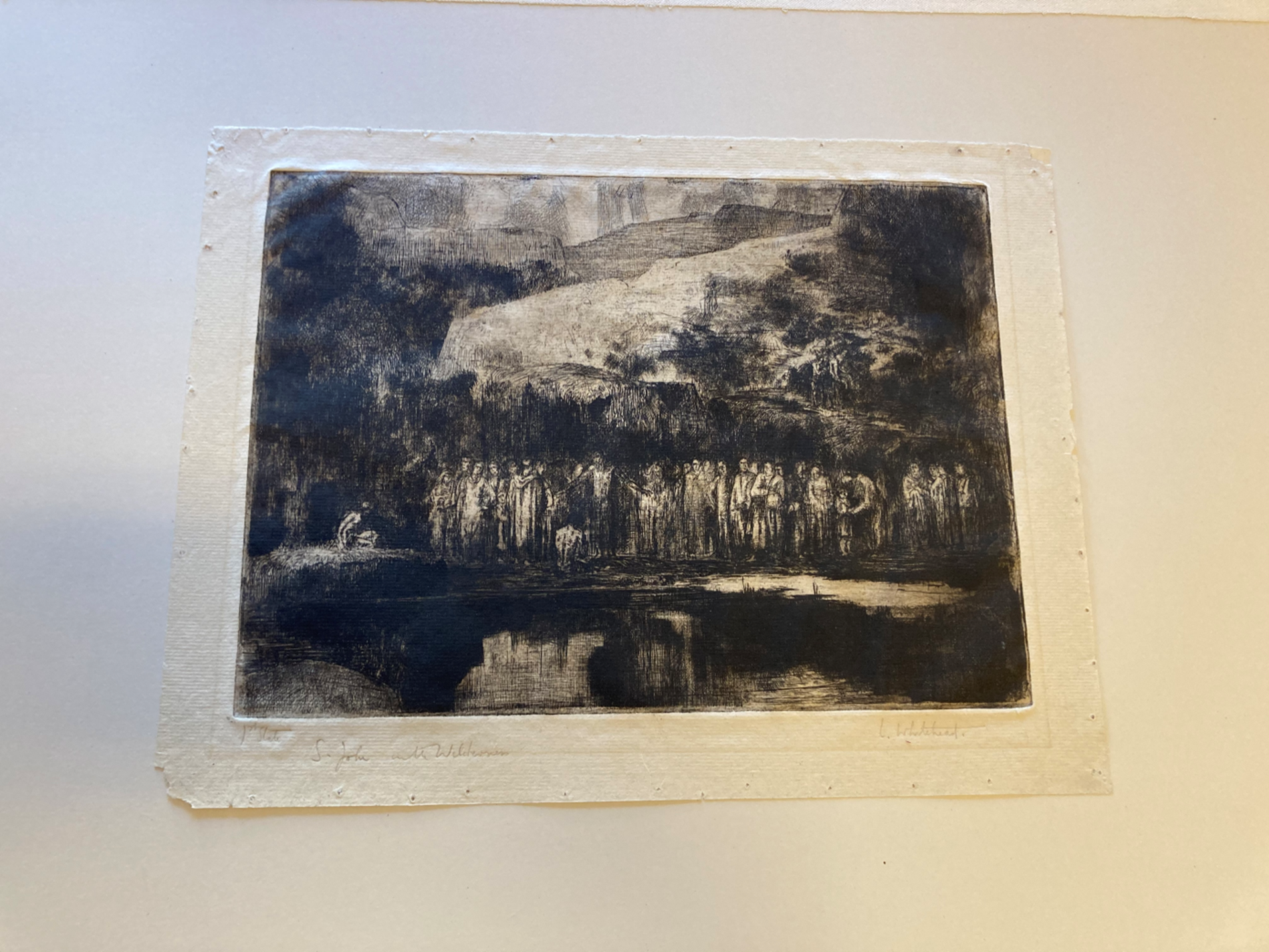
L Whitehead, Study for etching, St. John the Baptist Preaching in the Wilderness, circa 1923 (BSR Fine Arts Archive)
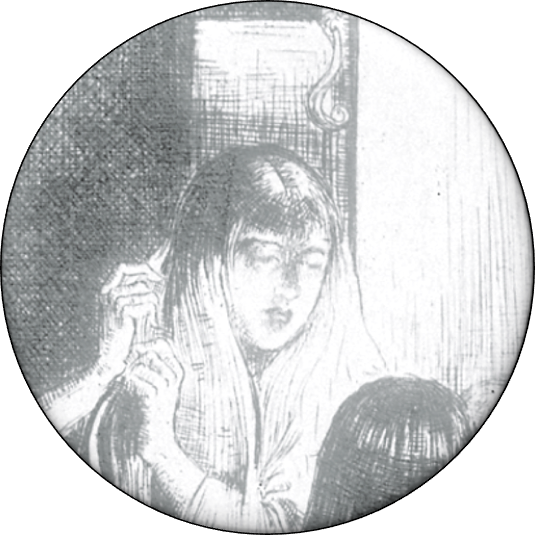
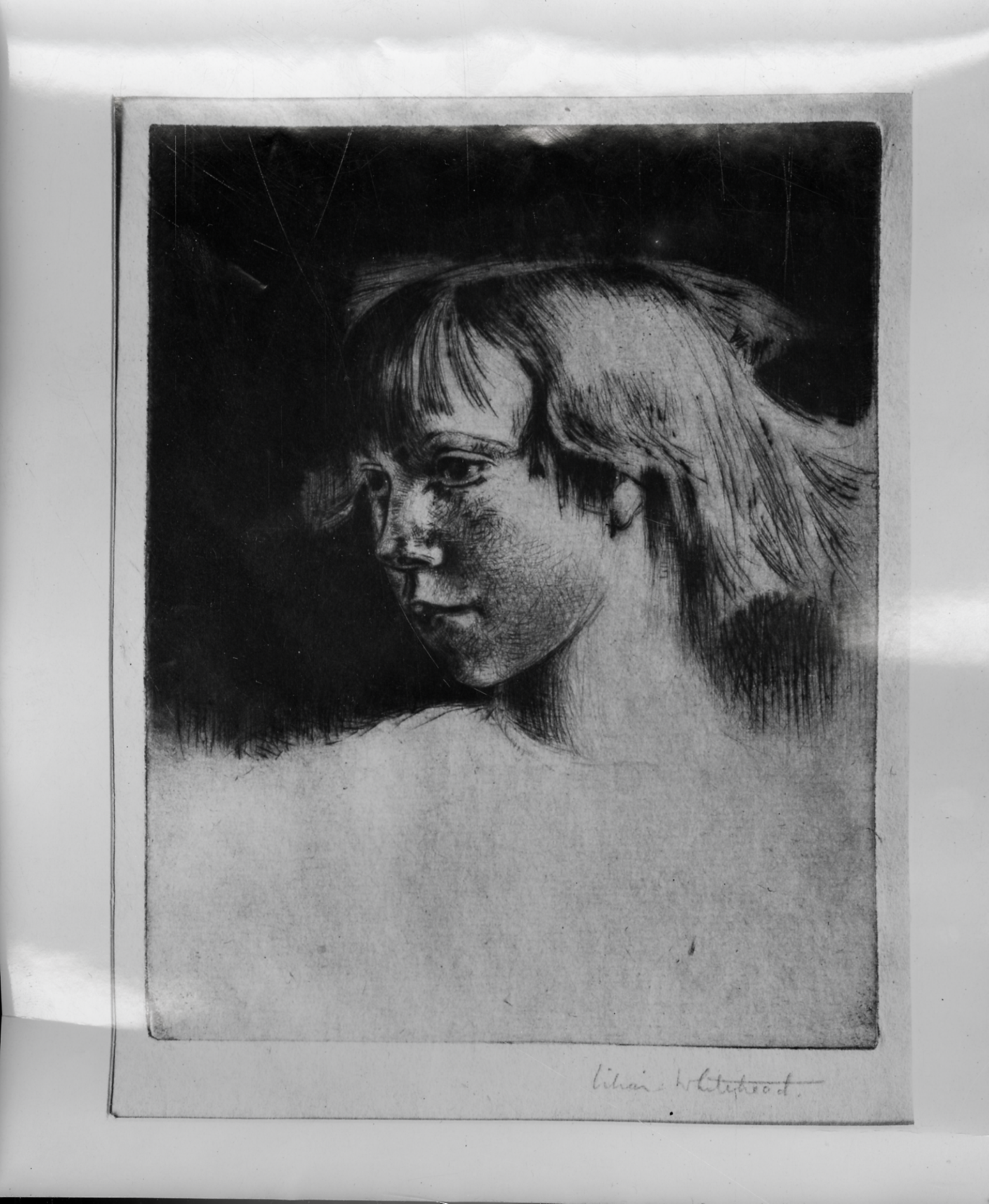
L Whitehead, Drypoint, Alya, 1921 (BSR Fine Arts Archive)
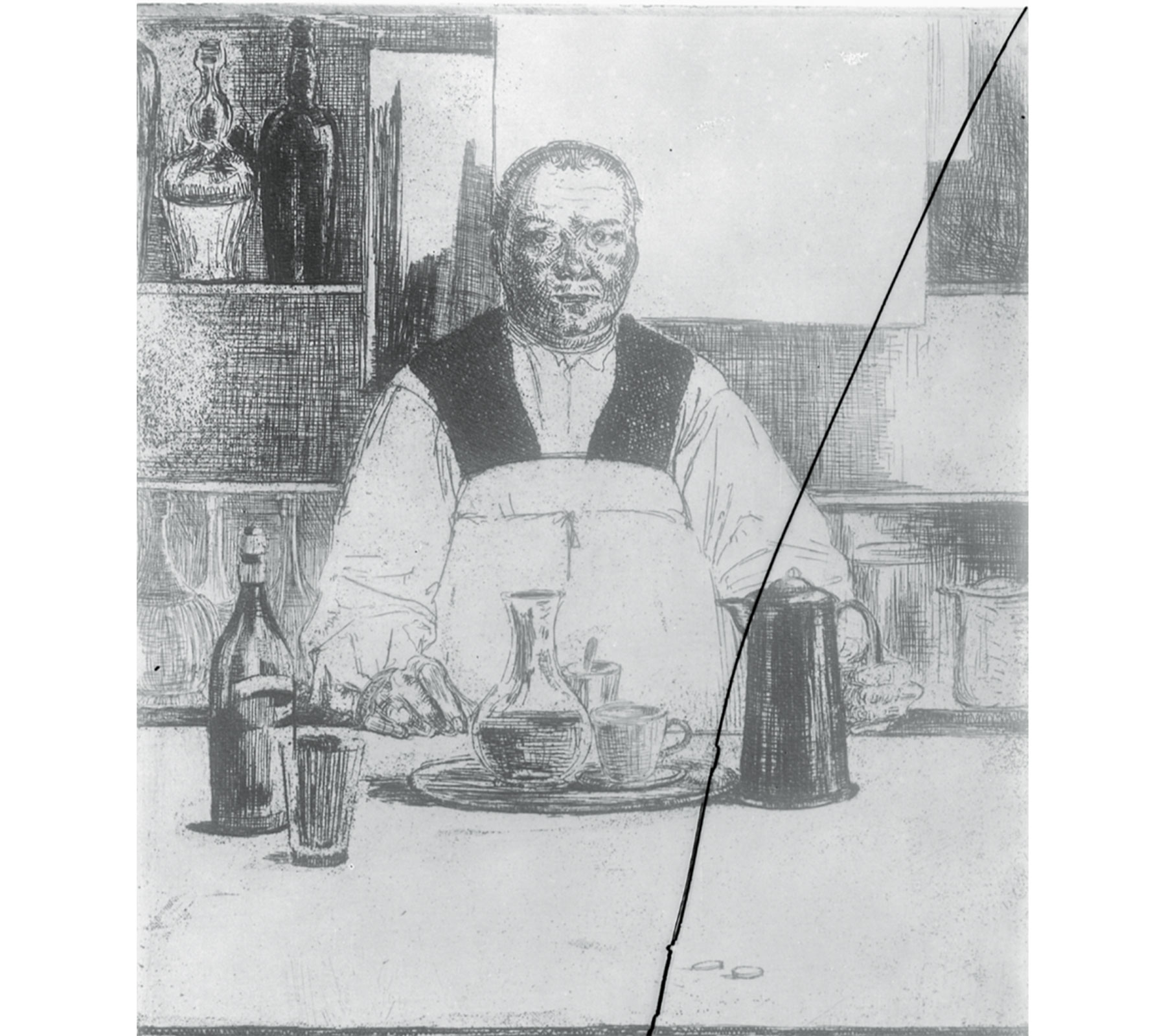
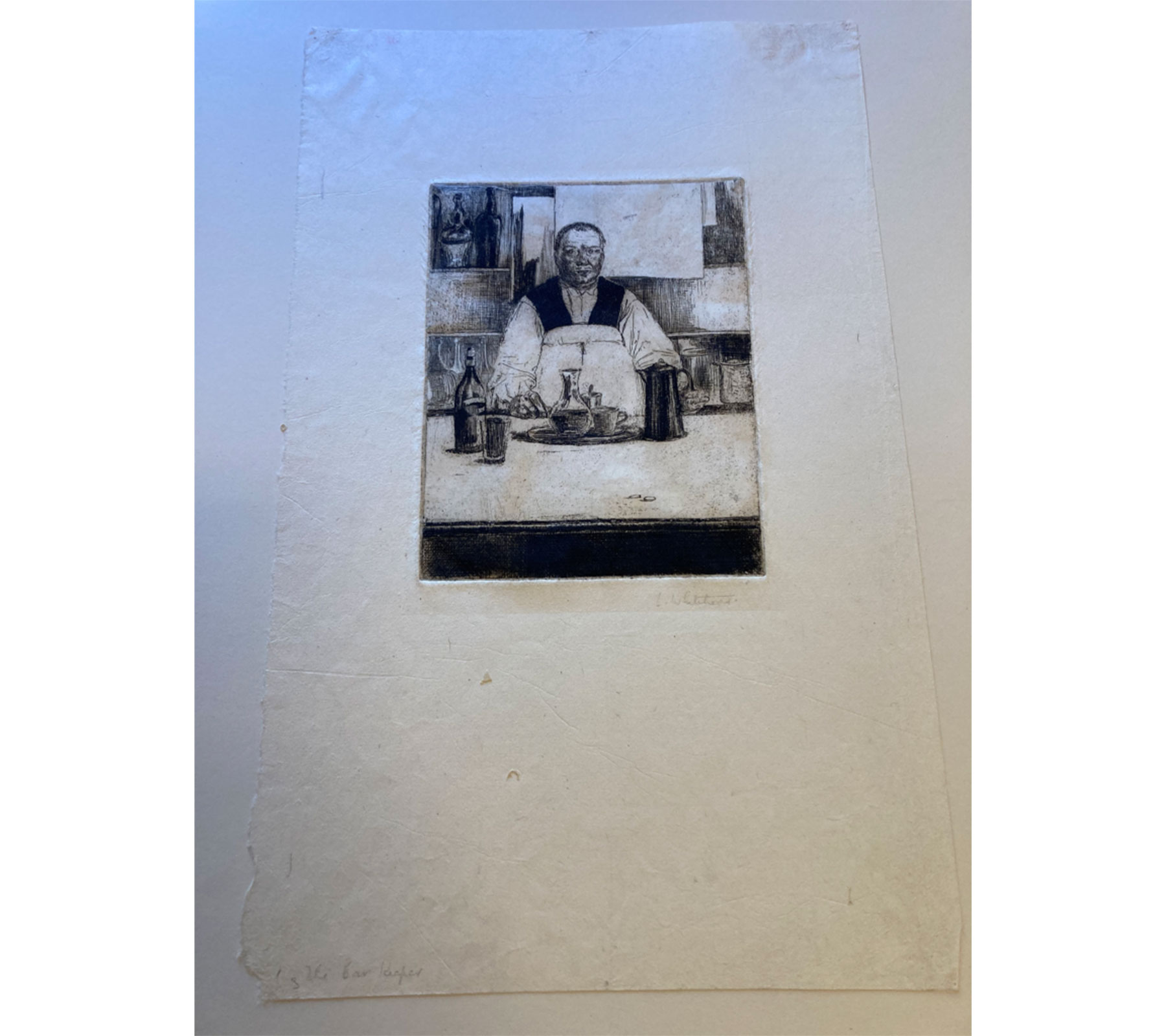
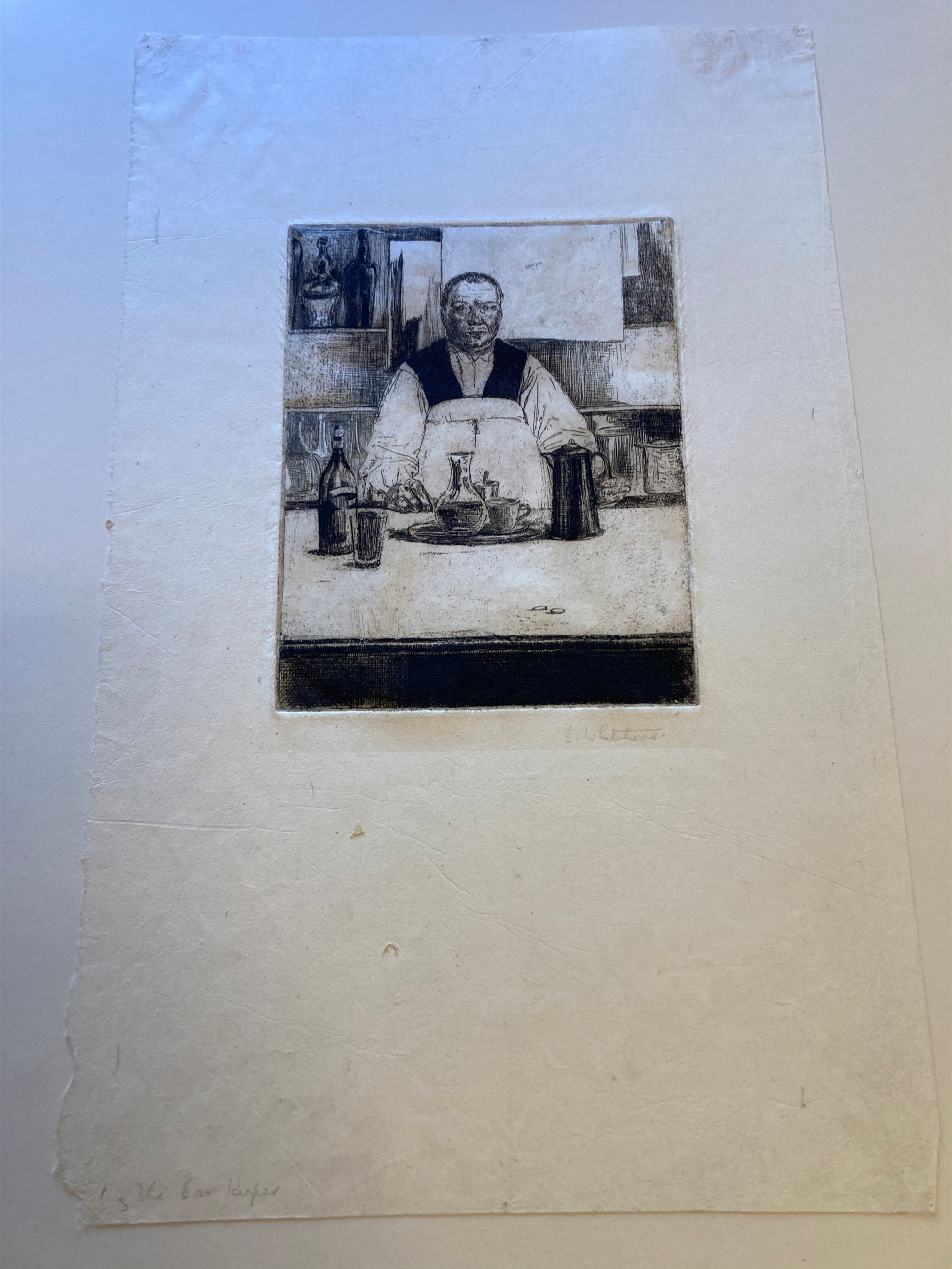
L Whitehead, Etching, The Bar-Keeper, circa 1923 (BSR Fine Arts Archive)
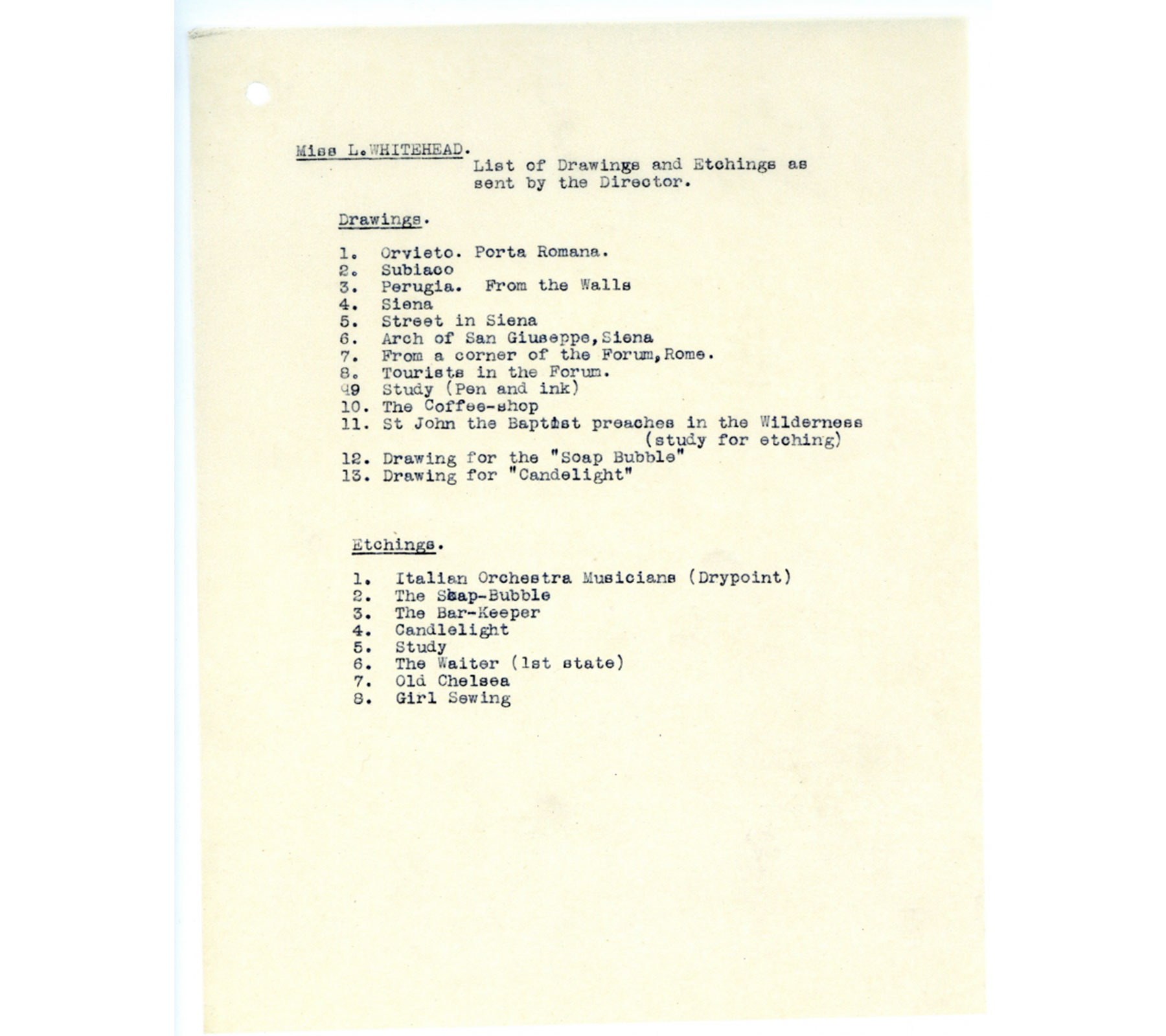
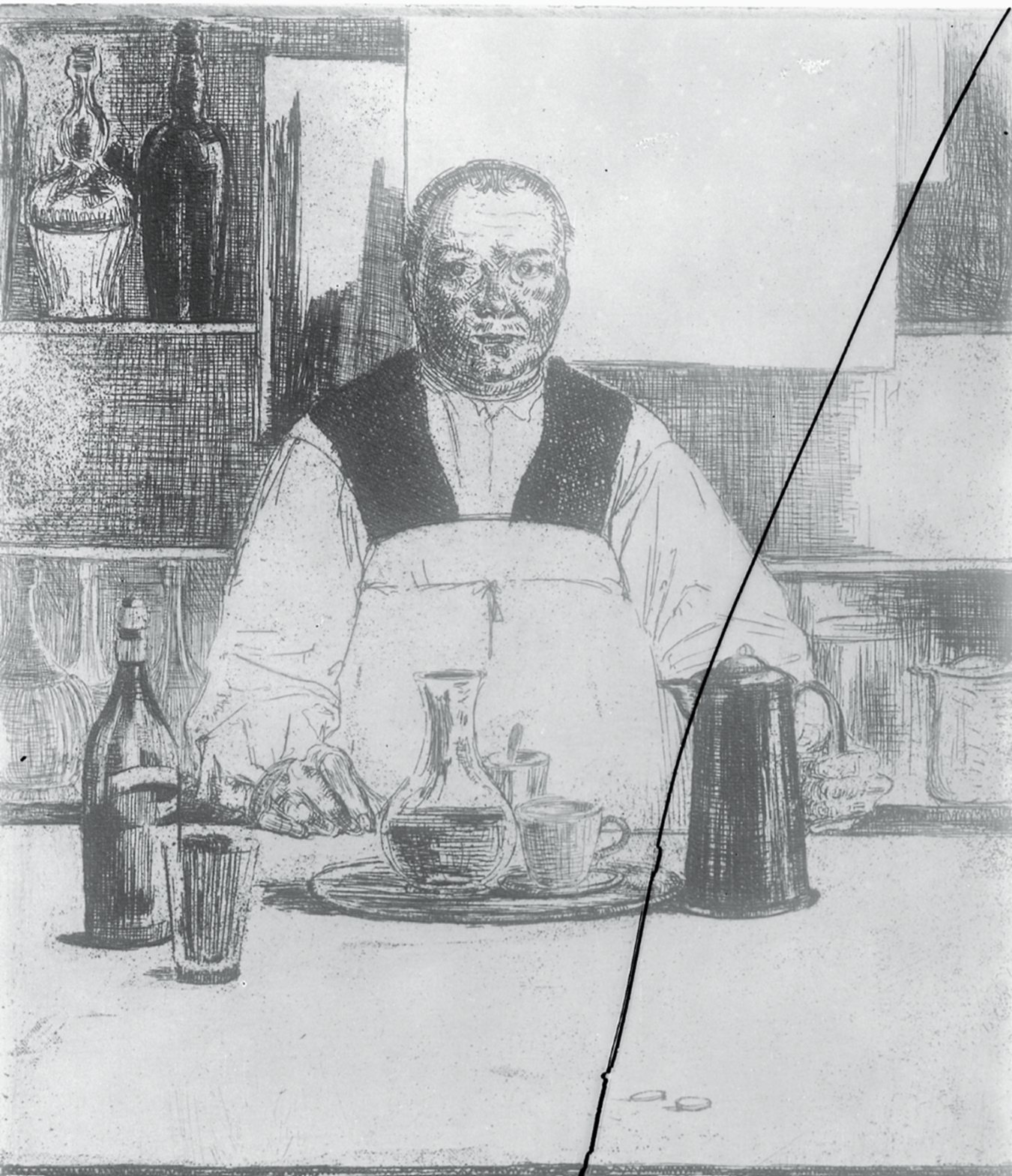
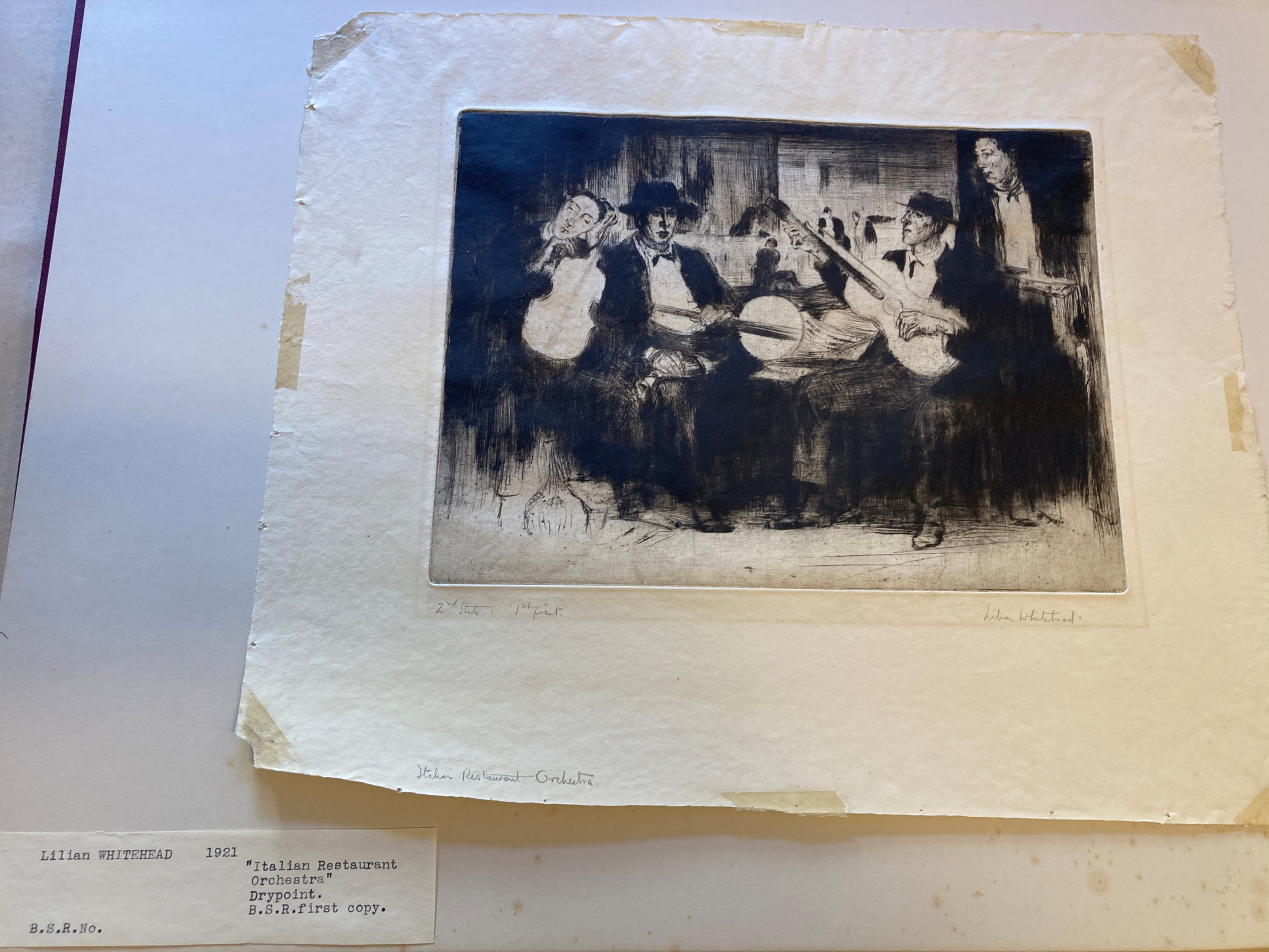
Whitehead’s etchings and drawings often capture scenes from quotidian life in Italy, revealing connections the artist established with Italian people outside of the School. Among other settings, she depicted Italian orchestra musicians, a barkeeper at work, a scene at the coffee show, a waiter, a girl sewing, and groups of tourists exploring Rome. The artist also produced images of Italian historical architecture: Porta Romana in Orvieto, the view onto Perugia, and the Roman Forum. Whitehead reported being overwhelmed with Rome’s variety of ideas and possibilities, so it took her considerable time to settle on the final designs.
Some of the notable etchings produced during her residency at the BSR and later exhibited in the UK are St. John the Baptist, Bubbles, Candlelight, and A Waiter. These works allow us to see the formation of Whitehead’s personal style and mastery in depicting light, movement, and atmosphere.
On behalf of the BSR’s Faculty of Engraving, Lilian Whitehead requested books and journals that are now held at the BSR’s library. These are, for example, collections of Goya’s etchings, the catalogue of works of a Scottish etcher and watercolourist Muirhead Bone, examples of etchings by French and British artist Alphonse Legros and other publications which trace historical and contemporary influences Whitehead was exposed to while in Rome.
Lilian Whitehead’s personal file, portrait photo (BSR Fine Arts Archive)
Lilian Whitehead’s personal file, portrait photo, recto (BSR Fine Arts Archive)
Lilian Whitehead’s personal file, Report, June 1924 (BSR Fine Arts Archive)
Lilian Whitehead’s personal file, List Of Drawings and Etchings, 1923 (BSR Fine Arts Archive)
Lilian Whitehead’s personal file, portrait photo verso (BSR Fine Arts Archive)
Where would you like to go next? Who would you like to meet?
Explore the Lilian Whitehead Collection in the BSR Fine Arts Archive
Meet Job Nixon (1891-1938)
Learn more about Engraving at the BSR, 1913-1930
Visit the BSR Library
Sources:
Lilian Whitehead, Modern British Art Gallery: https://www.modernbritishartgallery.com/works__A_204__.htm
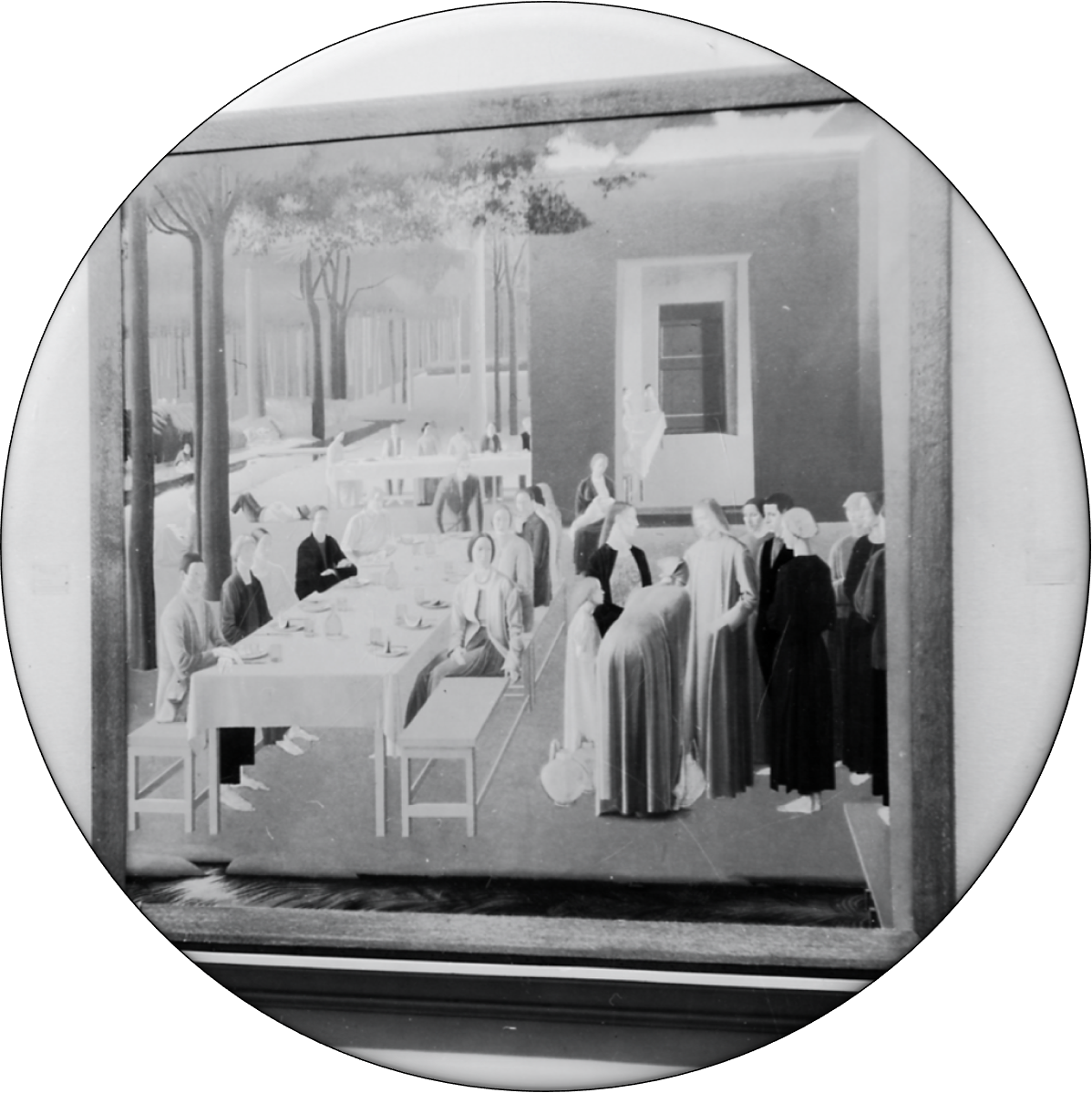
The BSR holds several items relating to the engraver and 1921 Rome Scholar Lilian Whitehead (1894-1959) in its archival collections. Many of these items have been preserved in the archives as copies of prints, as well as photographs of the original presses.
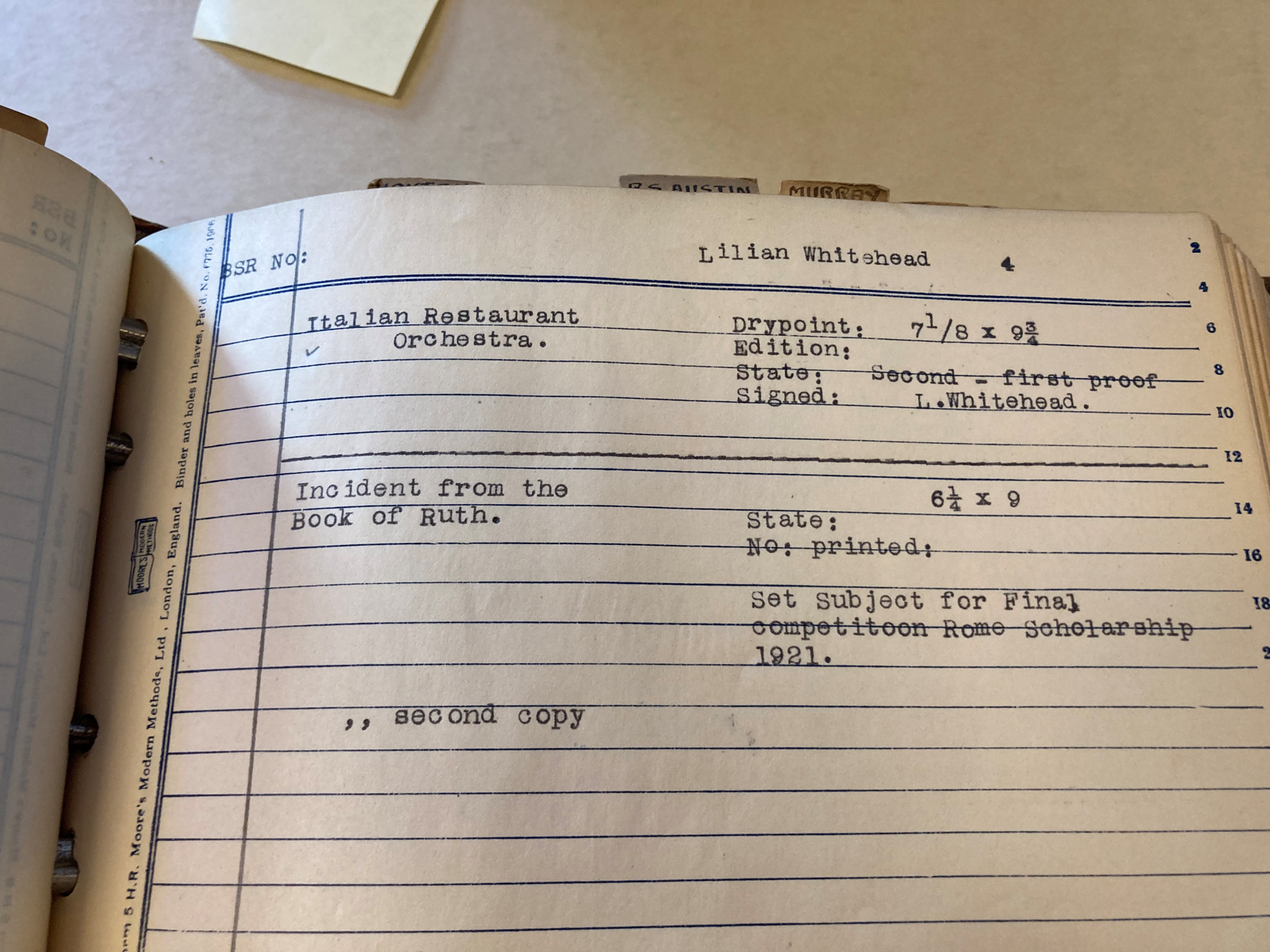
Entry for ‘Lilian Whitehead’ in the original catalogue of the Engraving Collection
Here are some that have been preserved through glass photographs.
L Whitehead, Etching, The Soap Bubble, circa 1923 (BSR Fine Arts Archive)
L Whitehead, Drypoint, Alya, 1921 (BSR Fine Arts Archive)
Many have been preserved in both mediums.
Lilian Whitehead, The Bar Keeper, 1921 (BSR Fine Arts Archive)
L Whitehead, Etching, The Bar-Keeper, circa 1923 (BSR Fine Arts Archive)
Lilian Whitehead, Candlelight, 1921 (BSR Fine Arts Archive)
L Whitehead, Etching, Candlelight, circa 1923 (BSR Fine Arts Archive)
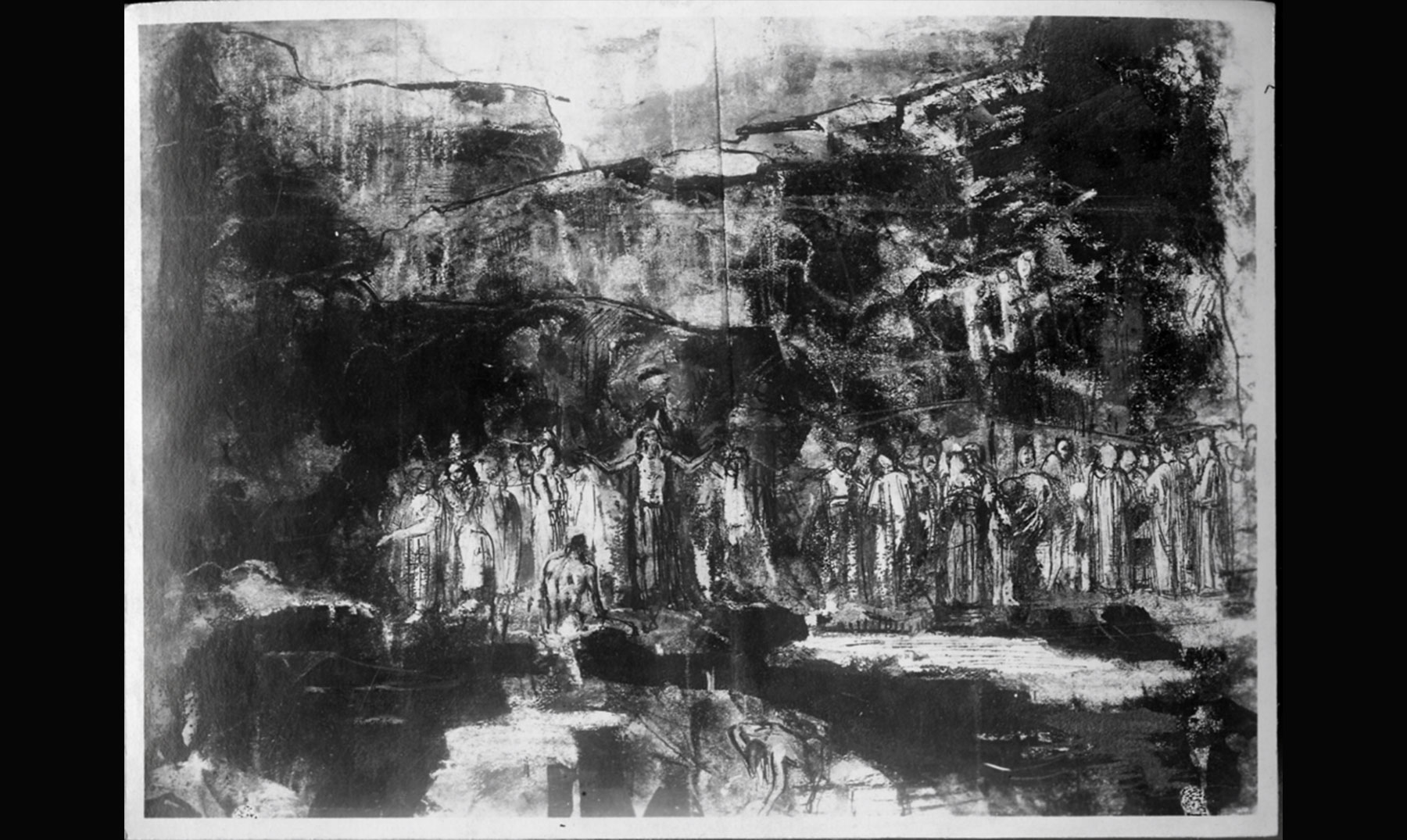
Lilian Whitehead, St. John in the Wilderness, 1921 (BSR Fine Arts Archive)
Lilian Whitehead, photo of artwork, 1921 (BSR Fine Arts Archive)
Some have been preserved as physical copies only.
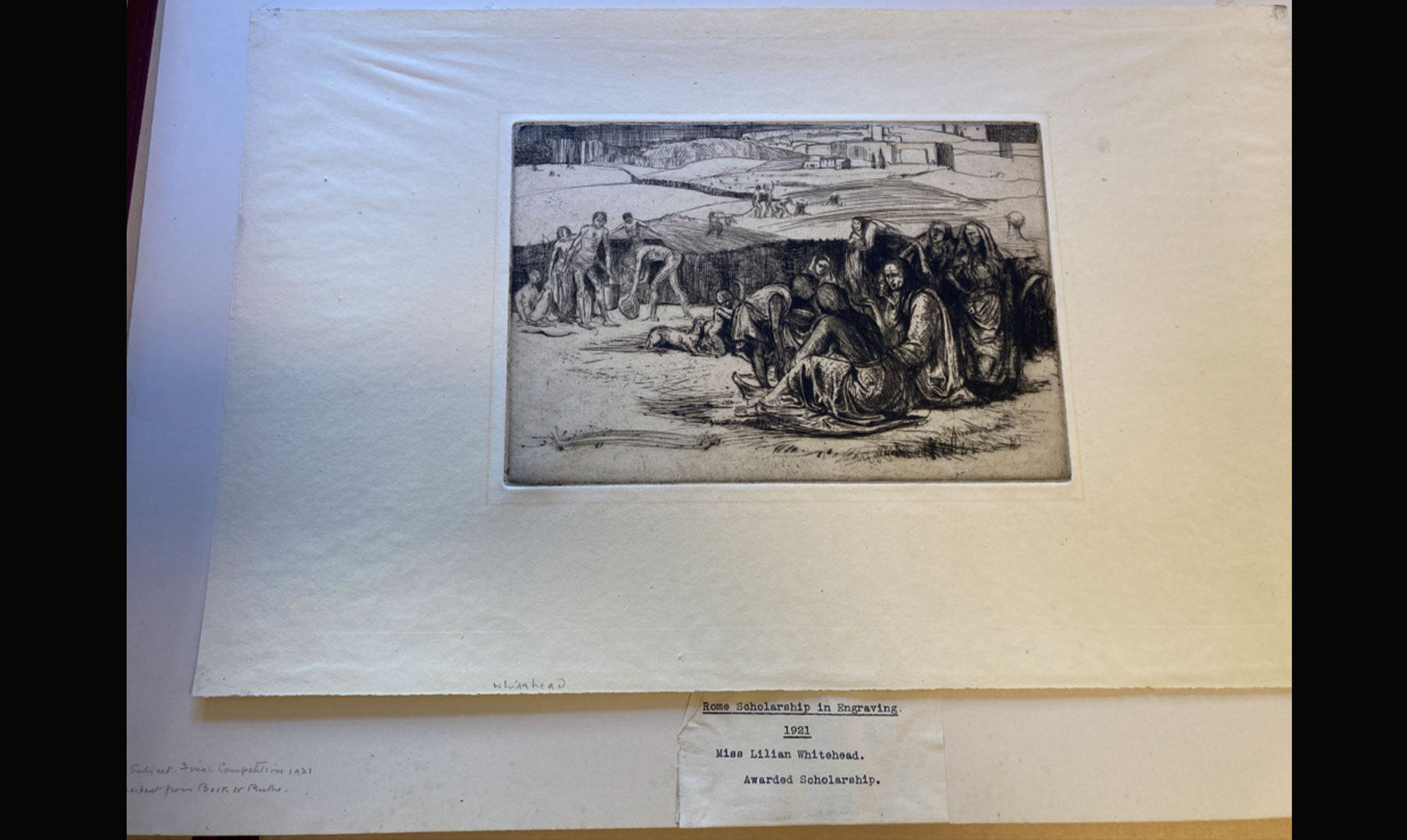
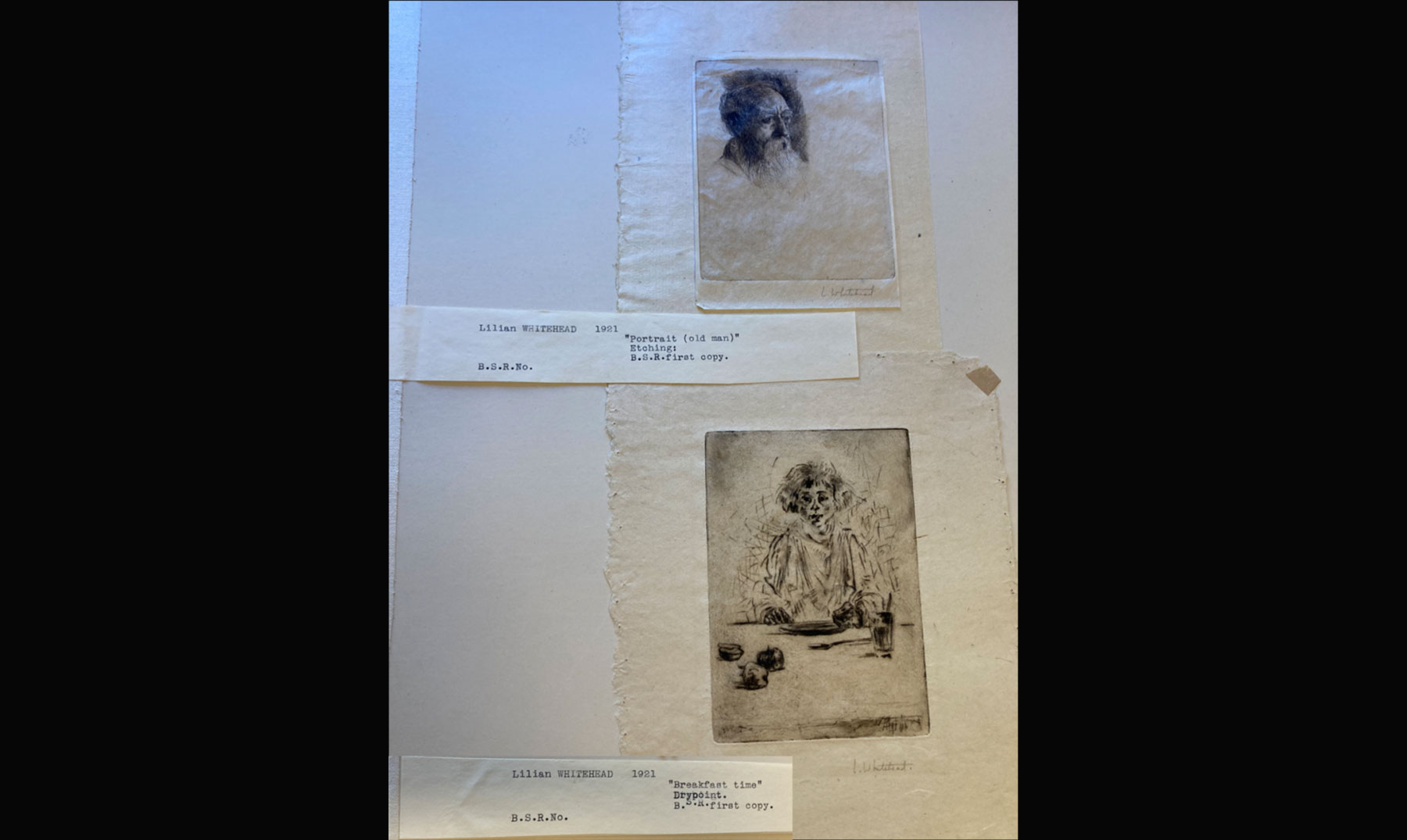
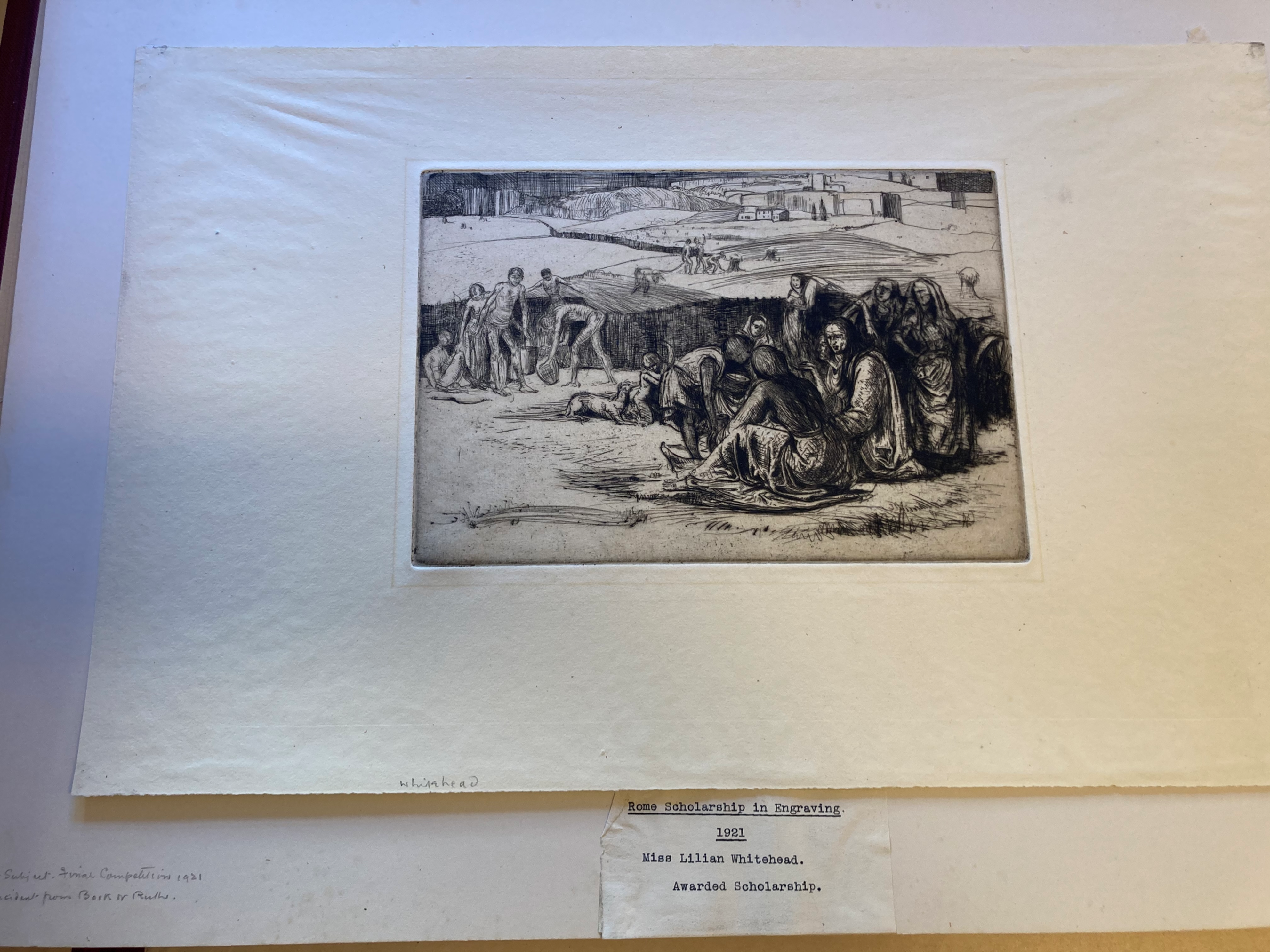
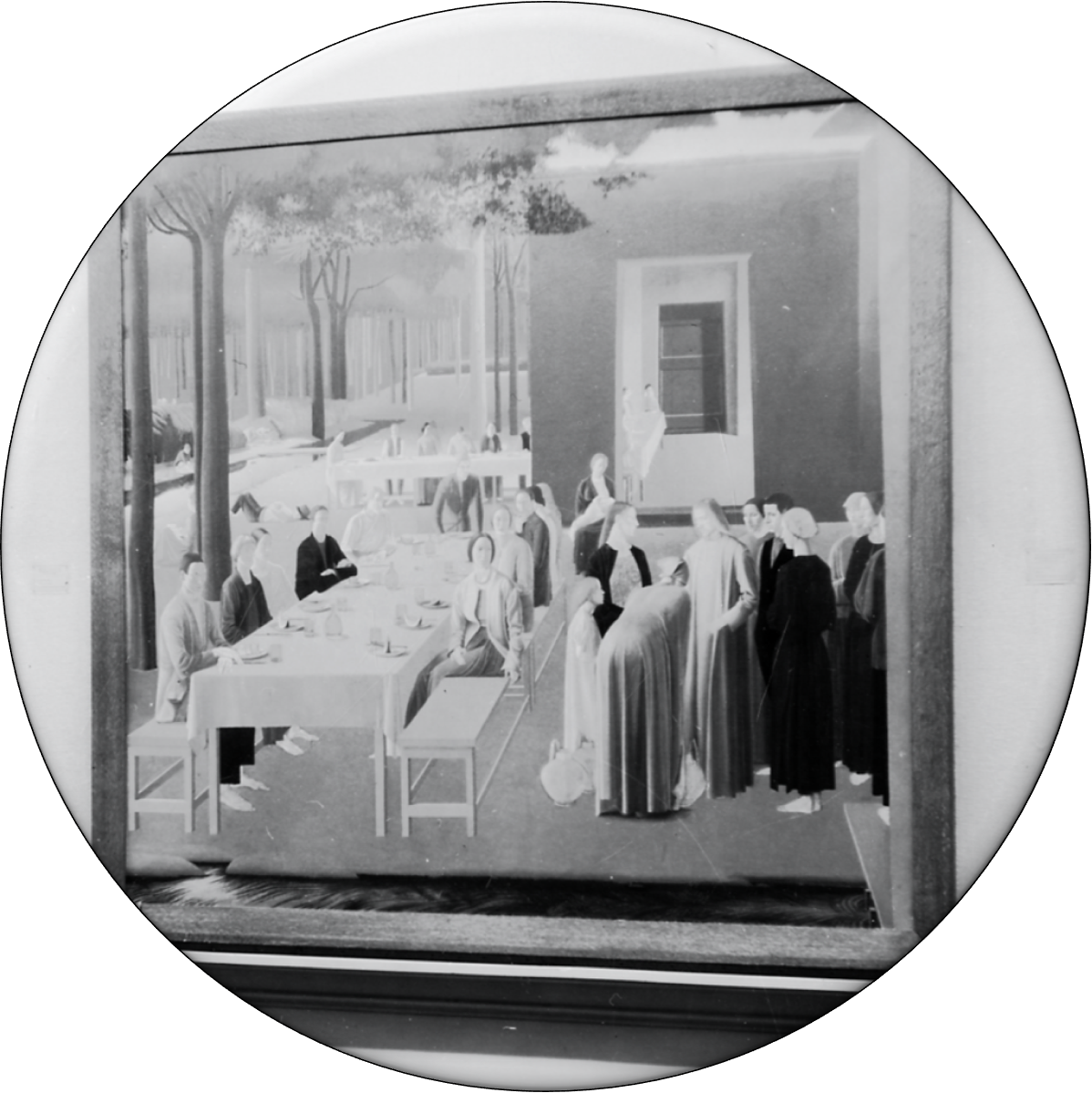
Lilian Whitehead, Incident from Book of Ruth, 1921 and Breakfast time, 1921 (BSR Fine Arts Archive)
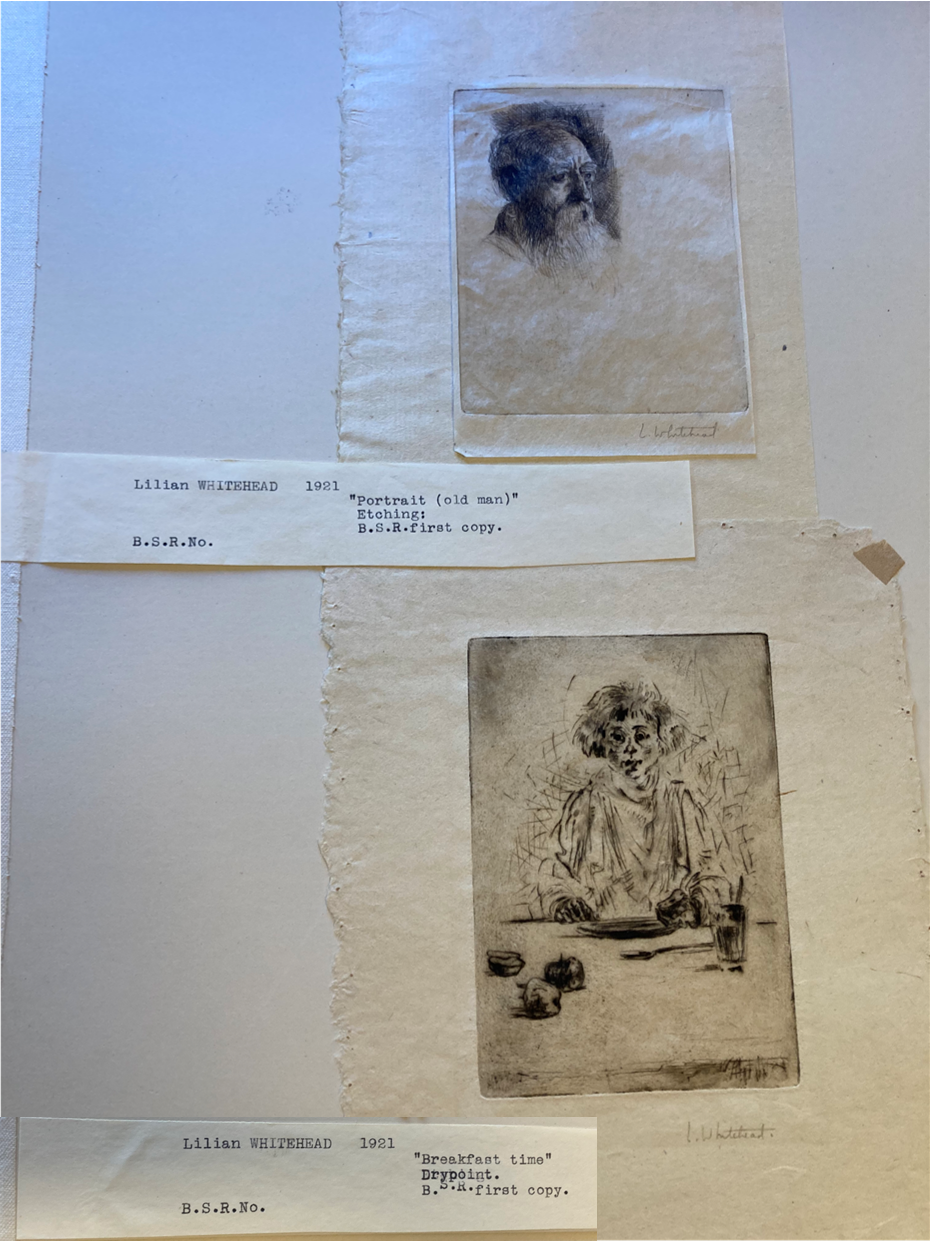
Lilian Whitehead, Portrait (old man), 1921 and Breakfast time, 1921 (BSR Fine Arts Archive)
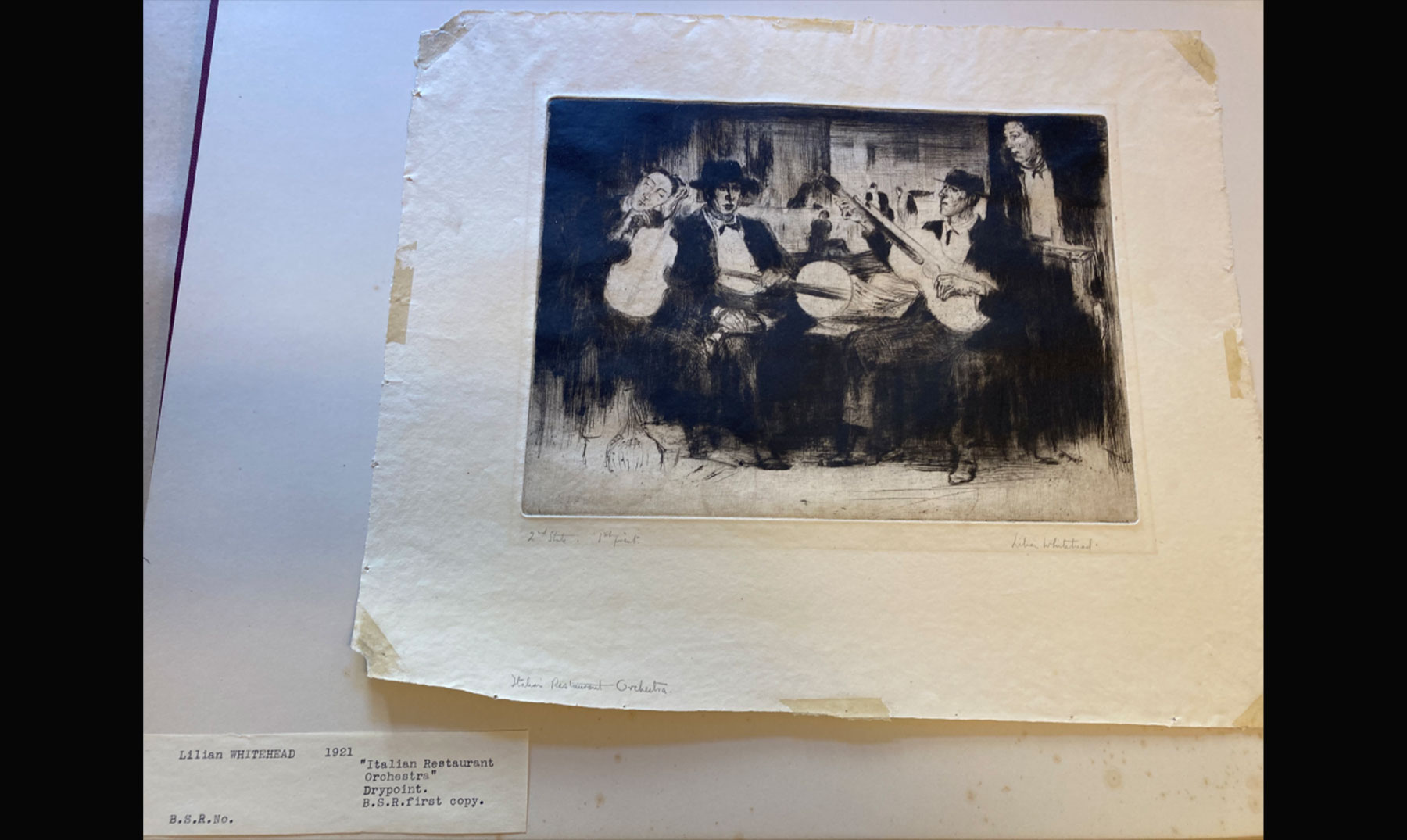
Lilian Whitehead, photo of Italian Restaurant Orchestra (1921), BSR Fine Arts Archive
Where would you like to go next? Who would you like to meet?
Meet Lilian Whitehead (1894-1959)
Learn more about Engraving at the BSR, 1913-1930
Learn more about Photography at the BSR, 1913-1930
Please click on an image to enlarge it.
For a full bibliography and further reading, see here.
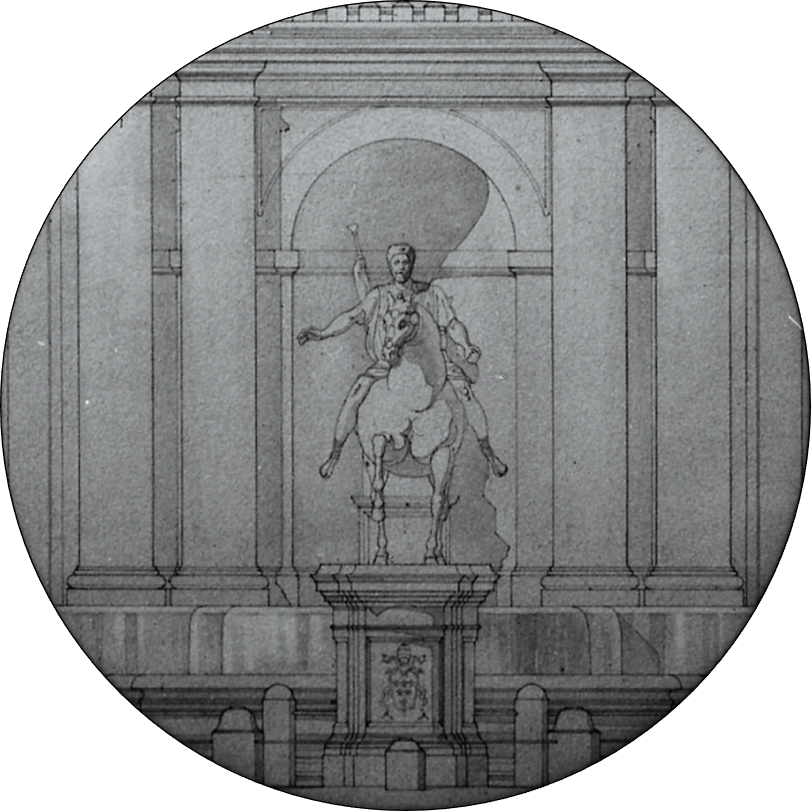
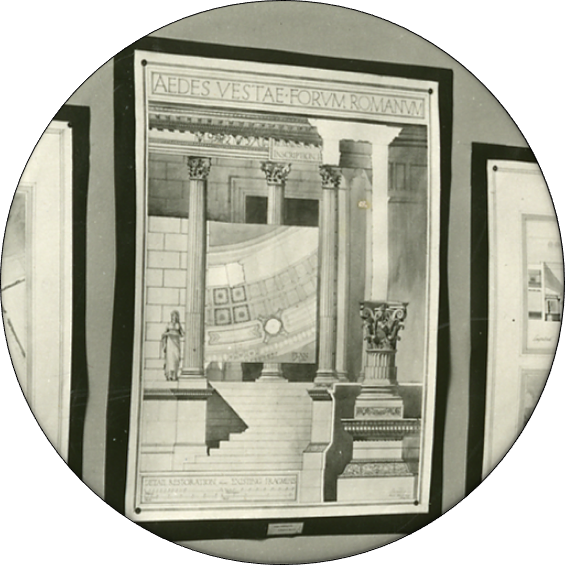
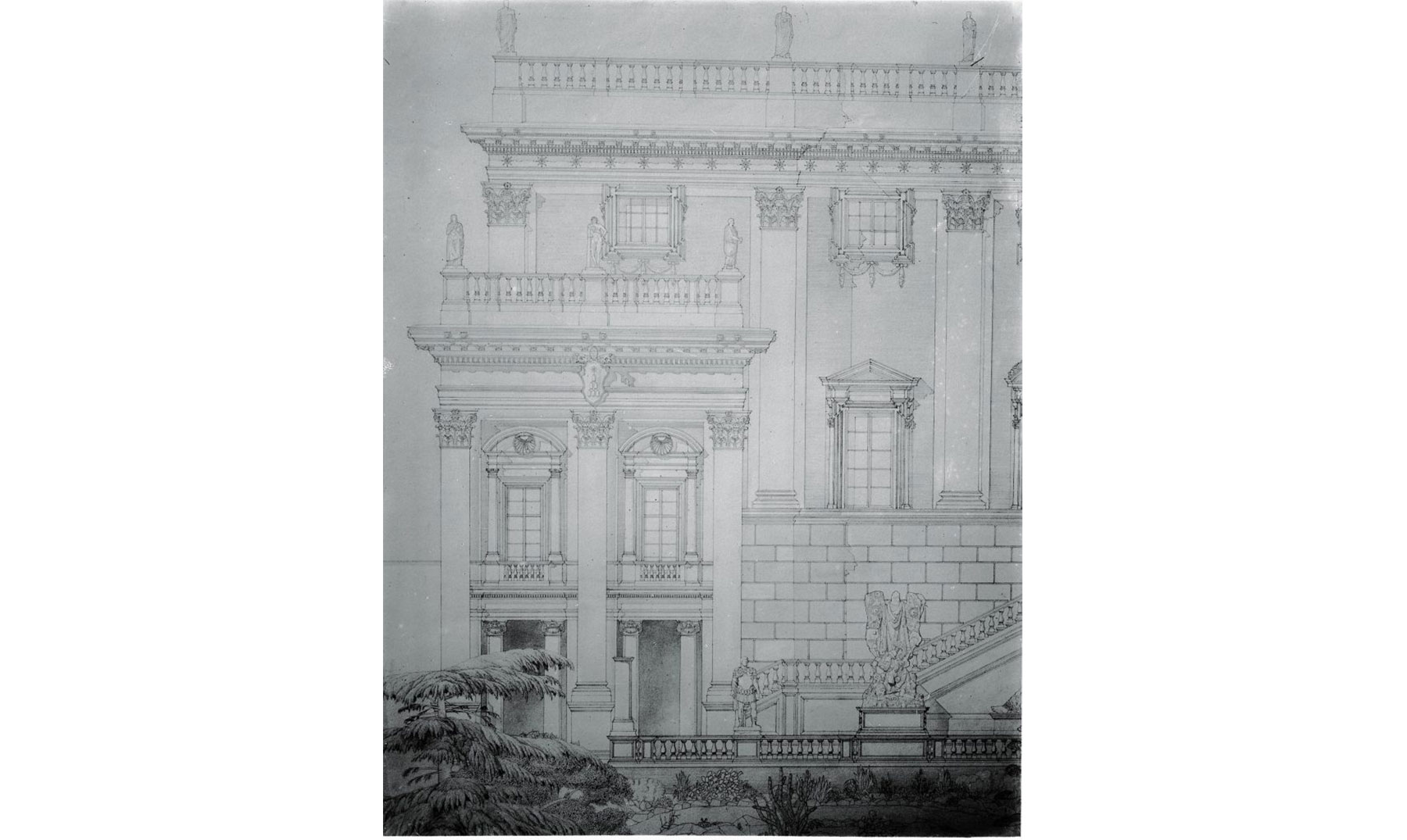
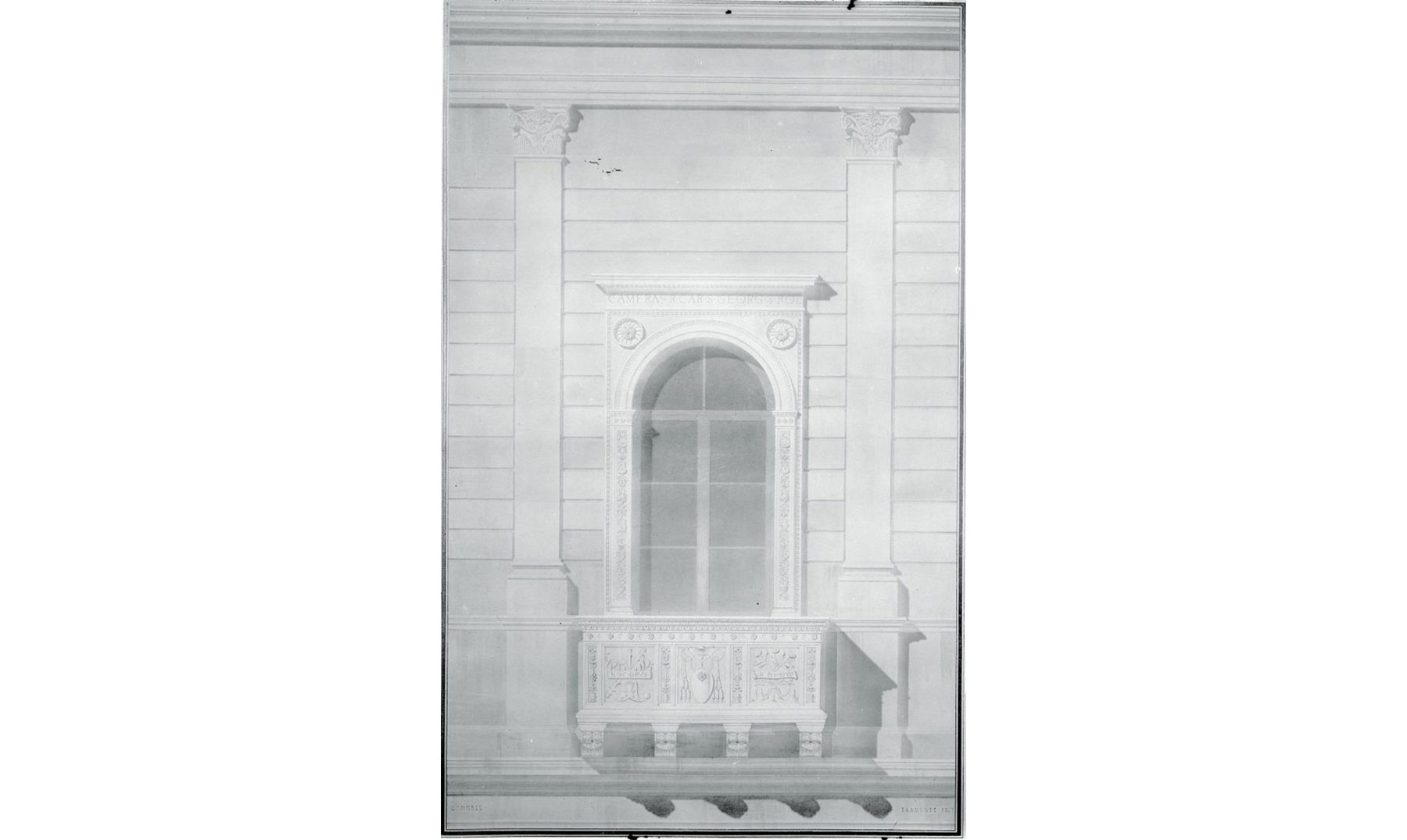
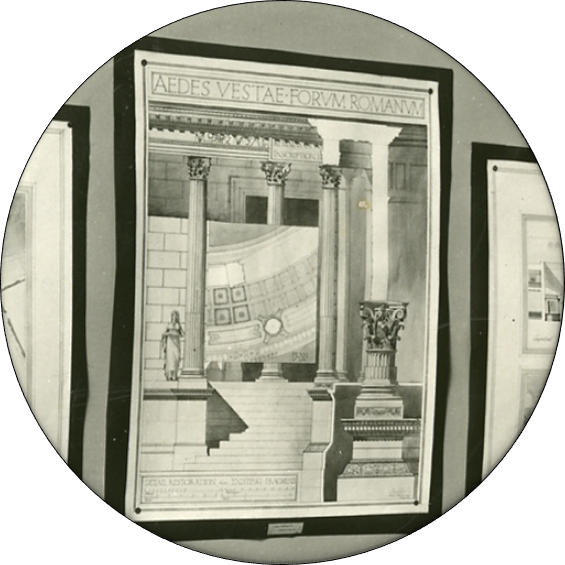
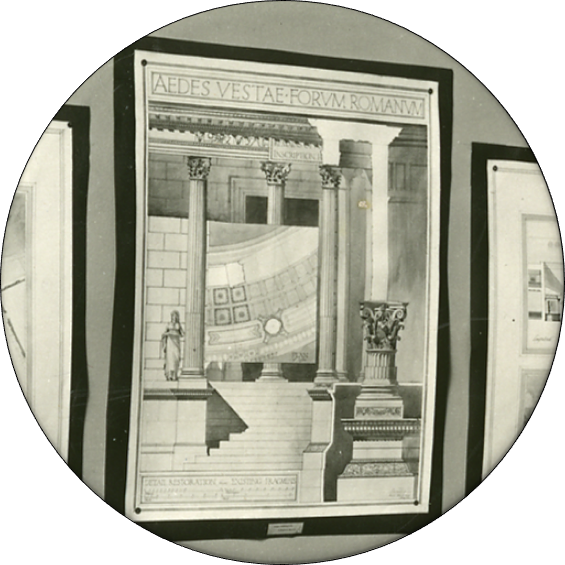
Amyas D. Connell (1901-1980) was the 1926 Rome Prize winner in Architecture at the British School at Rome. The BSR archive holds collections of Connell’s drawings and plans made in Rome, a testament to his study of the classical tradition at this time, before he went on to work on modernist projects such as his collaboration with Bernard Ashmole on High and Over (1931). In the archive we can find several photographs of unfinished drawings Connell made and show the various stages of his working process.Other images show how he paid attention to the architecture around him, including an unfinished representation of the Capitol building, now the home of the Capitoline Museums on Capitoline Hill.
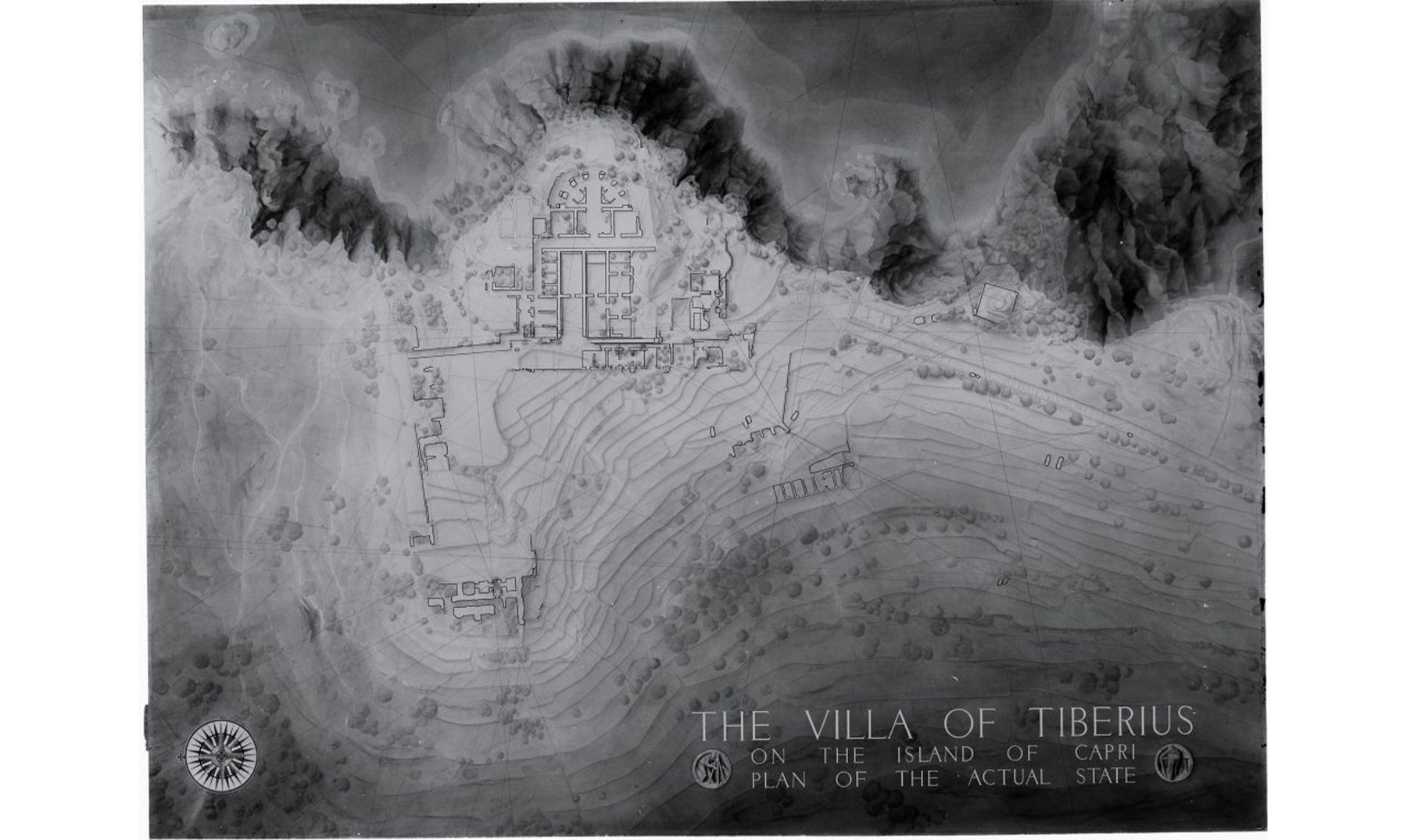
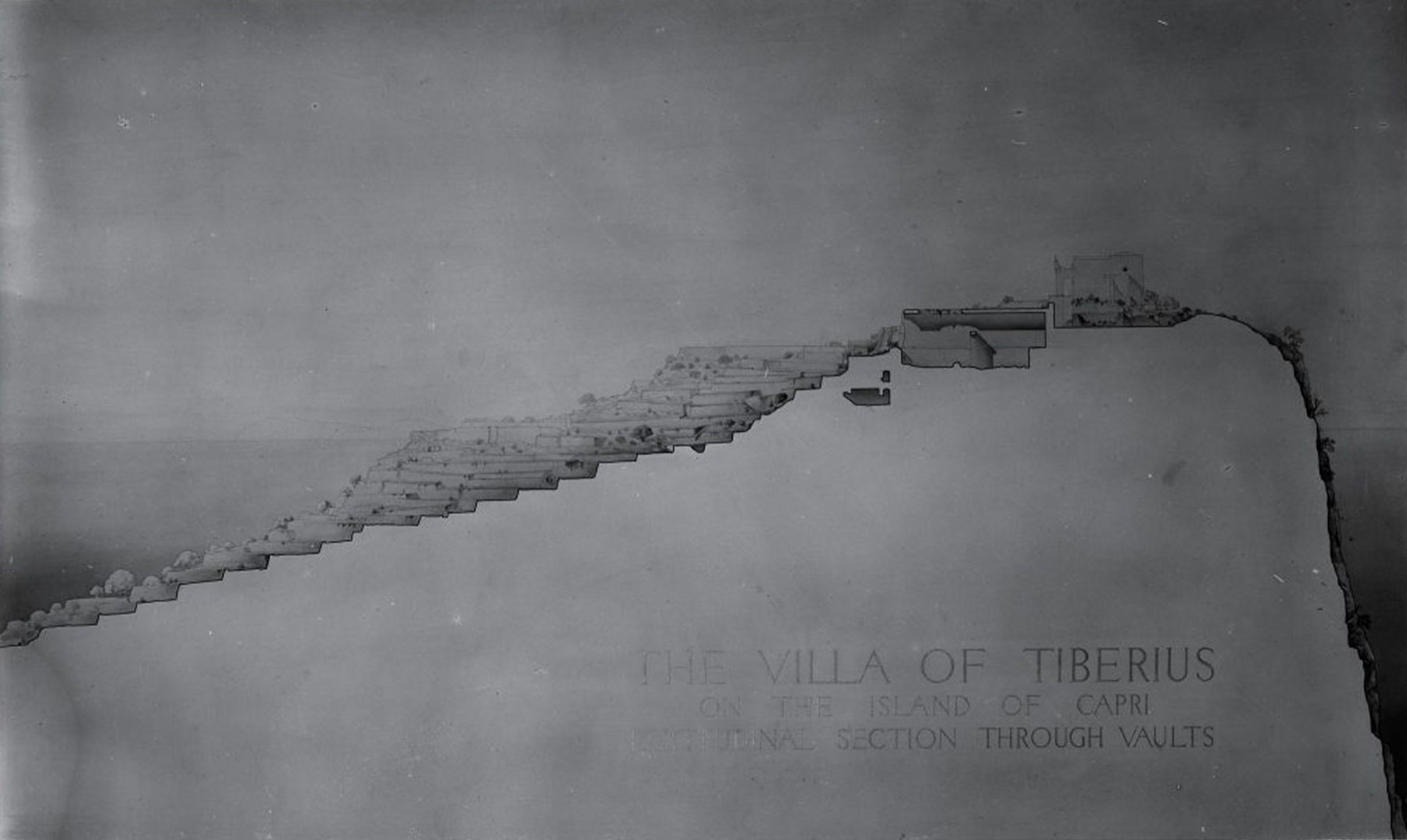
The Rome Scholars in Architecture were also expected to design a restoration project for some of Rome’s ancient ruins. Connell chose to centre his project on the Villa of Tiberius on the island of Capri.
Where would you like to go next? Who would you like to meet?
Meet Amyas D. Connell (1901-1980)
Learn more about Architecture at the BSR, 1913-1930
Learn more about Photography at the BSR, 1913-1930
Please click on an image to enlarge it.
For a full bibliography and further reading, see here.
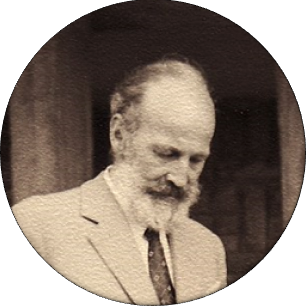
Amyas D. Connell (1901-1980) was born in South Taranaki, New Zealand, to the photographer and drawing teacher Nigel Douglas Connell. In 1926, he was awarded the Rome Scholarship. Examples of Connell’s work, along with some of the correspondence, are included in the collections of the BSR’s archives.
Like other Rome Scholars in Architecture, such as Frederick O. Lawrence, during his residency at the School, Connell was working in the genre of restoration drawing. Through on-site measurements, research and masterly draughtsmanship, Connell produced a project of restoring the Tiberius villa on Capri Island. Rome Scholars from the faculties of Decorative Painting and Sculpture were often invited to collaborate with architects on restoration projects. In the BSR’s archives, we can see the result of such a partnership between Connell and the painter Rex Whistler (1905-1944), who painted trees for Connell’s reconstruction project of the Tiberius Villa on Capri. While architectural projects are usually attributed to one person, we can see webs of collaborations behind the façade of individual authorship through these documents.
A Connell, The Villa of Tiberius on the island of Capri, Plan of the actual state, circa 1926 (BSR Fine Arts Archive)
A Connell, The Villa of Tiberius on the island of Capri, Latitudinal Section Through Vaults, circa 1926 (BSR Fine Arts Archive)
A Connell, The Villa of Tiberius on the island of Capri, Restoration proposal, circa 1926 (BSR Fine Arts Archive)
A Connell, The Villa of Tiberius on the island of Capri, Restoration proposal for architectural details, circa 1926 (BSR Fine Arts Archive)
Acquaintances made by Connell at the British School of Rome significantly influenced his later professional career. The BSR’s director at the time of Connell’s scholarship was the professor of Classical Archaeology at London University and head of classical sculpture at the British Museum, Bernard Ashmole (1898-1988). Ashmole became Connell’s friend and client. After completing the Rome scholarship, they collaborated with Ashmole to design a ‘modern villa’ for the professor and his family.
The villa in Amersham, Buckinghamshire, also known as the ‘High over Park’ estate, was the first suburban residence in the UK built in the so-called ‘International’ style. At the same time, Connell and Ashmole shared knowledge and appreciation of classical Roman heritage. Modern ideas about the organisation of living introduced by such architects as Le Corbusier were a decisive driver behind the concept of the estate. In contrast to a more traditional understanding of the architectural profession advocated by the creators of the Rome Scholarship, in this project Connell leaned towards a practical sense of domesticity in architecture. Among other features, he designed a functional kitchen with ‘labour-saving’ appliances, a glass-covered stairway that allowed natural light into the building, spacious and airy interiors, and other innovations qualifying rather as artefacts of modern engineering than fine arts. The iconic Y-shape of the building was erected with the help of modern materials: the concrete frame and blocks and created three different facades opening the views on the Misbourne valley.
Two villas — the restoration project Tiberius villa on Capri island and the modern ‘High over Park’ estate — exhibit drastic differences in Connell’s work during his tenure at the BSR and after the scholarship’s completion. These different projects allow one to understand the professional twists and turns an architect could undertake in their approach to the profession at the beginning of the twentieth century.
Where would you like to go next? Who would you like to meet?
Explore the Amyas Connell Collection in the BSR Fine Arts Archive
Learn more about Architecture at the BSR, 1913-1930
Benton, C. (2004). ‘Connell, Amyas Douglas (1901–1980)’, in Oxford Dictionary of National Biography. Oxford: Oxford University Press.
Sharp, D. and Rendel, S. (2008). Connell, Ward and Lucas: Modernist Architecture in England. London: Frances Lincoln.
Thistlewood, D. and Heeley, E. (1997). Connell, Ward and Lucas: Towards a Complex Critique in The Journal of Architecture, Vol 2, Spring 1997. London: The Royal Institute of British Architects/Routledge.
For a full bibliography and further reading, see here.
Architecture, along with Decorative Painting and Sculpture, was one of the founding faculties of the British School at Rome. The establishment of the faculty coincided with the launch of the Rome Prize in 1913 that facilitated the mobility of young British architects to Rome. The prize, granting the winner a professional residency and scholarship in Italy in a prolific community of artists and scholars, followed the traditional French ‘Ecole de Beaux Arts’ model with its prestigious ‘Prix de Rome’ scholarships awarded once per year to the most gifted architecture graduate by the Royal Institute of British Architects (RIBA). The scholarship, tenable for up to three years, aimed at raising professional standards by building connections to Rome seen as a source of European architectural tradition.
As with any prize, it favoured certain forms of practice and quietened others. The initiators of the scholarship, the president of the RIBA Reginald Theodore Blomfield and renowned British architect Aston Webb, advocated systematization of architectural education in accordance with the ‘classical’ tradition, and were wary of the new tendencies sweeping the profession. Contemporaneous modernist and avant-garde experiments questioning the social role of art and architecture from France, Germany, the USSR or even the London-based Vorticism movement, were openly resisted by the decision-makers behind the Prize. The Prize, in turn, rendered architectural education primarily as an arts-based training which placed architectural drawing and a comparative study of historical styles at the core of the curriculum.
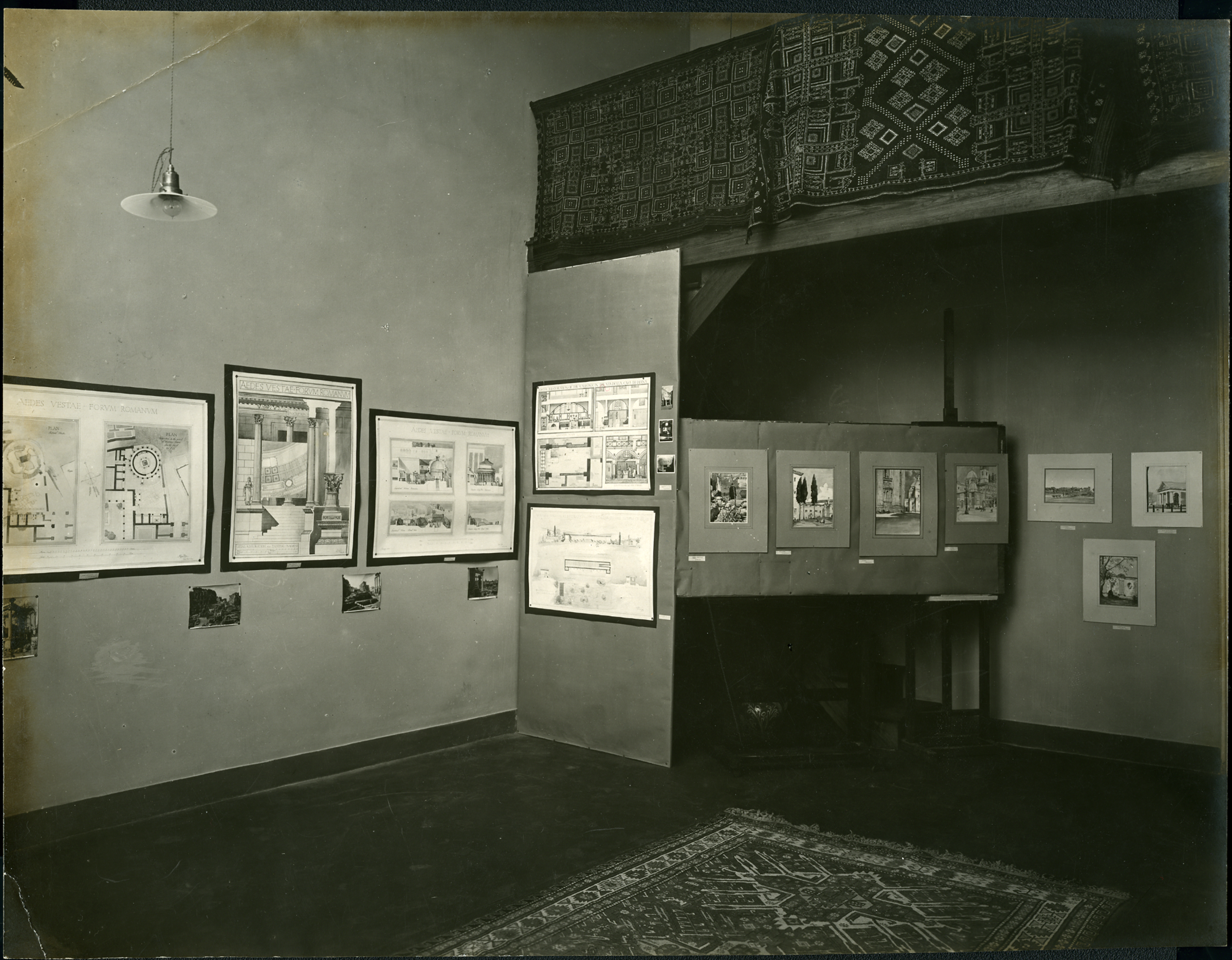
Architecture Exhibition at the BSR c.1920s (BSR Photographic Archive, BS Collection)
Thanks to the Rome Prize, the BSR archive holds numerous studies of ancient buildings and ‘imaginary’ restoration proposals as the scholarship supported the study of important historical (classical and Renaissance) architecture across continental Italy and in the islands of the Mediterranean. To develop restoration projects, resident architects conducted direct measurements of historical buildings and ruins using just a tape measure, pen, and paper. Scholarly expertise on the analysed buildings was provided by resident historians and archaeologists. Surveying was therefore a time-consuming and arduous process, requiring lengthy field trips and extensive professional collaboration.
At this stage, after necessary examinations were completed, architects received inputs from mural painters and sculptors, produced a graphic representation, and proposed a restoration project as a final project of their residency. In the absence of computers, architects honed their draughtsmanship skills. They scaled the building’s measurements down to a drawing, working with simple tools such as a scale ruler, a compass, a T-square, and a drawing board. One of the earliest examples of such work is attributed to the first Rome Scholar of the Architectural Faculty (1913), H. C. Bradshaw. Bradshaw conducted a study for the restoration project for Praeneste (Palestrina), an ancient city east-southeast of Rome, in collaboration with the student of the Archaeological Faculty Mary Taylor and presented the results in a series of ‘Beaux-Arts’ style drawings.
A Connell, The Villa of Tiberius on the island of Capri, Plan of the actual state, circa 1926 (BSR Fine Arts Archive)
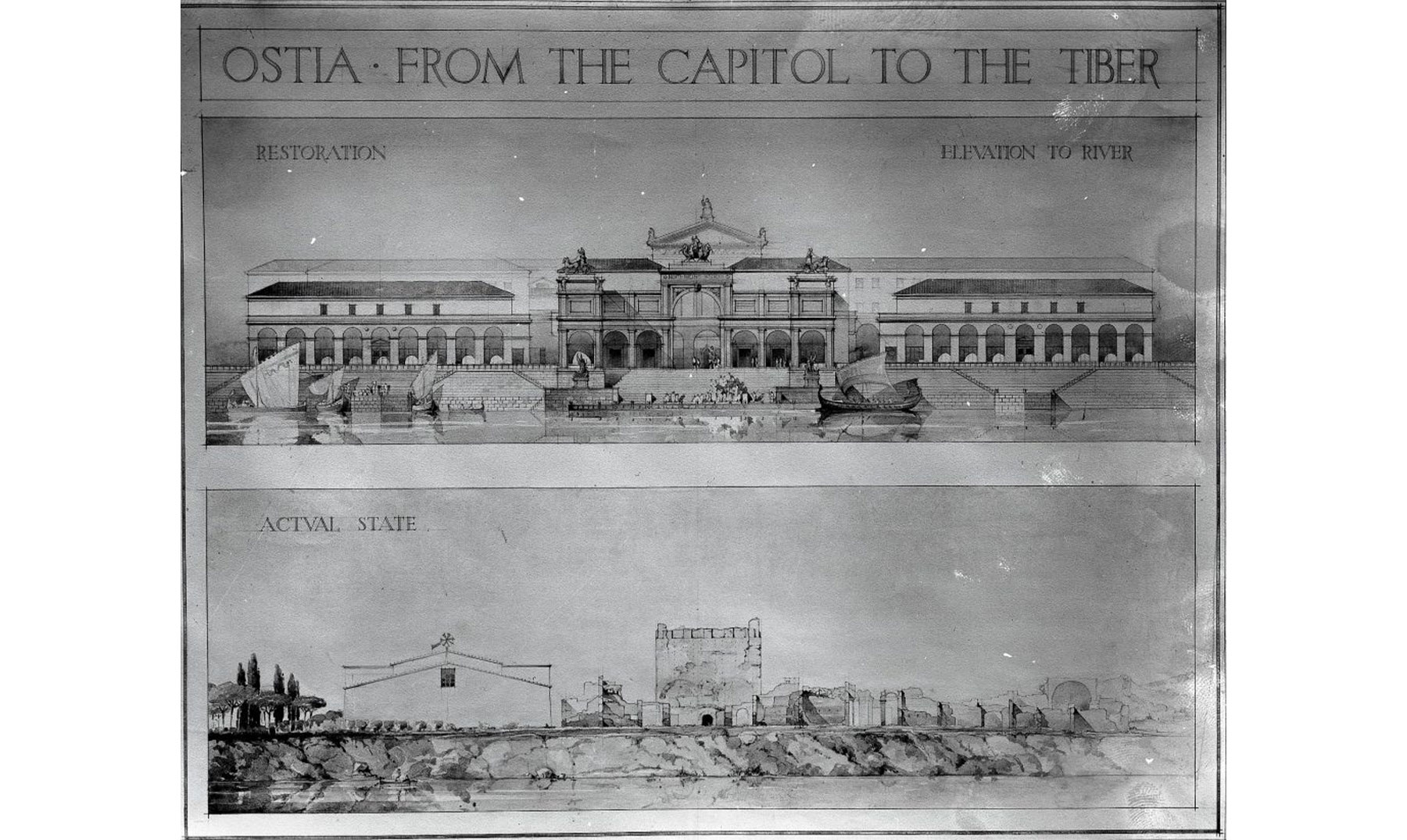
F Lawrence, Ostia Restoration Drawing Series, Elevation to the river Tiber, Actual state and Restoration proposal, circa 1920 (BSR Fine Arts Archive)
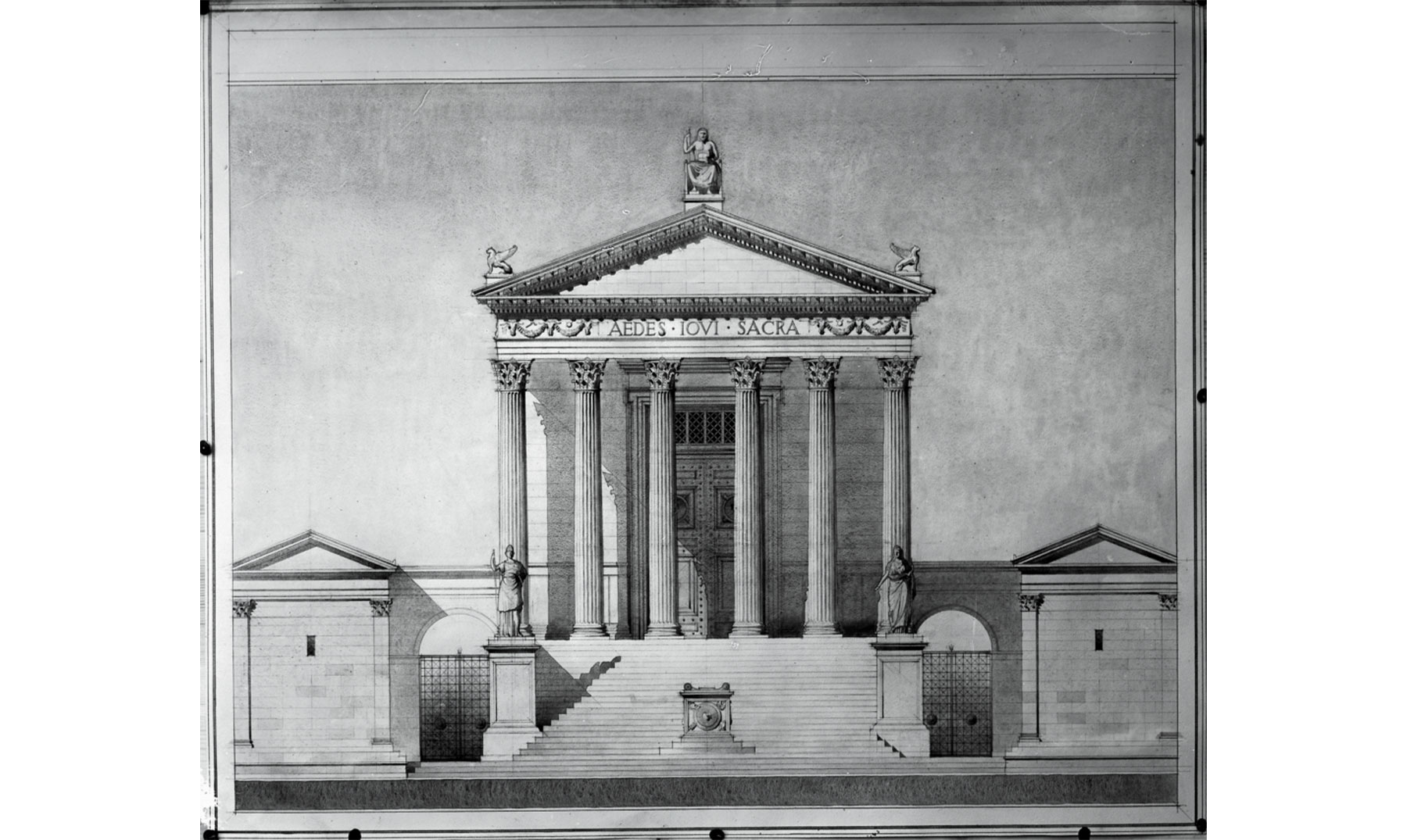
F Lawrence, Ostia Restoration Drawing Series, Elevation of Temple, Restoration proposal, circa 1920 (BSR Fine Arts Archive)
F Lawrence, Ostia Restoration Drawing Series, Architectural details from the Capitol Museum, circa 1920 (BSR Fine Arts Archive)
From 1922 scholars were also permitted to collaborate on original design projects. This initiative allowed the BSR to leave a tangible material imprint by developing sculpture and mural decorations for international building and memorial projects. Among other contributions, sculptures were created to decorate Ploegsteert Memorial (Belgium), the Guards’ Memorial in St. James Park (UK) or Norwich Town Hall designed by the Rome Scholar S. Rowland Pierce. To maintain the adherence to classical tradition, it was required that each project had a “precedent in ancient or Renaissance architecture”. Modern building typologies and materials were discouraged. The restriction, however, did not stop some of the Rome Scholars. For example, see the project for a country house ‘High and Over’ (Amersham, Buckinghamshire) designed for, and in close collaboration with, the archaeologist and BSR director from 1925 to 1928, Bernard Ashmole, by the 1926 Rome Scholar Amyas D. Connell (1901 – 1980). Despite the criticism and fear surrounding the new tendencies in architecture, the architect executed the project in a daringly modern approach.
As well as Bradshaw, Pierce and Connell, other architecture Rome Scholars in this period include Frederick O. Lawrence (1920), S. Welsh (1922), R. A. Cordingly (1923), G. A. Butling (1925), R. P. Cummings (1927) and J.B. Wride (1929).
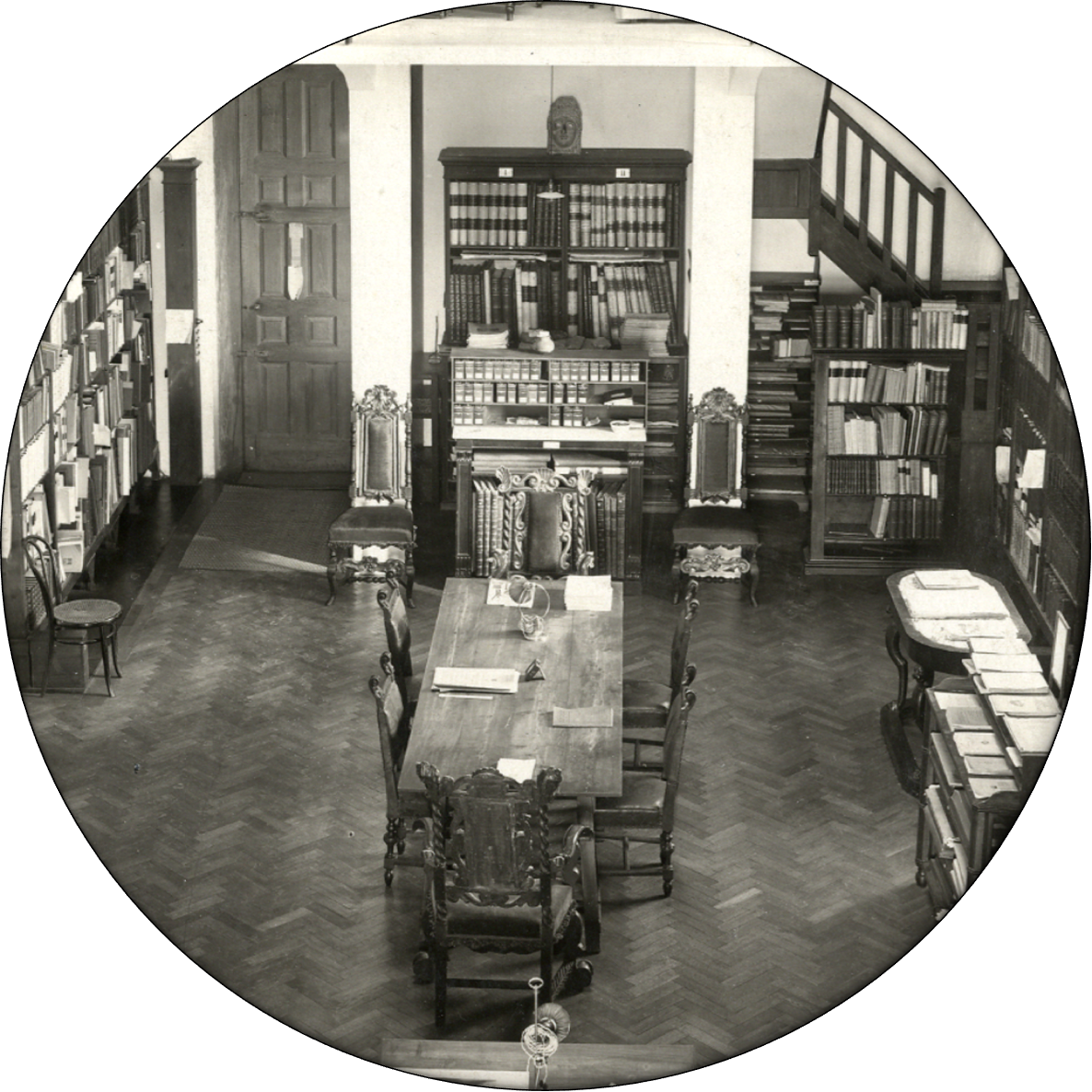
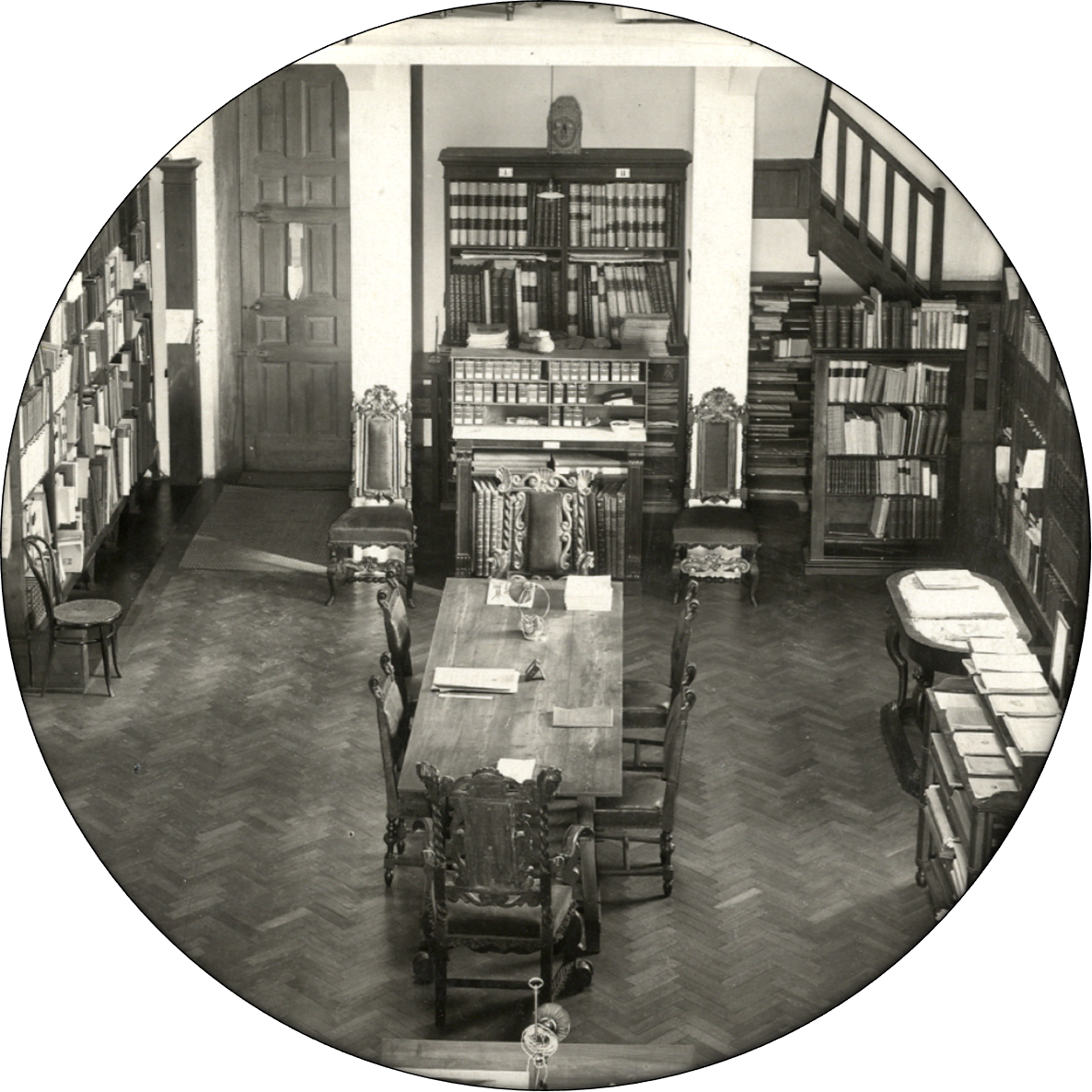
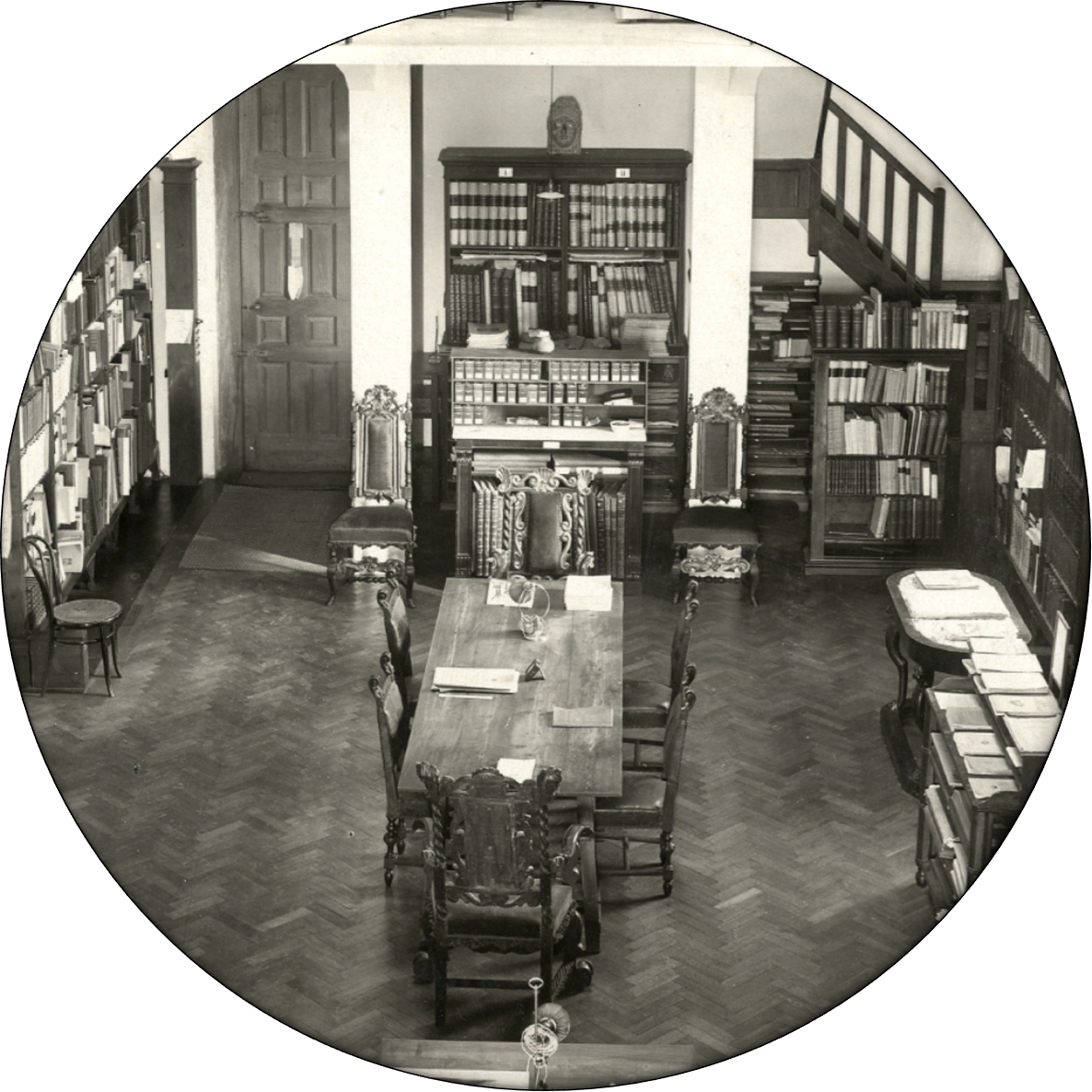
One of the aims of the BSR was to establish a library, where English travellers could find information about Italian history and culture. The Faculty of Architecture took part in selecting books for the collection. For example, as we can see in this letter from 1922-1923, the department purchased a study of Genoese Palaces and expressed an interest in five volumes on palace architecture in Northern Italy and “American periodical publications”. Due to this focus, the department avoided purchasing books written by contemporaneous leaders of the modern movement such as Le Corbusier and Bruno Taut. Despite the fact that their world-famous theoretical treatises, Towards a New Architecture (1927) and Modern Architecture (1920), were recently translated to English, these publications did not make it to the BSR library.
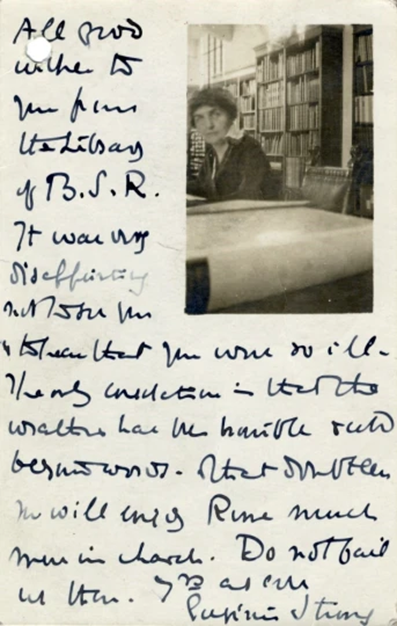
Eugénie Sellers Strong was an art historian, archaeologist and scholar of Roman and Baroque art. She was Librarian and then Assistant Director of the British School at Rome from 1909 to 1925 working with Director Thomas Ashby. Strong was the daughter of a wine merchant, educated in France and Spain who graduated in classics from Girton College Cambridge in 1882. She married Sandford Arthur Strong, the archivist of Chatsworth House Library, whom she succeeded in the post after his death. At one time a model for Pre-Raphaelite painters, she taught widely and published her research, including Roman Sculpture from Augustus to Constantine in 1907, which led in part to her appointment at the BSR.
Her research interests were largely focused on Roman sculpture, Etruscan art and, later, Baroque art which she continued to pursue alongside her administrative duties at the BSR. Strong’s tenure was pivotal and she had an impressive influence on the social life, cultural production and intellectual development of the institution. The archive contains numerable materials from her administration as she worked tirelessly as a supporter of students at the School; we can find numerous letters of recommendation and reference penned by Strong. The archive also holds a sizeable image collection which she bequeathed to the BSR in her will.
Strong maintained throughout her life a highly connected social circle; she numbered several famous and powerful people in her set. Gilchrist Scholar from 1920-1921, Agnes Sandys, recalled: “Her personality filled the place. Social life at the British School revolved entirely around her. You never knew whom you might not meet at her parties. Scholars of all kinds and many nationalities, distinguished artists, cardinals, bishops, and humble and learned friars.” Her role at the BSR came to an end in 1925 when she came into conflict with the wife of Thomas Ashby, whose tenure as Director also ended. She stayed on in Rome and in her later years, to the detriment of her posthumous reputation, was known for her support of fascism and Mussolini, whom she admired for his interest in archaeology and the classics.
Eugénie Sellers Strong in her role as BSR Librarian in the Main Reading Room (BSR Photographic Archive, BS Collection)
Much of Strong’s archive remains understudied and unexplored. Her image and postcard collection and correspondence can be found in the BSR archive. Researcher Ben White has written blogs on what has begun to be unboxed here and here. See more about the postcard collection here.
Where would you like to go next? Who would you like to meet?
Visit the BSR’s Library
Meet Alfred Frank Hardiman (1891-1949)
Meet Colin Gill (1892-1940)
Meet Job Nixon (1891-1938)
Meet Frederick Orchard Lawrence (c.1893-1971)
Meet Sir Walter Thomas Monnington (1902-1976)
Meet Winifred Knights (1899-1947)
Meet John R. Skeaping (1901-1980)
Meet Amyas D. Connell (1901-1980)
Meet Lillian Whitehead (1894-1959)
Meet Stephen Rowland Pierce (1986-1966)
Sources and Further Reading
Beard, M. (2002). The Invention of Ellen Jane Harrison. Cambridge: Harvard University Press.
Dyson, S.L. (2004). Eugenie Sellers Strong: Portrait of an Archaeologist. London: Duckworth & Co.
Wiseman, T.P. (1990). A Short History of the British School at Rome. Rome: BSR.
Colin Gill is notable for being the first person to win the Rome Scholarship in Decorative Painting in 1913. A cousin of Eric Gill, he took up the scholarship in early 1914, but postponed his studies following the outbreak of the First World War. From 1915 to 1918 he joined the War effort, firstly as part of the artillery, and later as a camouflage officer with the Royal Engineers. After suffering from gas poisoning in 1918, he returned to England to recover. He later became an Official War Artist, and only returned to Rome in 1919 to continue his three-year scholarship. During his tenure as a War Artist he produced several portraits of soldiers, including those both ranked and private, which are now held at the Imperial War Museum, as well as depictions of the artillery guns and crews he had worked with himself. His return to Rome in 1919 allowed him to resume the classic tradition in which he had been trained during his time as a student at the Slade School of Art. He won the Rome Scholarship in 1913 for his painting Flora (Private Collection, 1912), a painting inspired by the classical tradition that suited the BSR’s ethos.
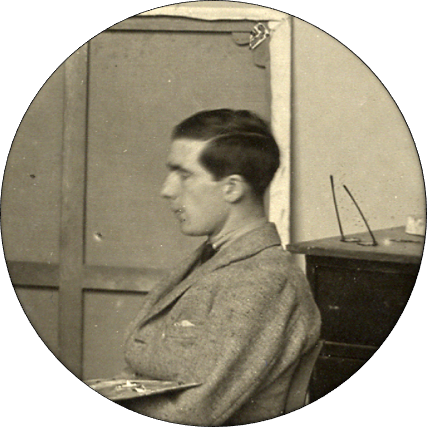
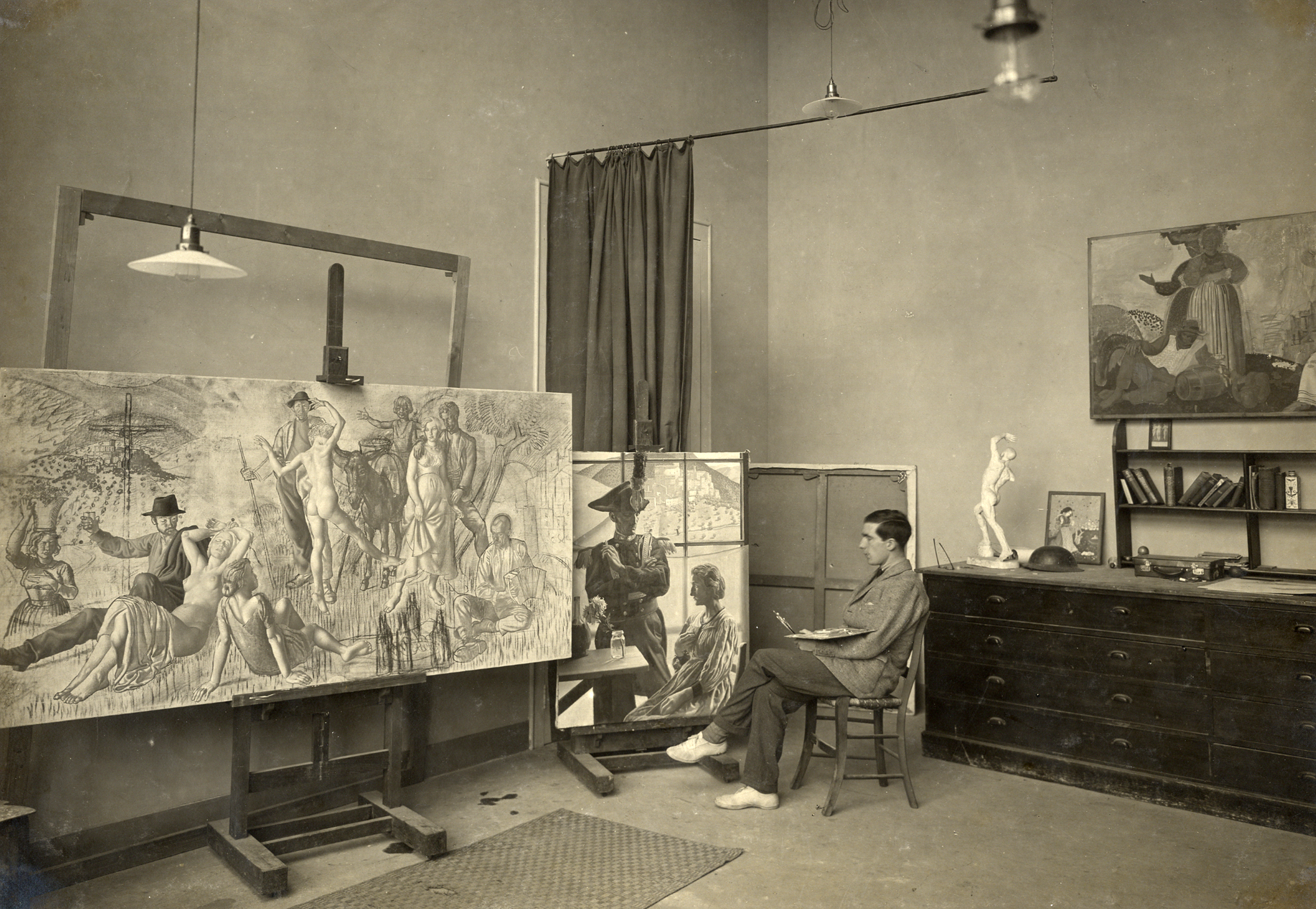
Gill in his studio. An early version of Allegro is on the left (BSR Photographic Archive, BS Collection)
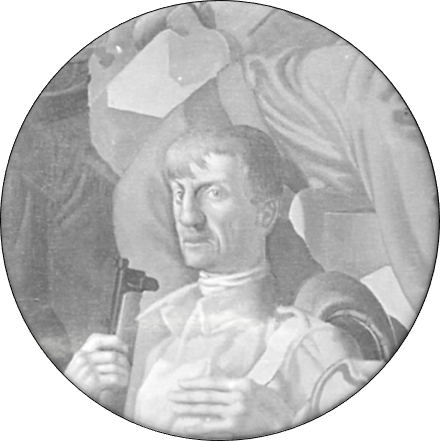
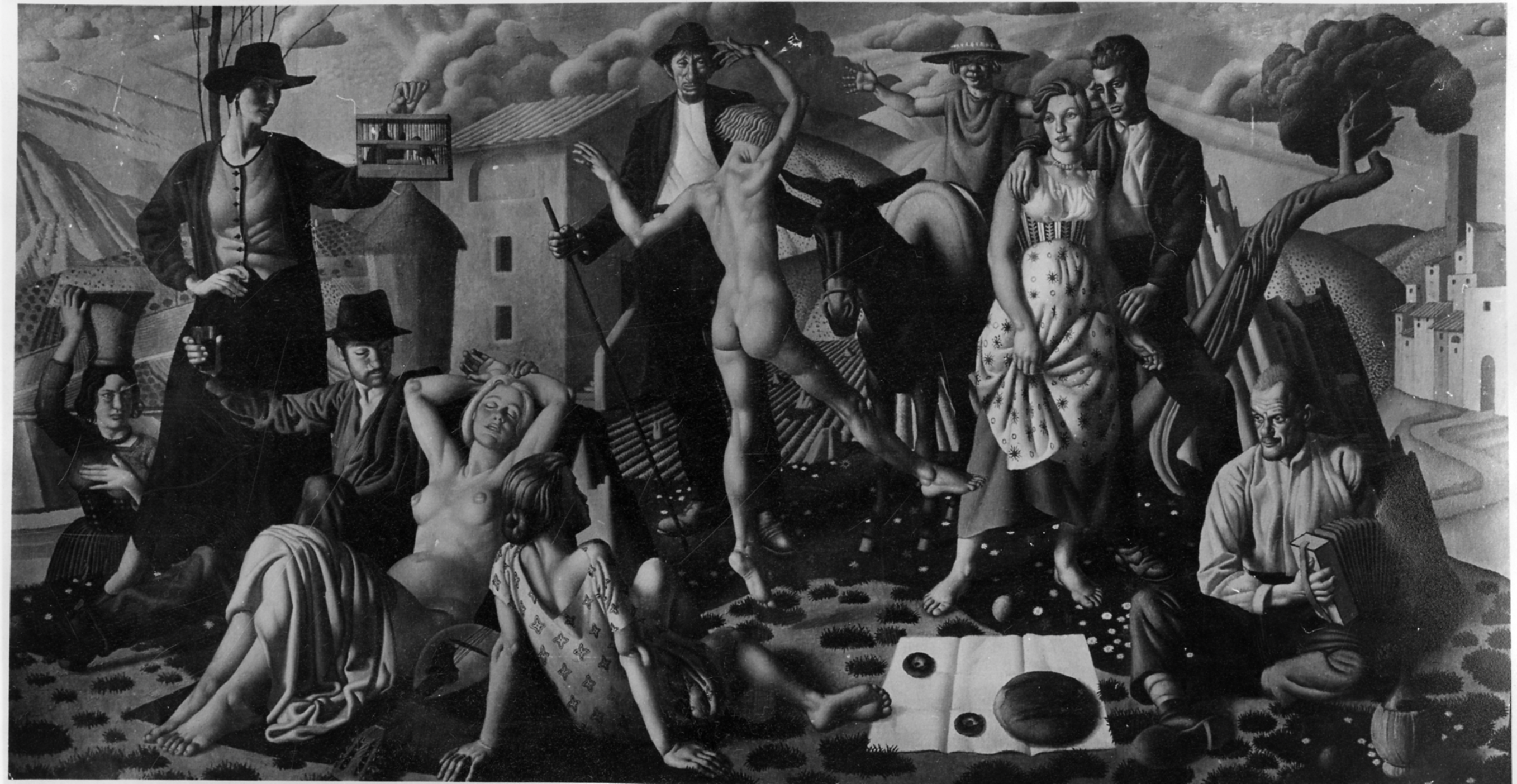
While in Rome, Gill painted what has gone on to be one of his best remembered works, and, indeed, arguably one of the most famous to be produced by Rome Scholars of the time. Allegro (1921), is an oil on canvas that depicts several figures in different poses and at varying stages of undress. It is a striking painting that was well-received at the time by art critics at its first exhibition in 1922. It aligned with the tradition of decorative painting with its absence of narrative content and deliberate pictorial effect. Its aesthetic qualities notwithstanding, one of its most striking features is the depiction of various other Rome Scholars. His models include Job Nixon, the Rome Scholar for engraving, Alfred Hardiman, who held the scholarship for sculpture, and the scholar who had followed Gill in decorative painting, Winifred Knights. Gill fell in love with Knights (he was, it seems, not the only one). He wrote that she held his heart “like a bird in a cage”. This metaphor is replicated in Allegro. Knights may well have reciprocated these feelings for a time, though she was engaged to Arnold Mason, a fellow artist. She broke off this engagement, not for Gill, but for another fellow Rome Scholar Walter Thomas Monnington.
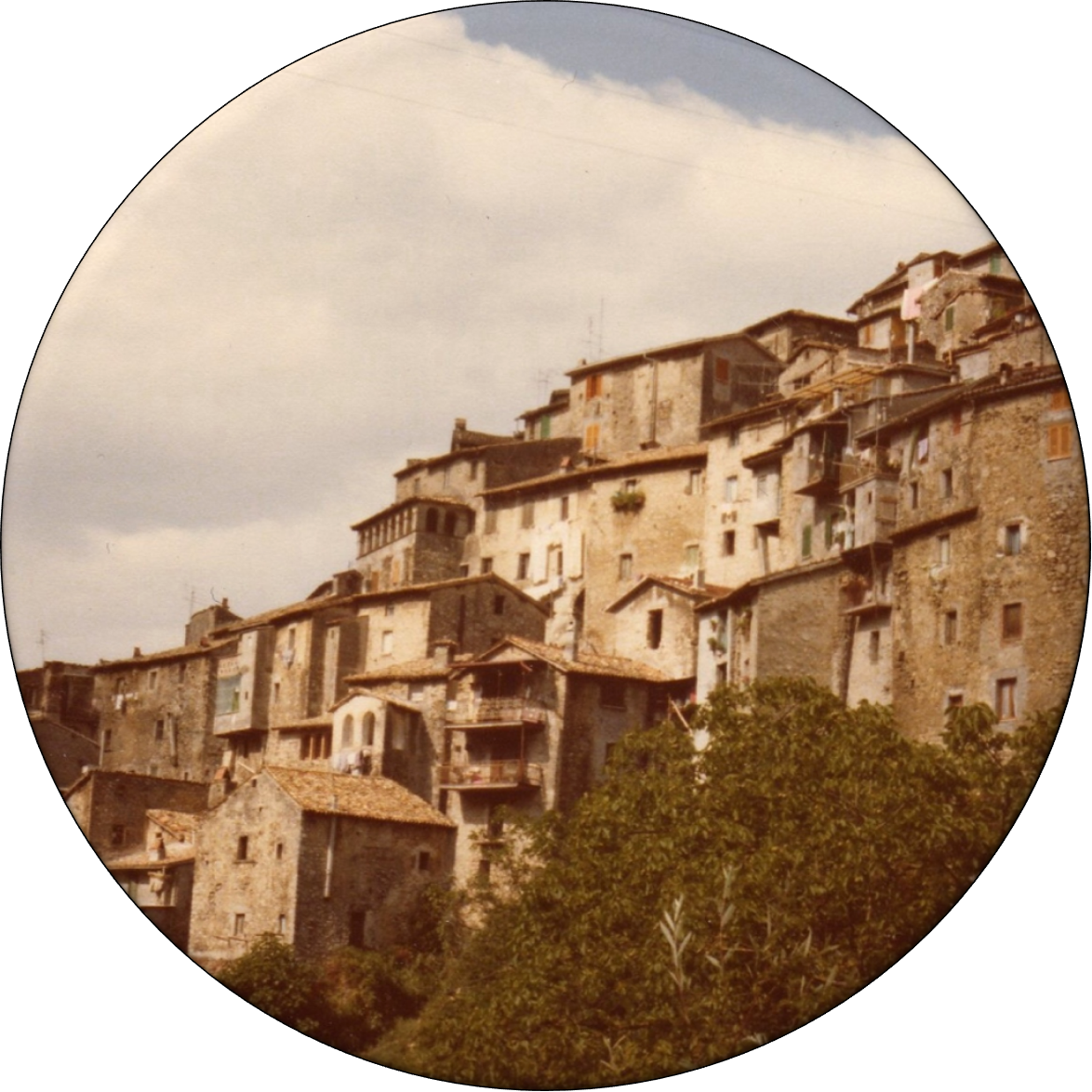
Gill was the first of the Rome Scholars to live in Anticoli Corrado, a hill village in Lazio, which had a long-standing connection to the artists of Rome thanks to its picturesque scenery. He was joined by Nixon, and later Knights. There he sketched portraits of Knights as they enjoyed Italian village life.
Gill, in the broader tradition of the Slade and Rome scholars, satisfied a variety of public commissions. Like his contemporary, Tom Monnington, Gill painted murals for St Stephen’s Hall at Westminster and the Bank of England. The former depicted King Alfred’s longships defeating the Danes, recreating a battle from 877, while the latter showed figures moving gold in the Bank’s Old Vault. He painted another historical scene for Essex County Council that showed Boadicea seated after the destruction of Camulodunum (Colchester) in 61 AD. He also painted murals showing influential figures from Northampton’s history for the city’s Guildhall. As well as being an artist, Gill was also a novelist and photographer. He died in 1940 whilst in South Africa after a period of illness, where he had travelled to paint murals for the Johannesburg Magistrates’ Courts.
Where would you like to go next? Who would you like to meet?
Explore the Colin Gill Collection in the BSR Fine Arts Archive
Visit Anticoli Corrado
Meet Alfred Frank Hardiman (1891-1949)
Meet Winifred Knights (1899-1947)
Meet Sir Walter Thomas Monnington (1902-1976)
Learn more about Mural Painting at the BSR, 1913-1930
Meet Job Nixon (1891-1938)
For a full bibliography and further reading, see here.
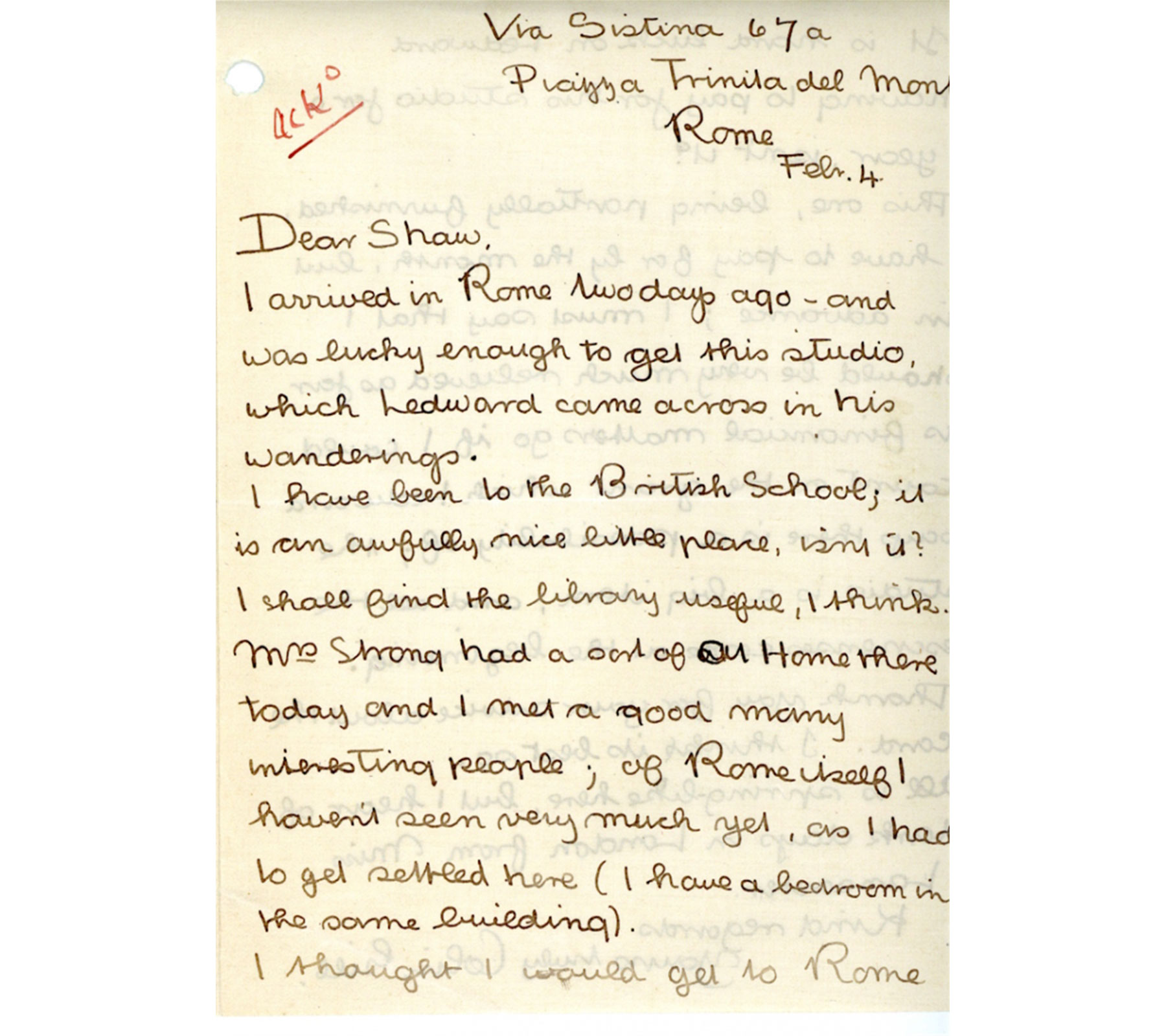
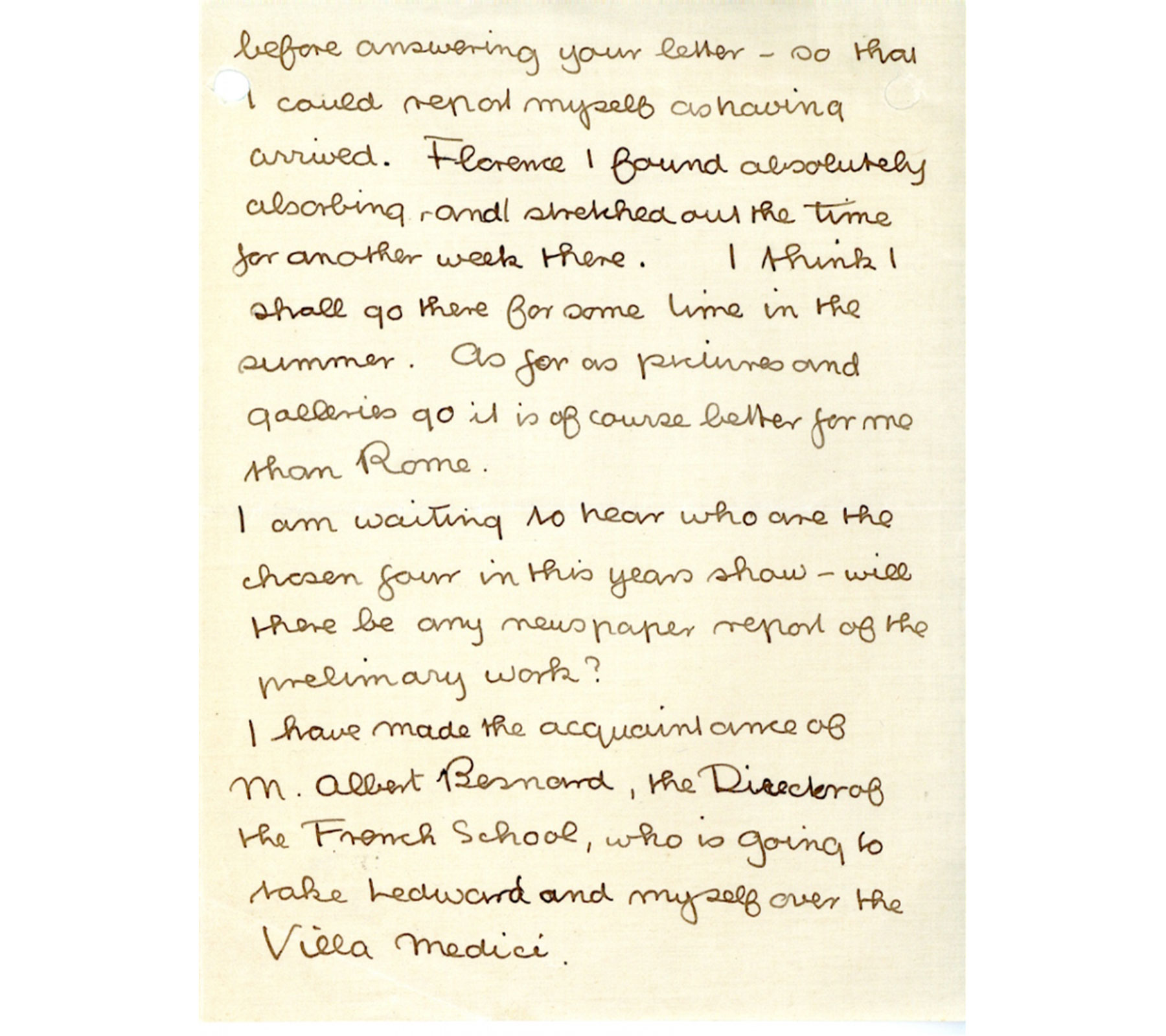
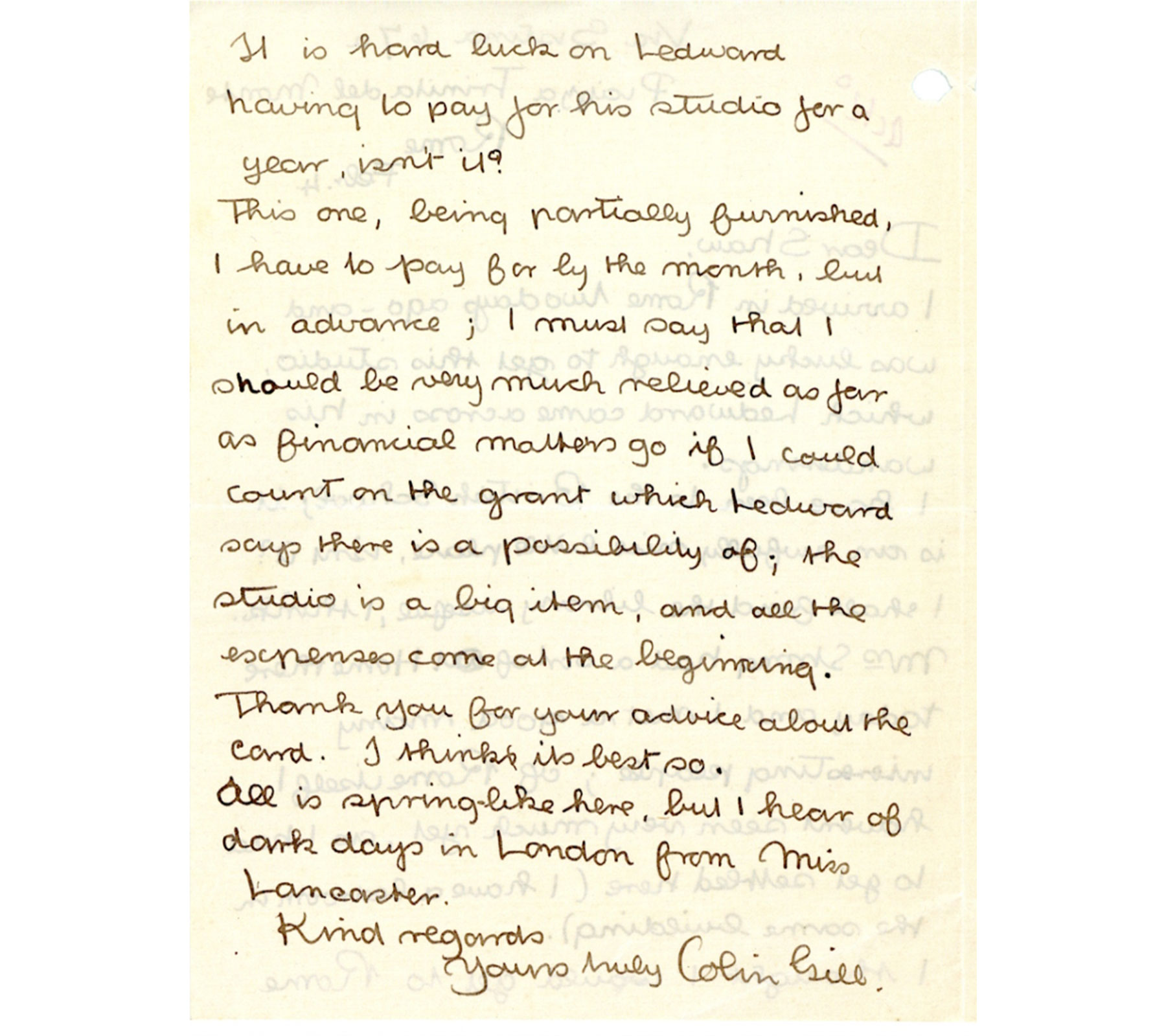
The BSR has collected photographs of some of the major paintings Colin Gill (1892-1940) made while he was at the institution. The black and white photographs reveal as much about the process of documenting artwork, and its limitations, as it does about the art itself. There is also a substantial record of correspondence between Colin Gill and Sir Evelyn Shaw, the first Honorary Secretary General of the British School at Rome.
These letters reveal Gill’s excitement at being selected as the first Rome Scholar in Decorative Painting.
Colin Gill’s personal file, Letter to E Shaw, p.1 (BSR Fine Arts Archive)
Colin Gill’s personal file, Letter to E Shaw, p.2 (BSR Fine Arts Archive)
Colin Gill’s personal file, Letter to E Shaw, p.3 (BSR Fine Arts Archive)
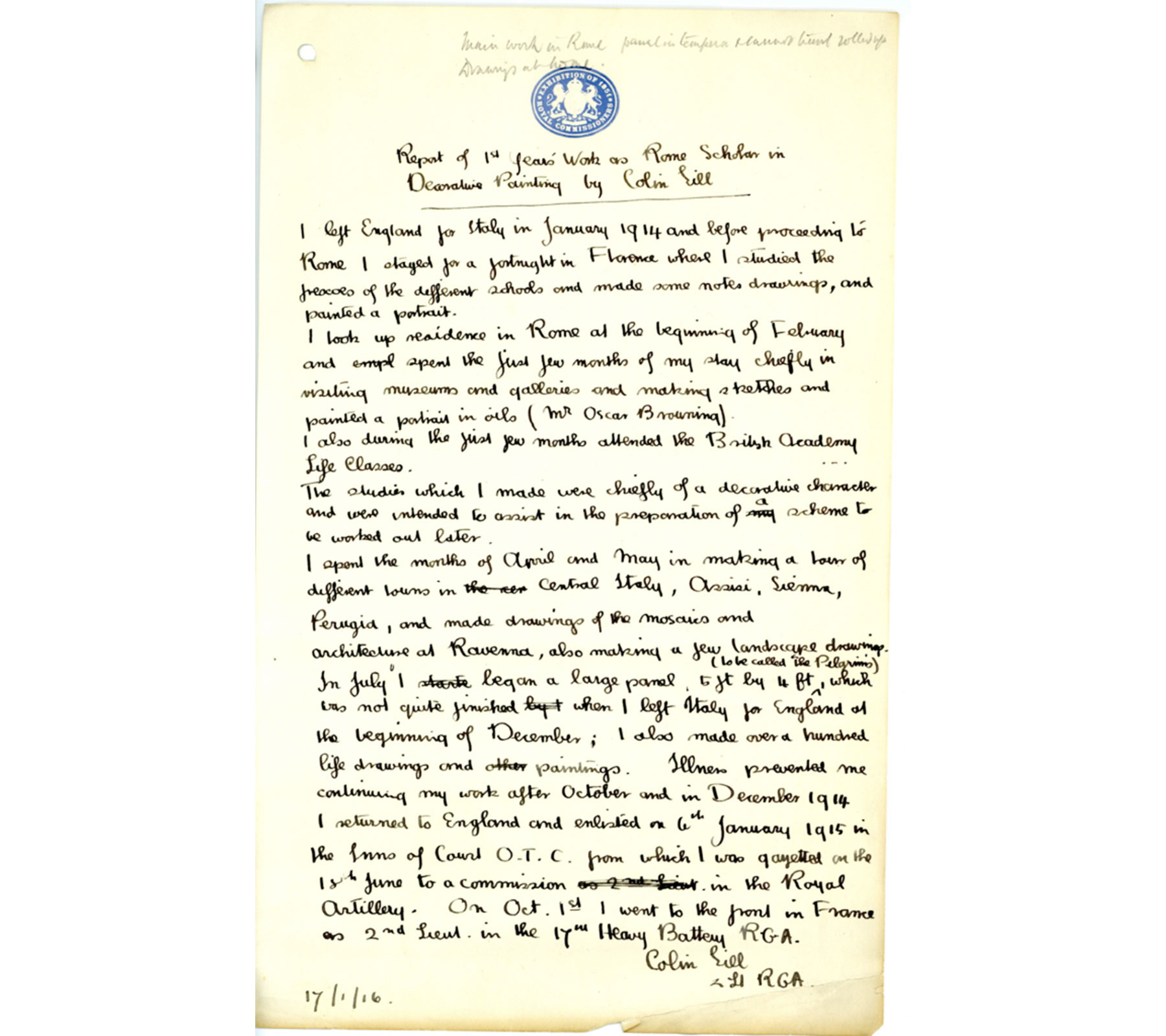
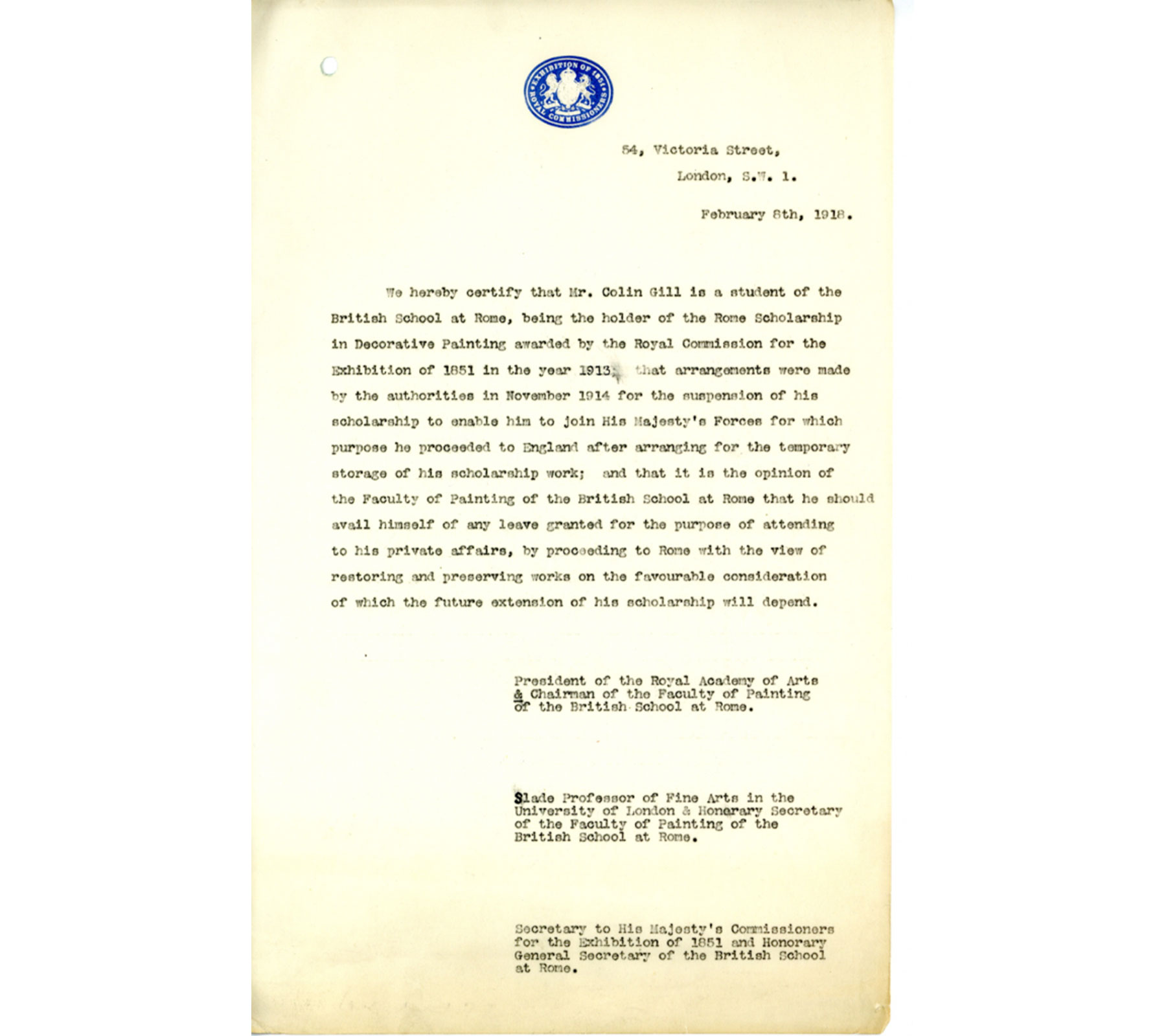
Other letters detail the suspension of his studies during World War One.
Colin Gill’s personal file, Certificate, 1916 (BSR Fine Arts Archive)
Colin Gill’s personal file, Report, 1916 (BSR Fine Arts Archive)
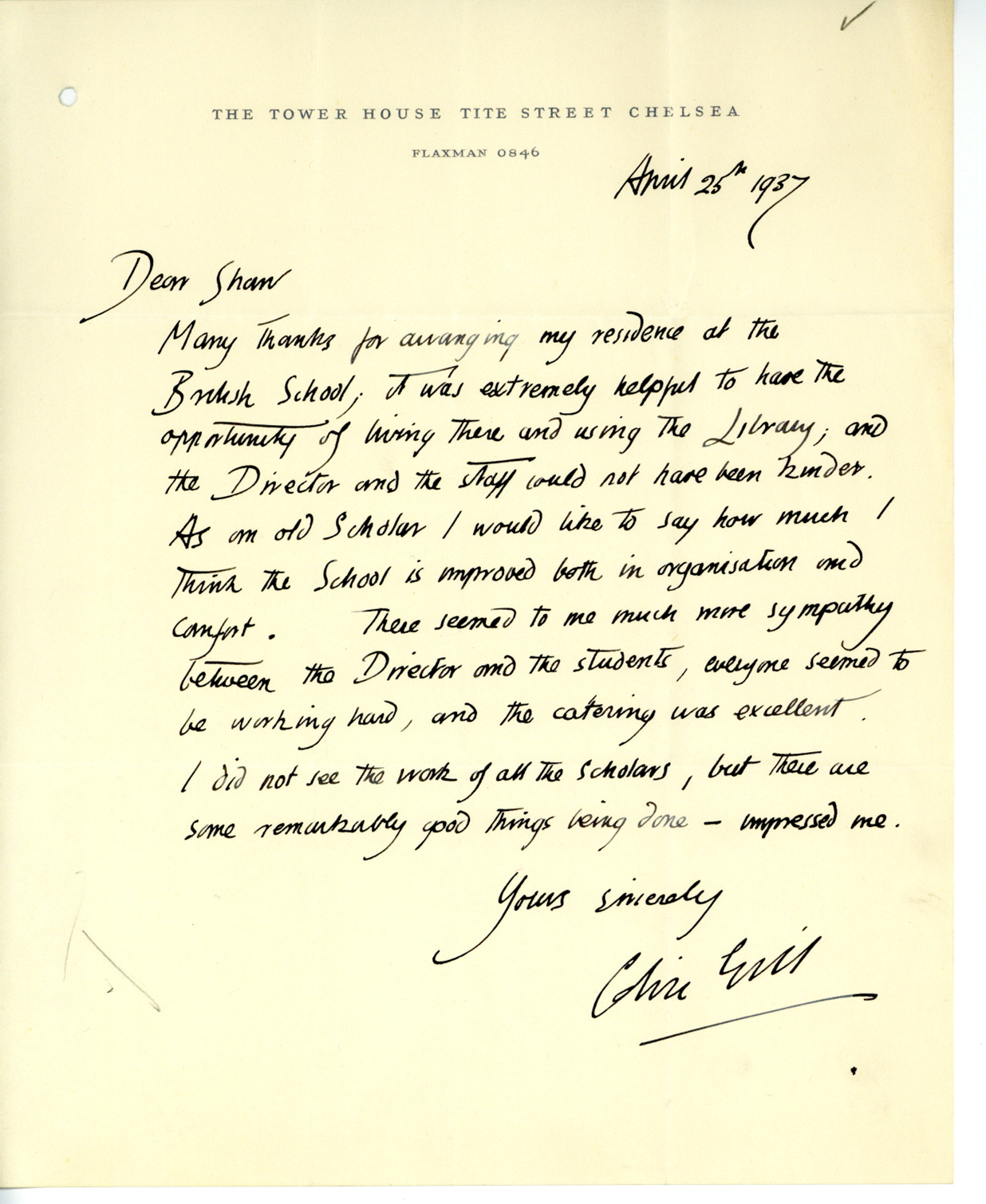
He even visited later in 1937, returning as an “old Scholar”.
Colin Gill’s personal file, Letter from Gill to E Shaw, 1937 (BSR Fine Arts Archive)
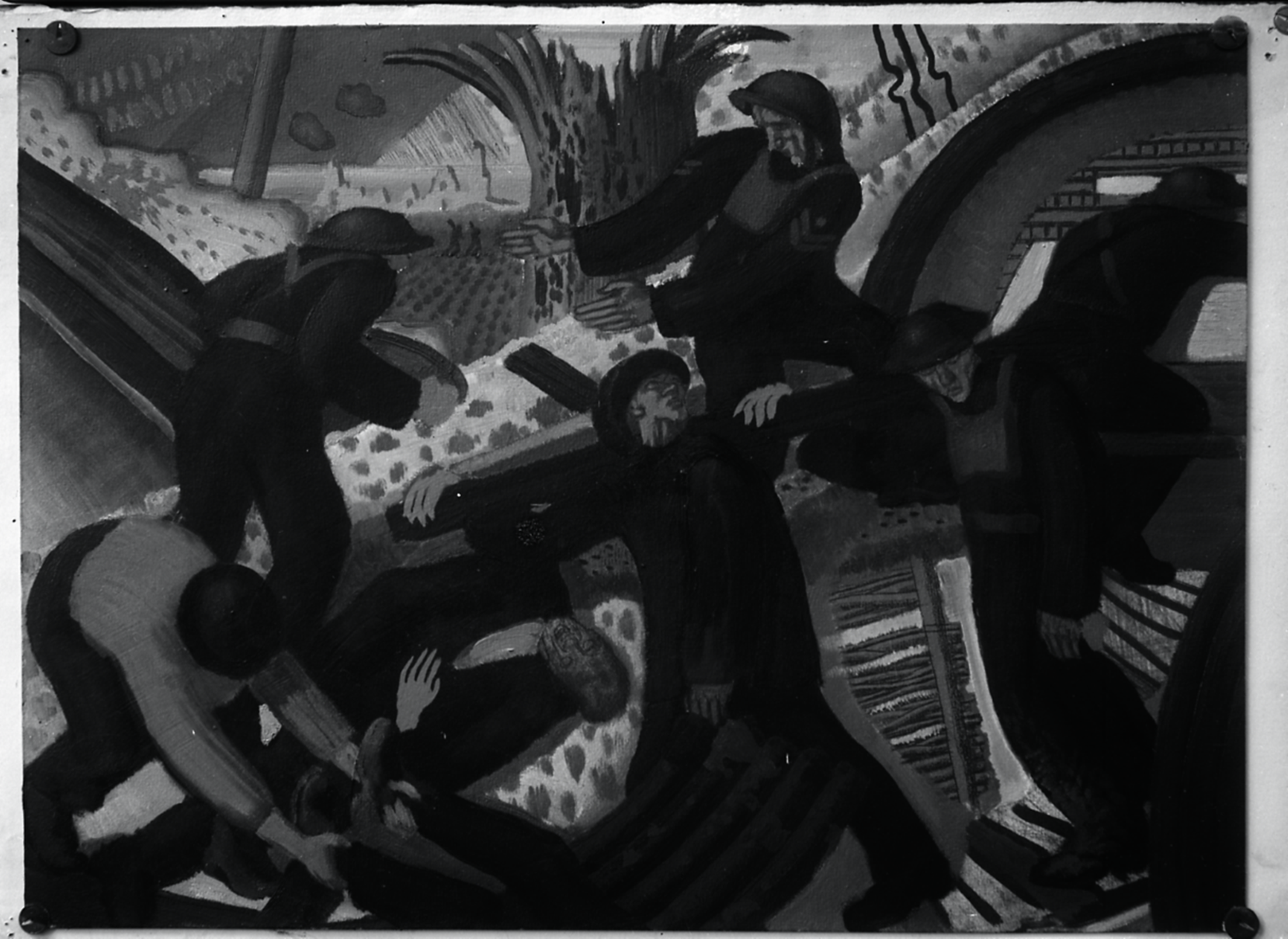
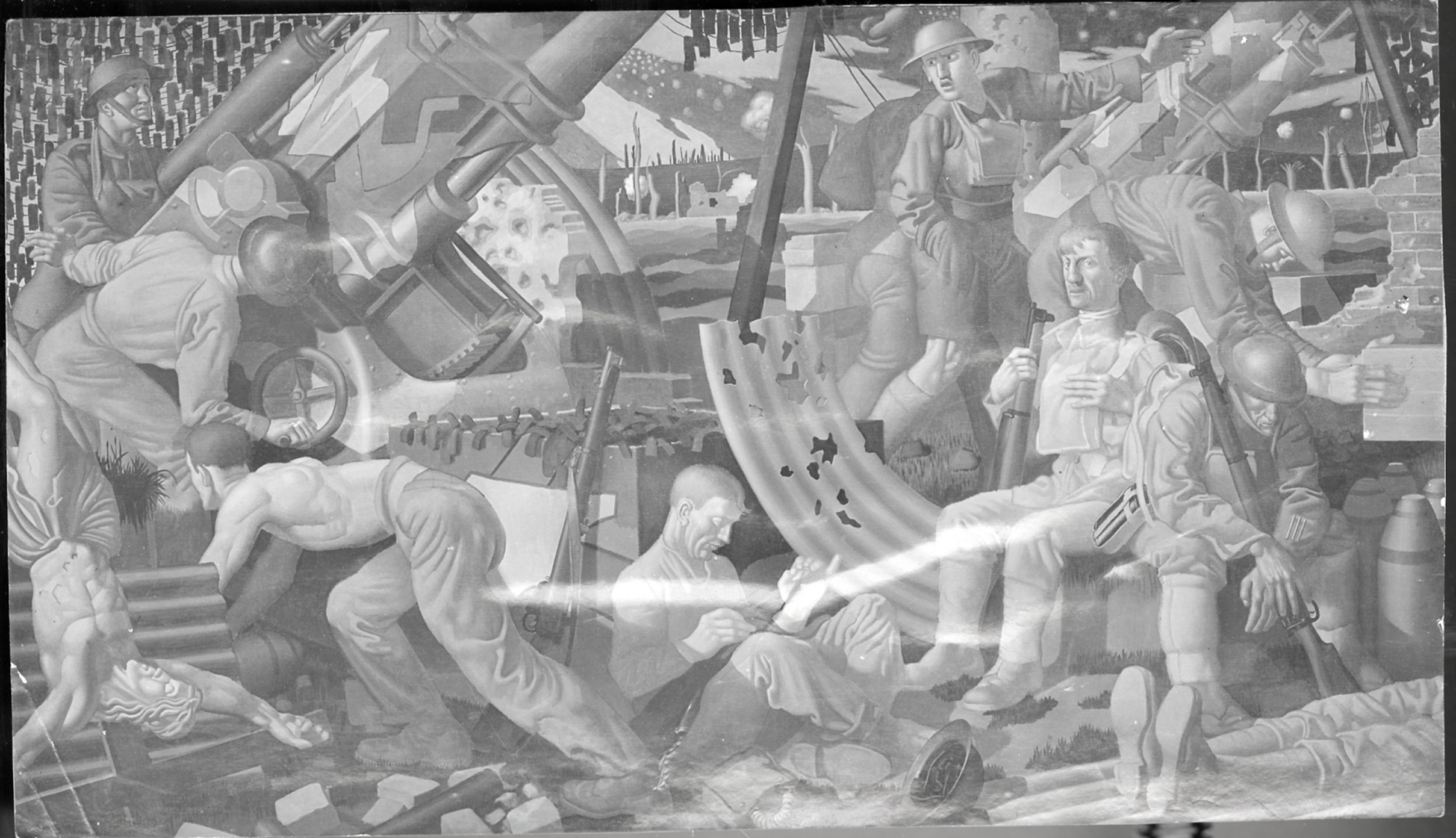
The BSR kept several images as records of Gill’s work. This photograph shows several soldiers carrying steel beams and moving sandbags. This formed part of Gill’s post-War engagement as a War Artist. It is an earlier version of his work Canadian Observation Post (Canadian War Museum, 1920), which showed the figures in similar poses. The final version went on to depict representations of shell shock, and places soldiers amongst the ruins of the building they had occupied.
Colin Gill Collection, photo of Canadian Observation Post, 1920 (BSR Fine Arts Archive)
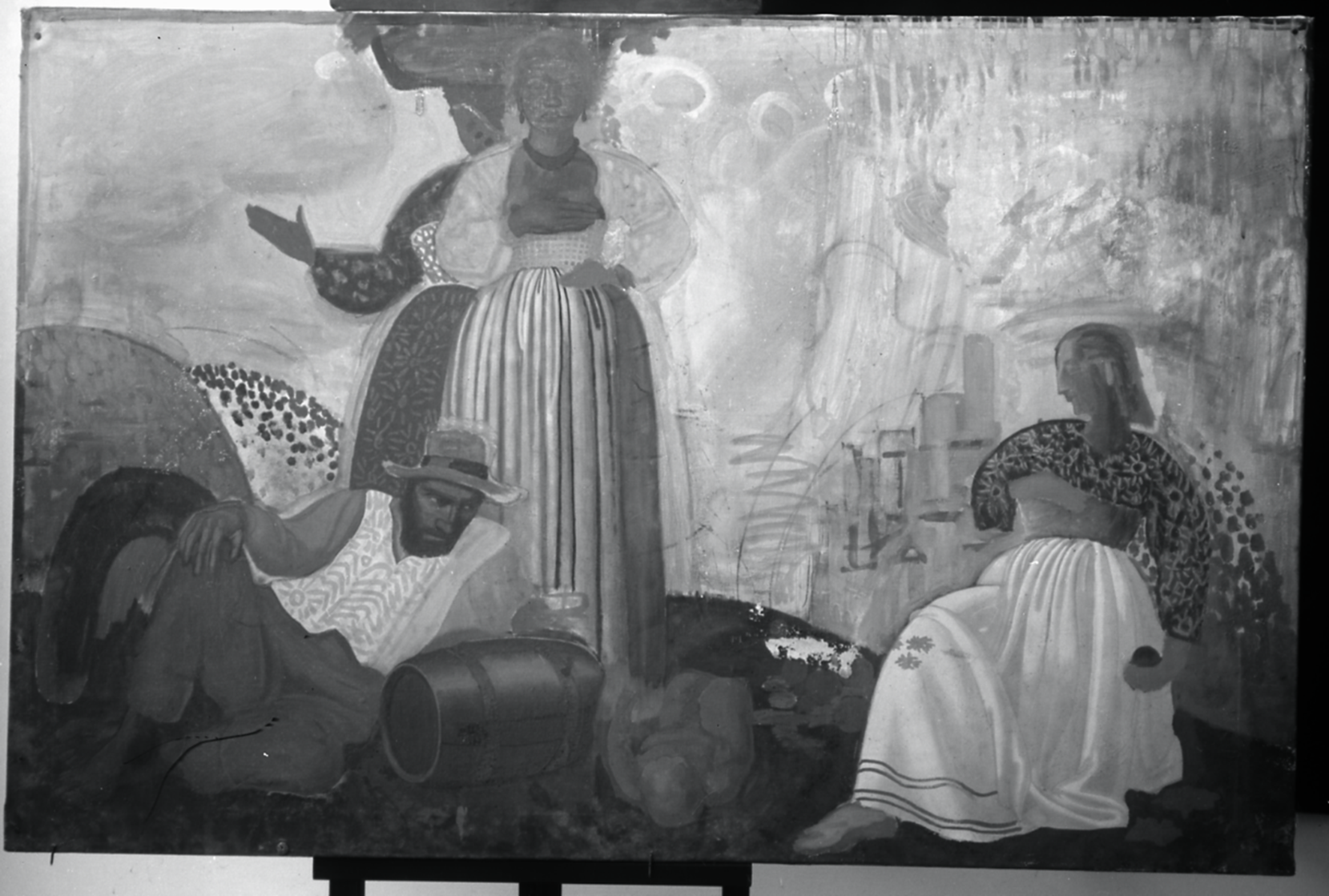
This is an image of Italian figures in a rural setting. It is a rough work, most likely done at Anticoli Corrado, where Gill stayed for much of his time as a Rome Scholar.
Colin Gill Collection, photo of Italians, c.1921 (BSR Fine Arts Archive)
This is a photograph of one of Gill’s more famous pieces, Heavy Artillery (Imperial War Museum, 1919). This painting was intended for the Hall of Remembrance. It depicts teams of soldiers working artillery guns, with others sitting close by. The horrors of war are juxtaposed against bright colours, vivid contrasts which, because of the technology of the time, have not been captured in the black and white photograph.
Colin Gill Collection, photo of Heavy Artillery, 1919 (BSR Fine Arts Archive)
Finally, this is an image of Gill’s most enduring piece which he created whilst at the BSR, Allegro (1921); (the work is also referred to at several different points in time as Allegory and Allegria). Several of his fellow Rome Scholars are depicted in this painting, including Alfred Hardiman and his wife, and, on the left holding the birdcage, Winifred Knights. The metaphor represents Gill’s infatuation with Knights, whom he once commented held his heart “like a bird in a cage”.
Colin Gill Collection, photo of Allegory, 1921 (BSR Fine Arts Archive)
Where would you like to go next? Who would you like to meet?
Meet Colin Gill (1892-1940)
Learn more about Mural Painting at the BSR, 1913-1930
Learn more about Photography at the BSR, 1913-1930
Please click on an image to enlarge it.
Colin Gill Collection, photo of Heavy Artillery, 1919 (BSR Fine Arts Archive)Colin Gill Collection, photo of Italians, c.1921 (BSR Fine Arts Archive)Colin Gill Collection, photo of Canadian Observation Post, 1920 (BSR Fine Arts Archive)
For a full bibliography and further reading, see here.
We use cookies to ensure that we give you the best experience on our website. If you continue to use this site we will assume that you are happy with it.