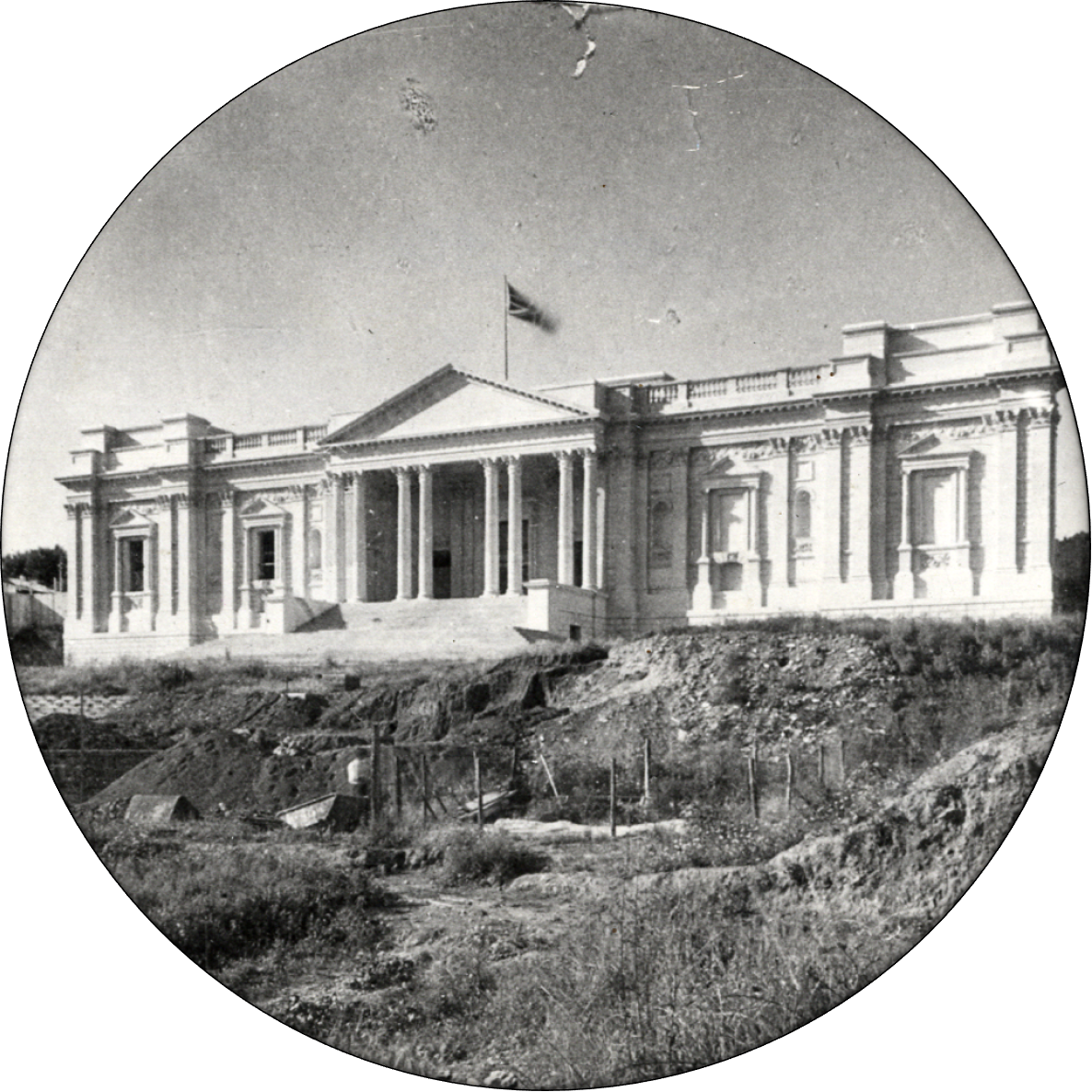
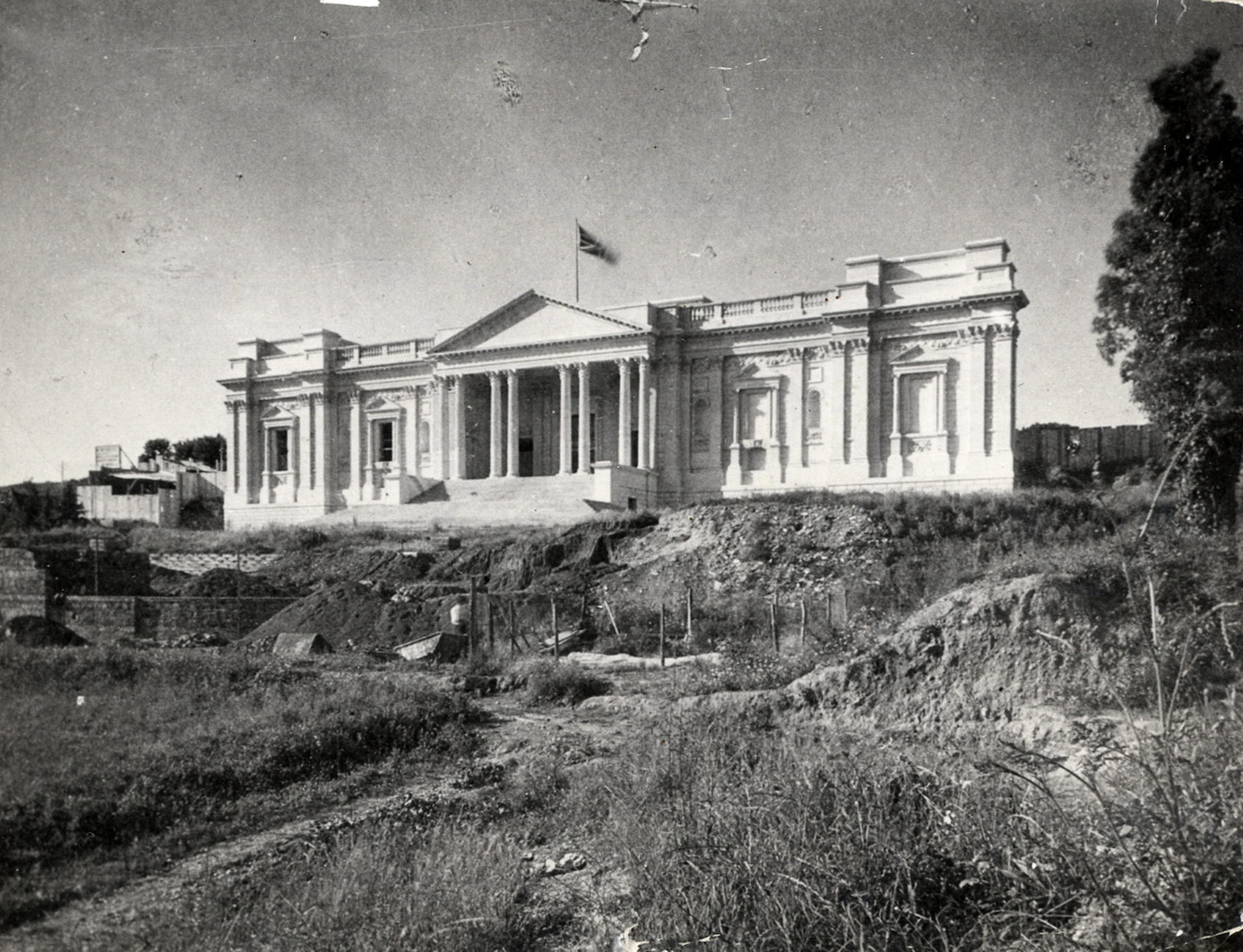
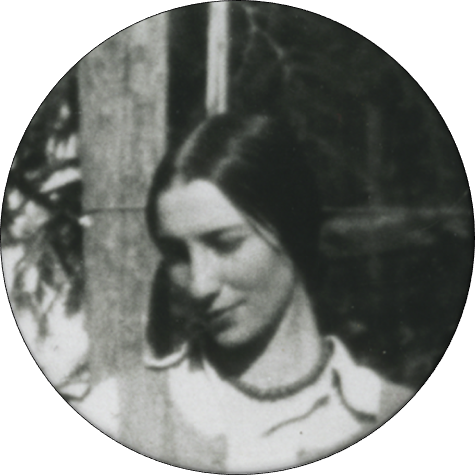
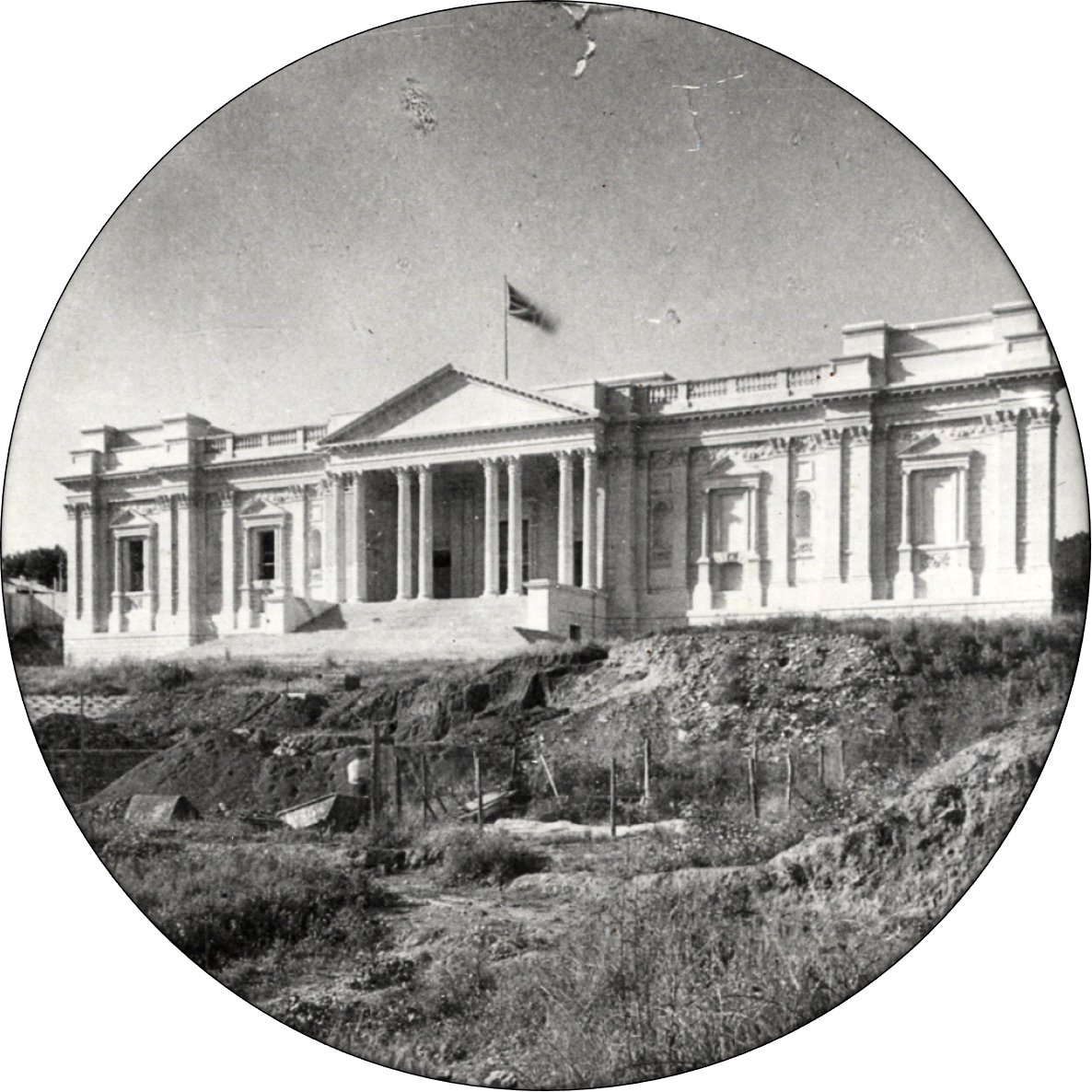
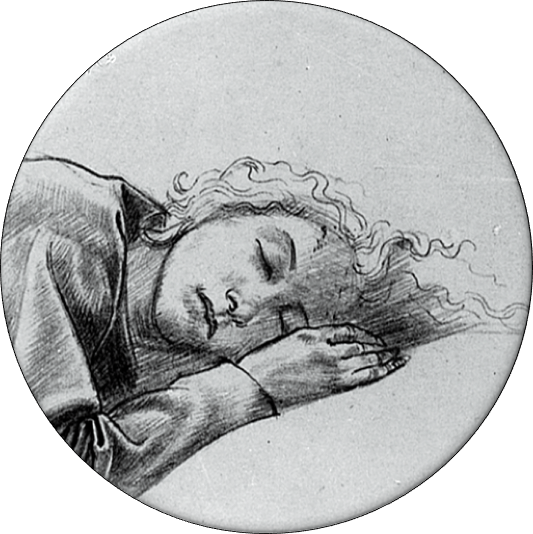
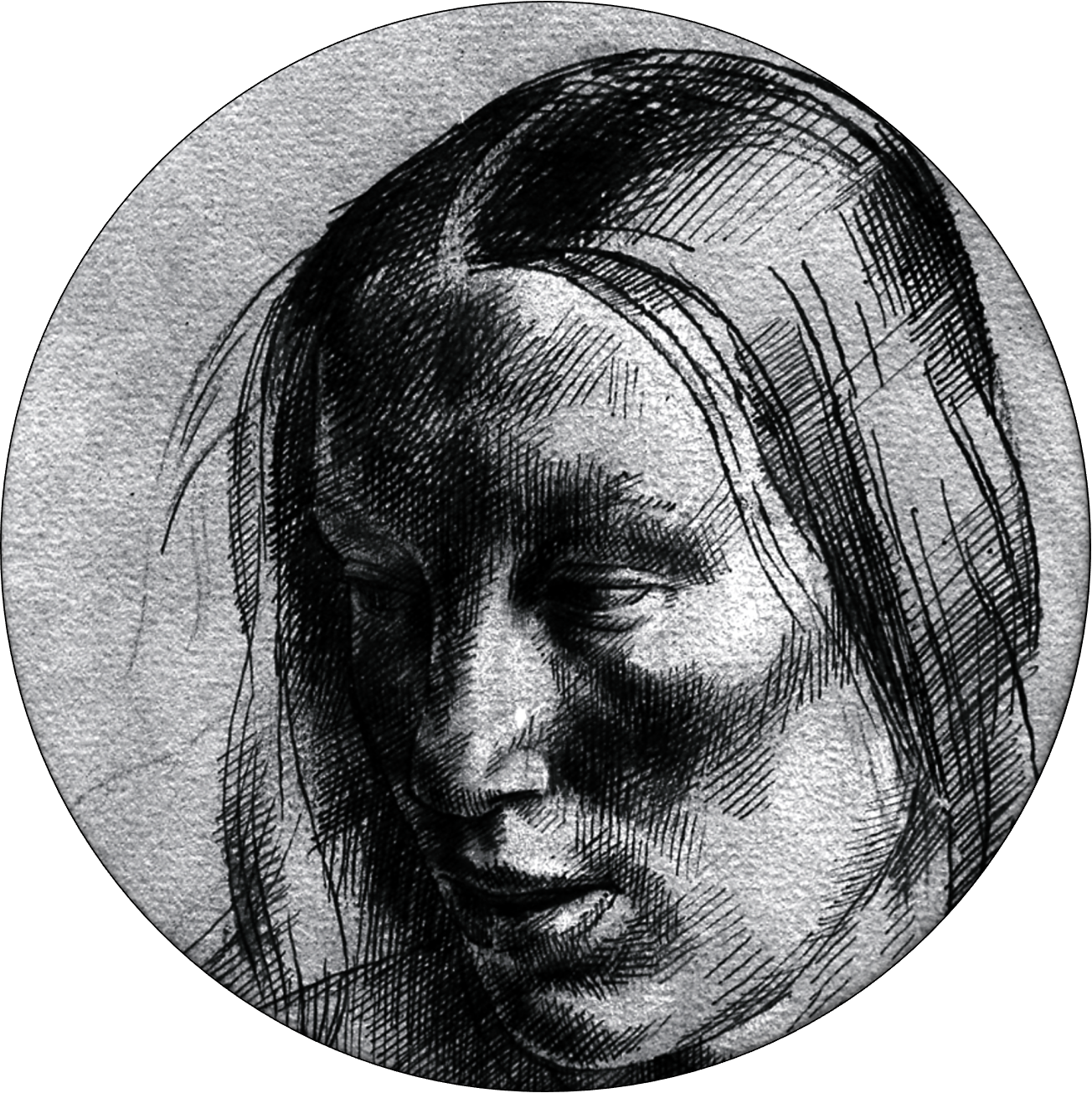
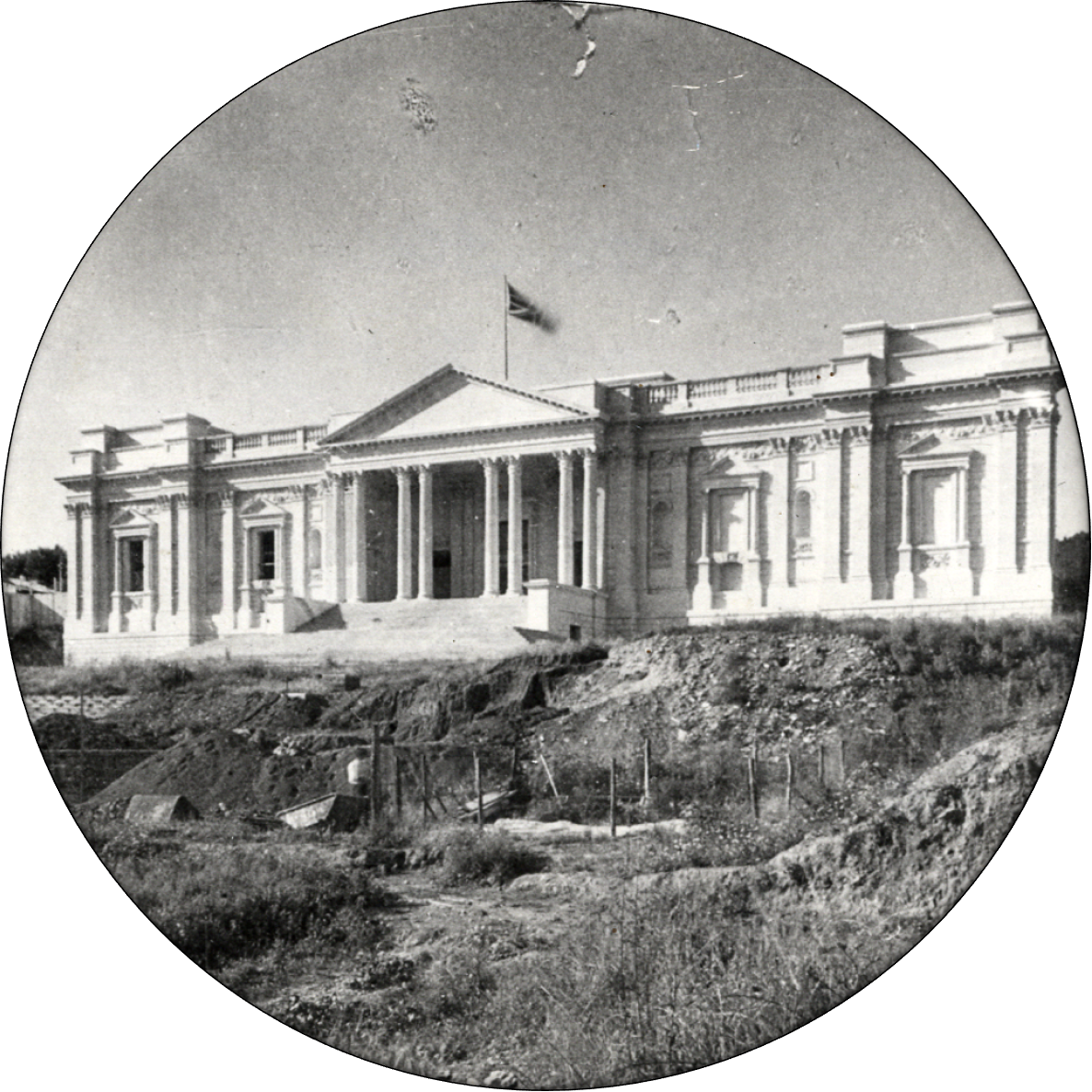
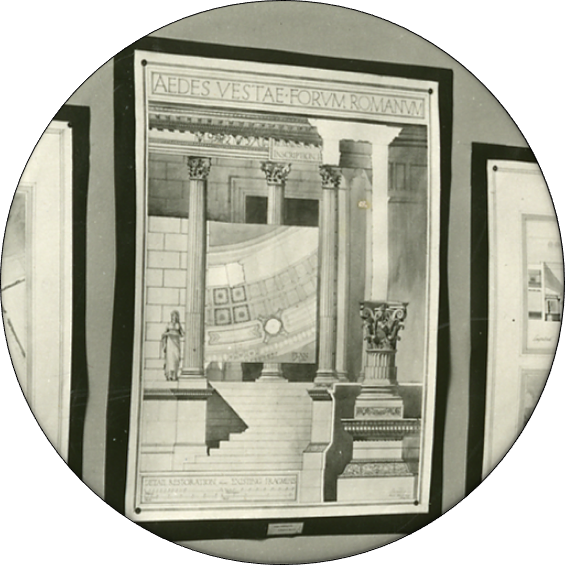
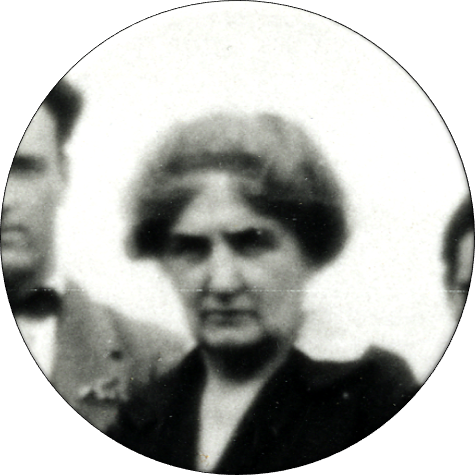
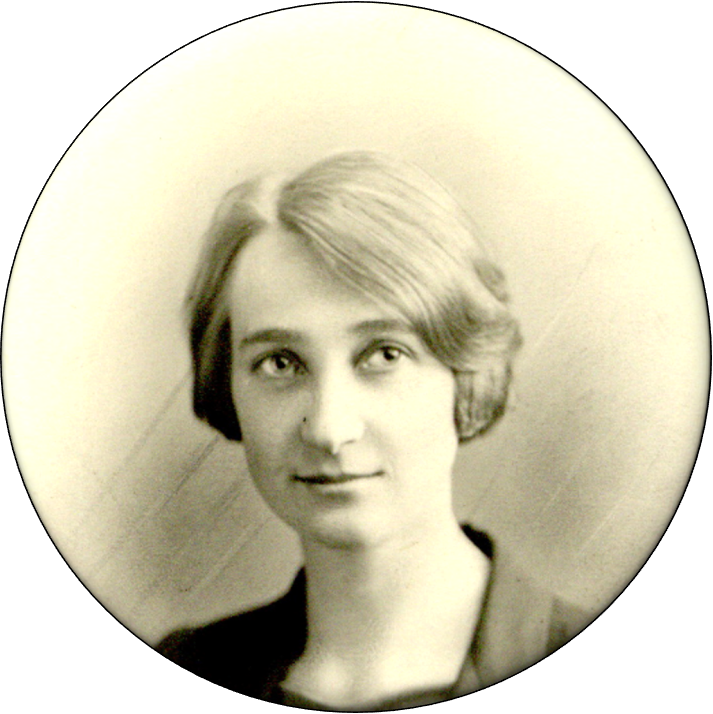
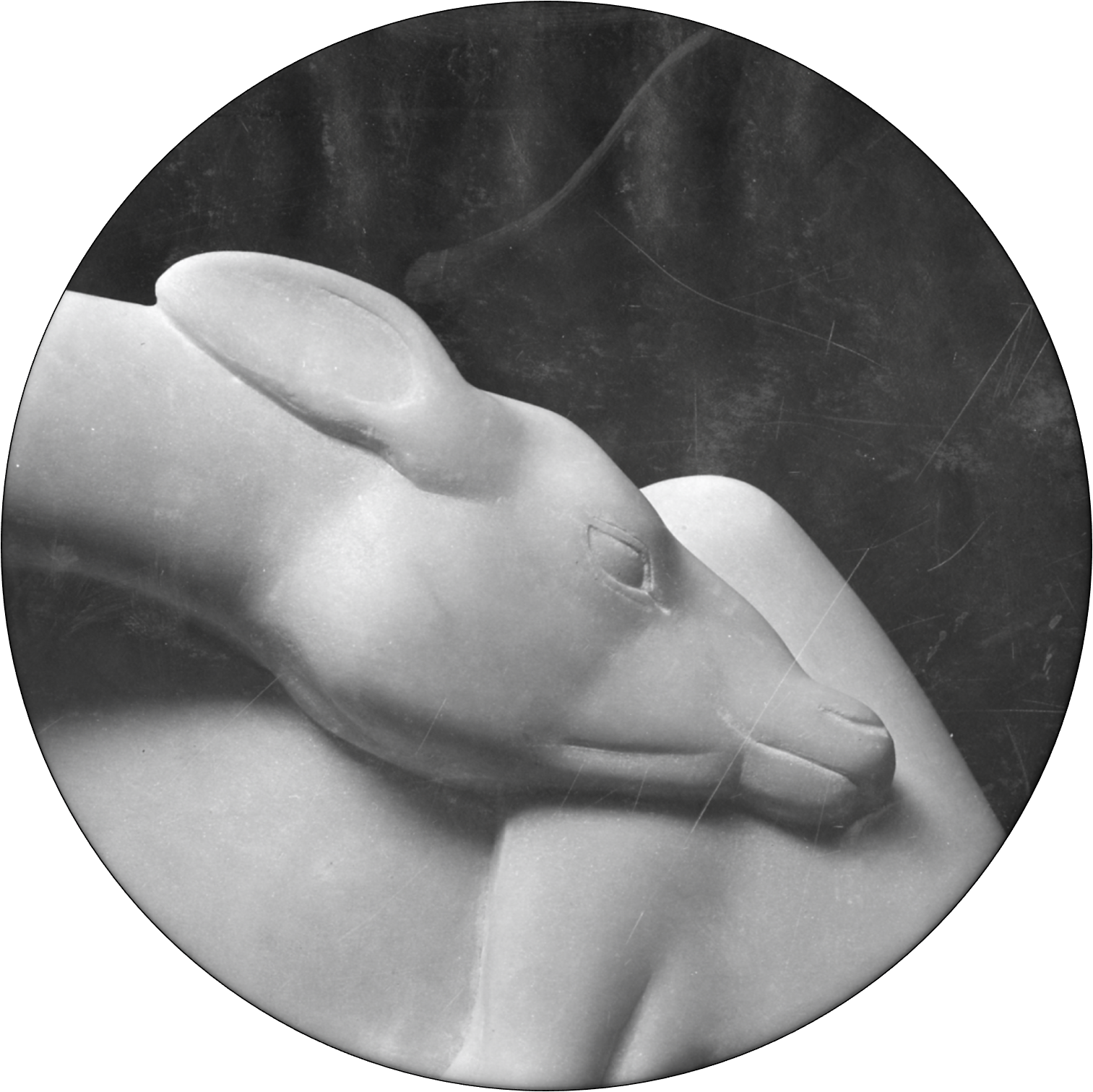
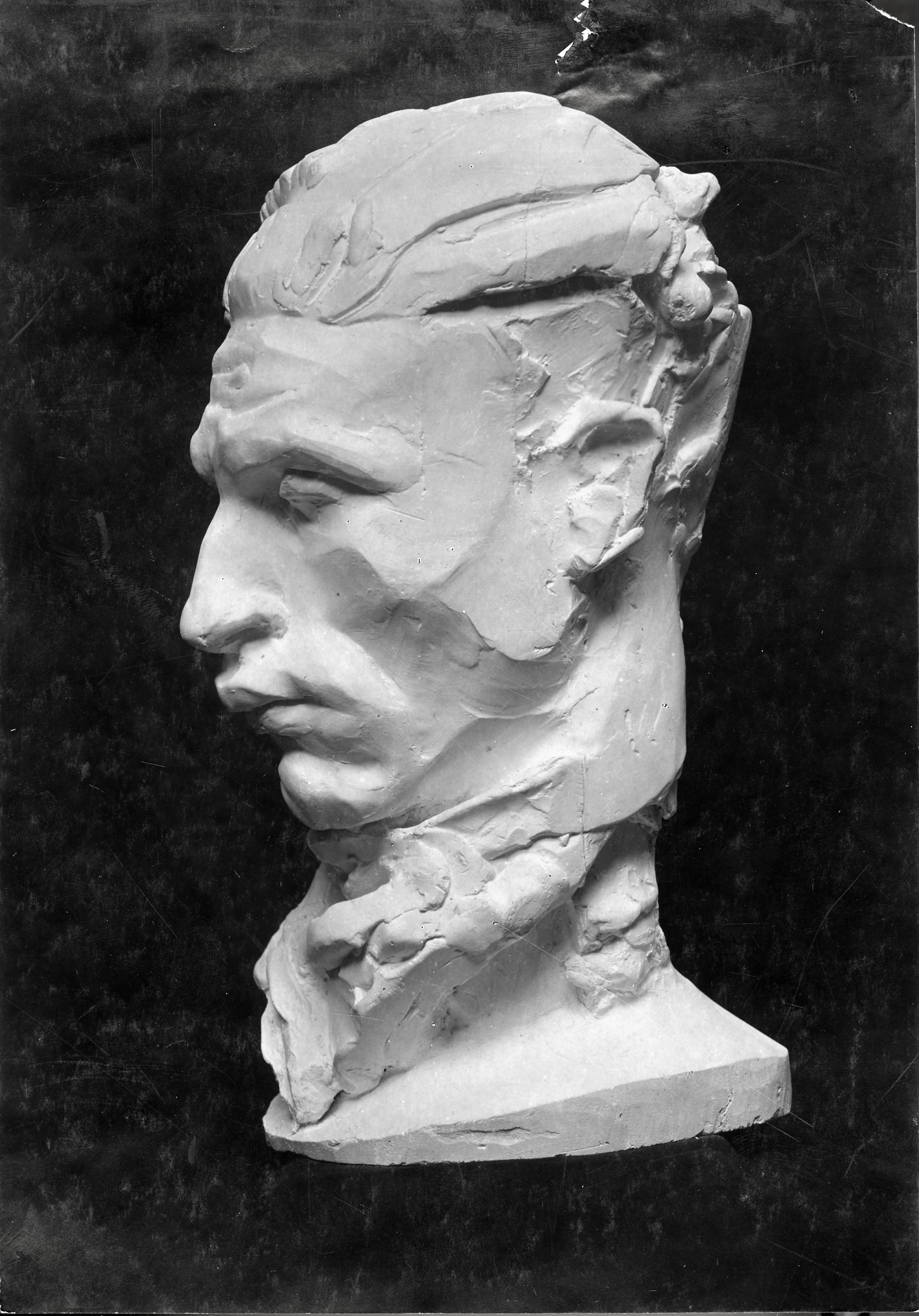
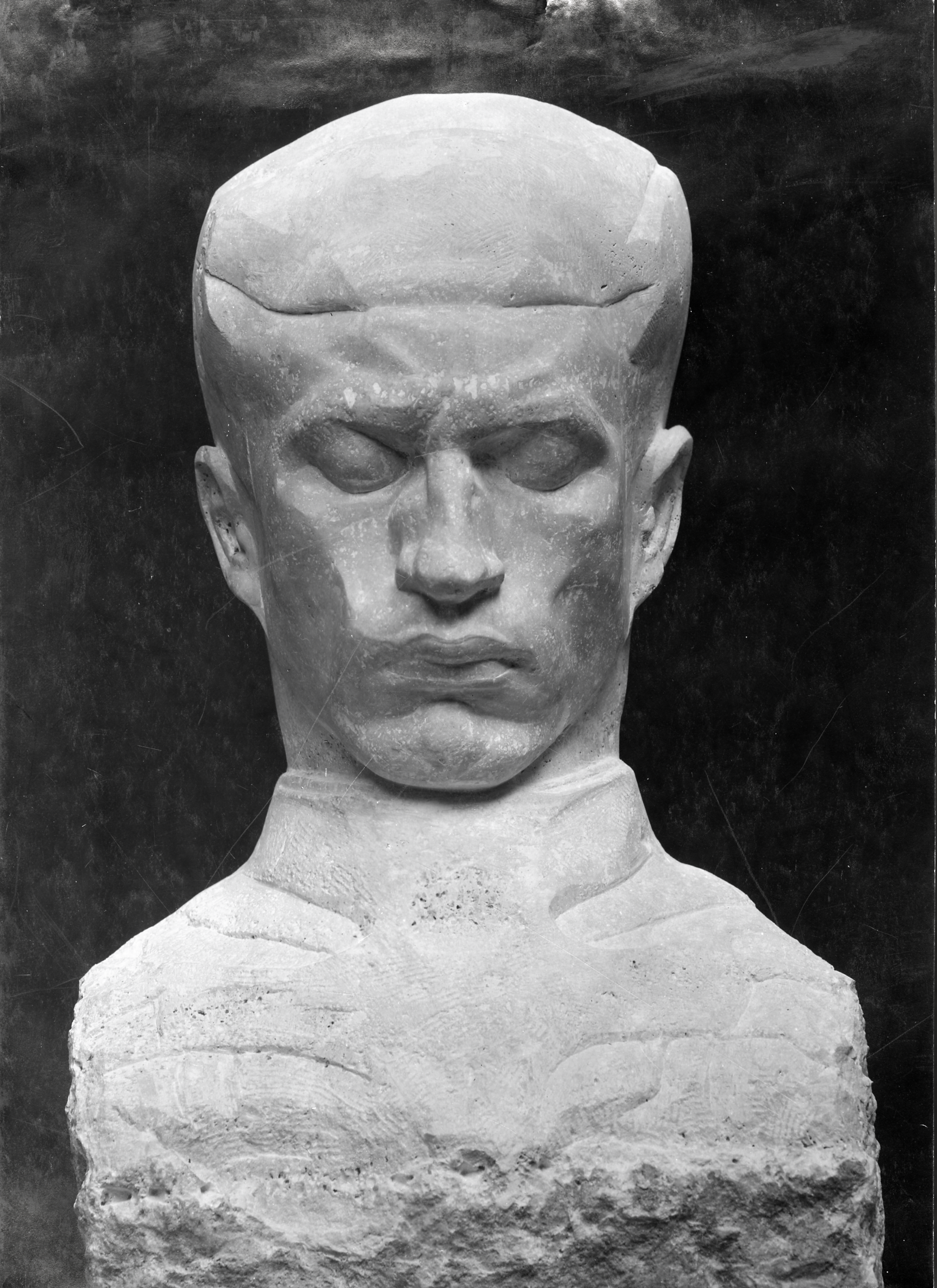
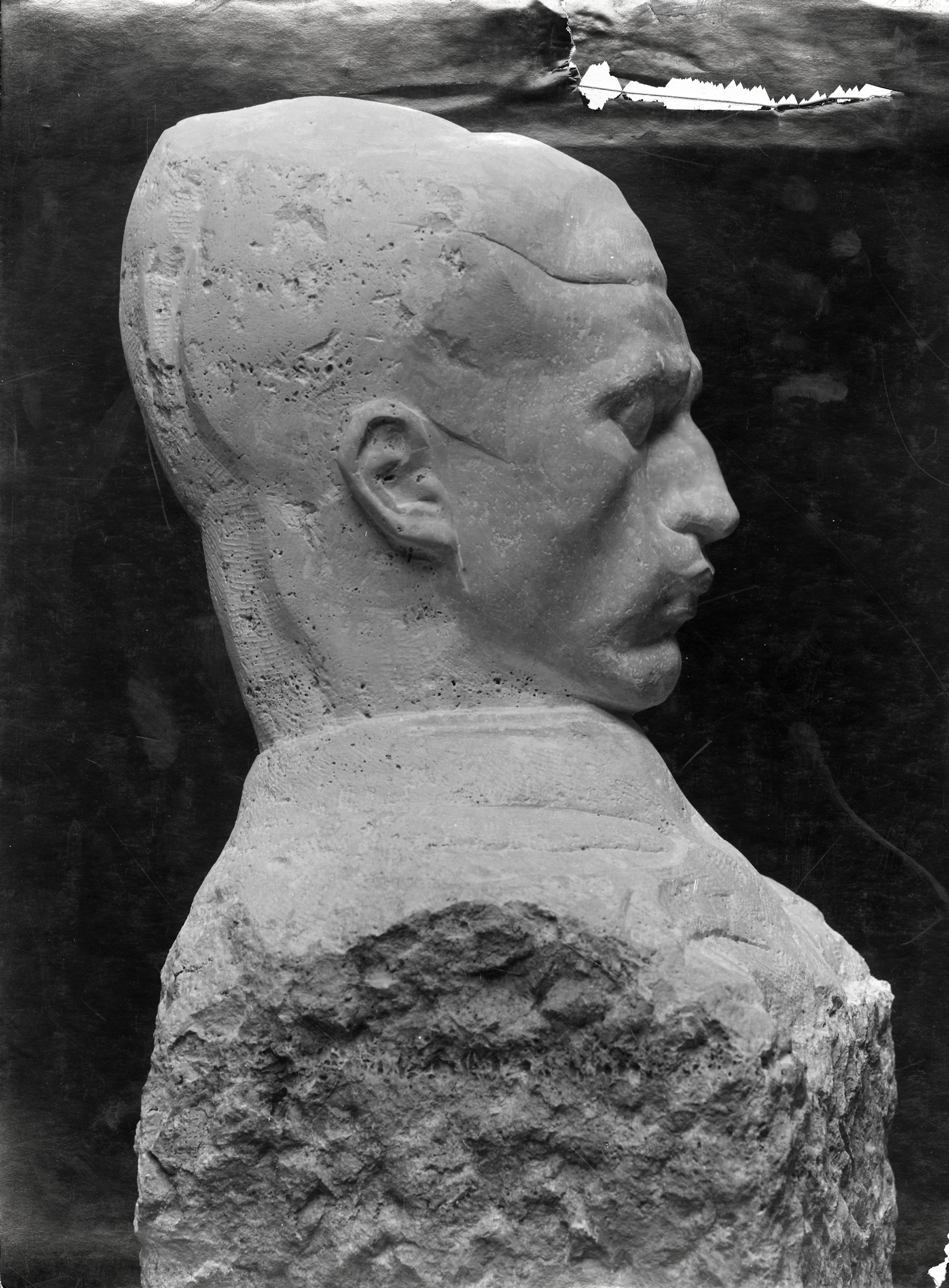
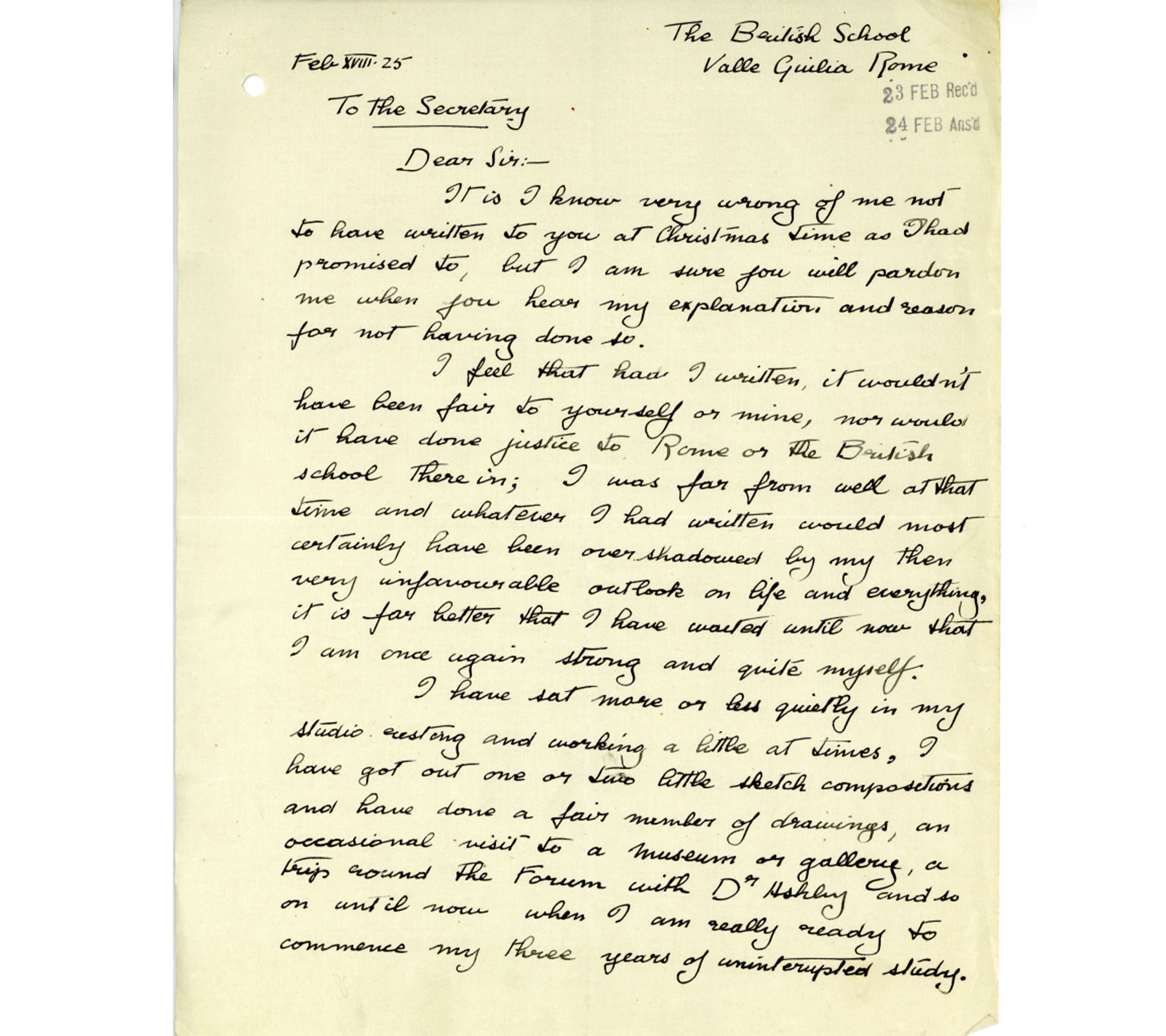
The BSR moved into a new building in Rome’s Valle Giulia near the Borghese Gardens in 1916. This impressive structure, adorned with Corinthian-style columns and a portico, was originally designed as the British pavilion for the International Exhibition of Art in 1911. The event celebrated 50 years since Italian reunification and attracted more than 7 million visitors.
The Pavilion was designed by Sir Edwin Lutyens, the notable British architect known for his attentiveness to historical architectural styles. The commissioners of the building, the British Board of Trade, wanted to maintain a strict and official classicist style to represent the country at the international event. Lutyens, who had never been to Rome prior to designing the Pavilion, studied the context through books, prints, and engravings. Lutyens incorporated a reference to the western front of St. Paul’s Cathedral, London in his design for the Pavilion.
The British School at Rome, c.1910s (BSR Photographic Archive, BS Collection)
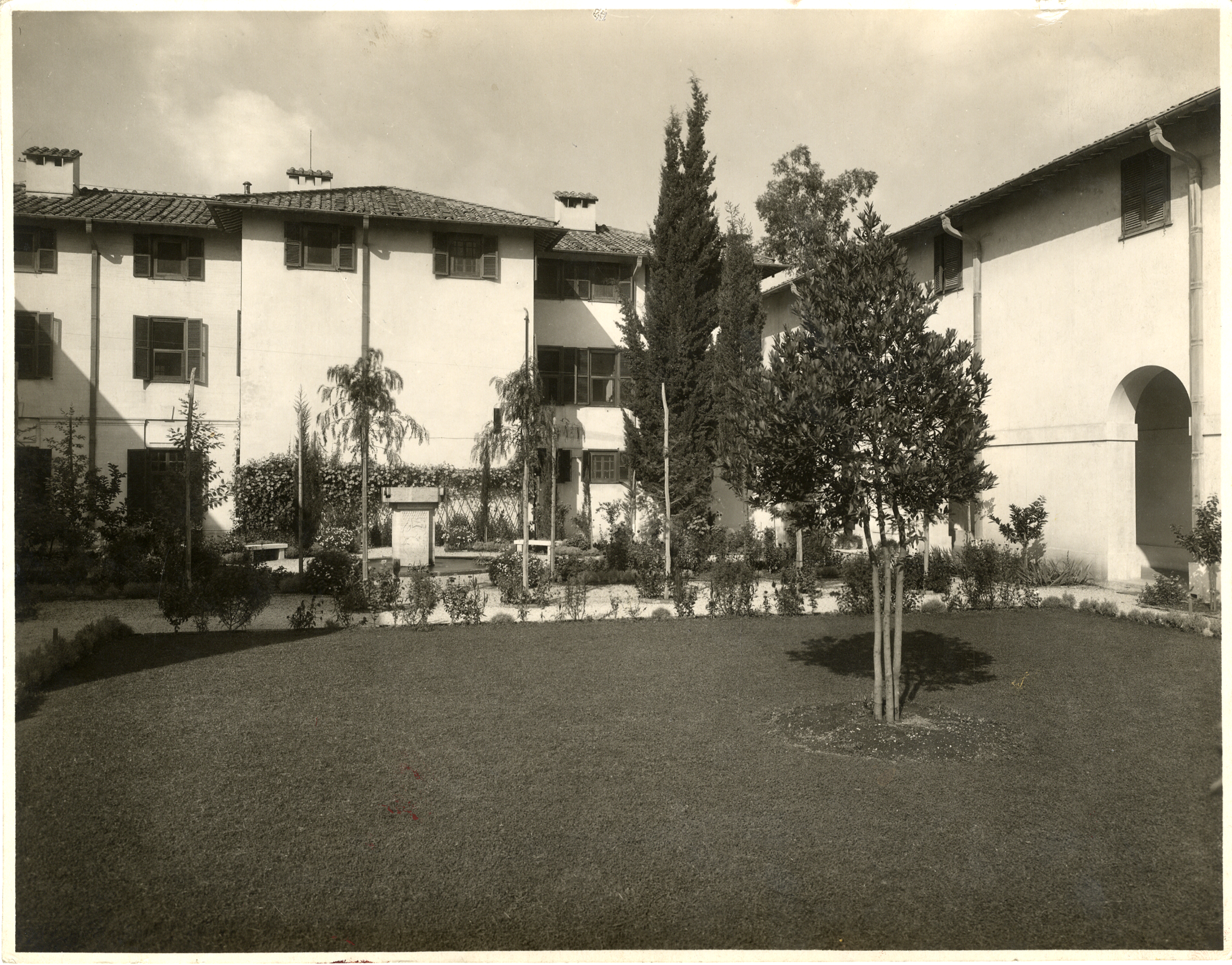
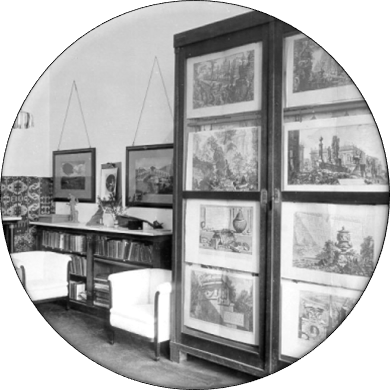
As the result of lobbying by the British Ambassador to Italy, Sir James Rennell Rodd, the Pavilion was donated to Great Britain by the City of Rome. Rennell Rodd had previously put forward the project for an international cultural centre for artists and researchers interested in taking inspiration from Italy’s classical heritage and culture. After the closure of the Exhibition, the original Pavilion was rebuilt in stone, with new foundations and adapted to the needs of a new institution — the BSR. Additionally, three new wings were designed to accommodate the BSR’s library, administrative quarters and artists’ studios. One of the studios was utilised as the common room and displayed Thomas Ashby’s (Director of the BSR from 1906 to 1925) collection of Piranesi prints. The project was complemented with the addition of an exhibition hall and a cortile. This new extension was paid for by the widow of the painter Edwin Austin Abbey as a tribute to her husband.
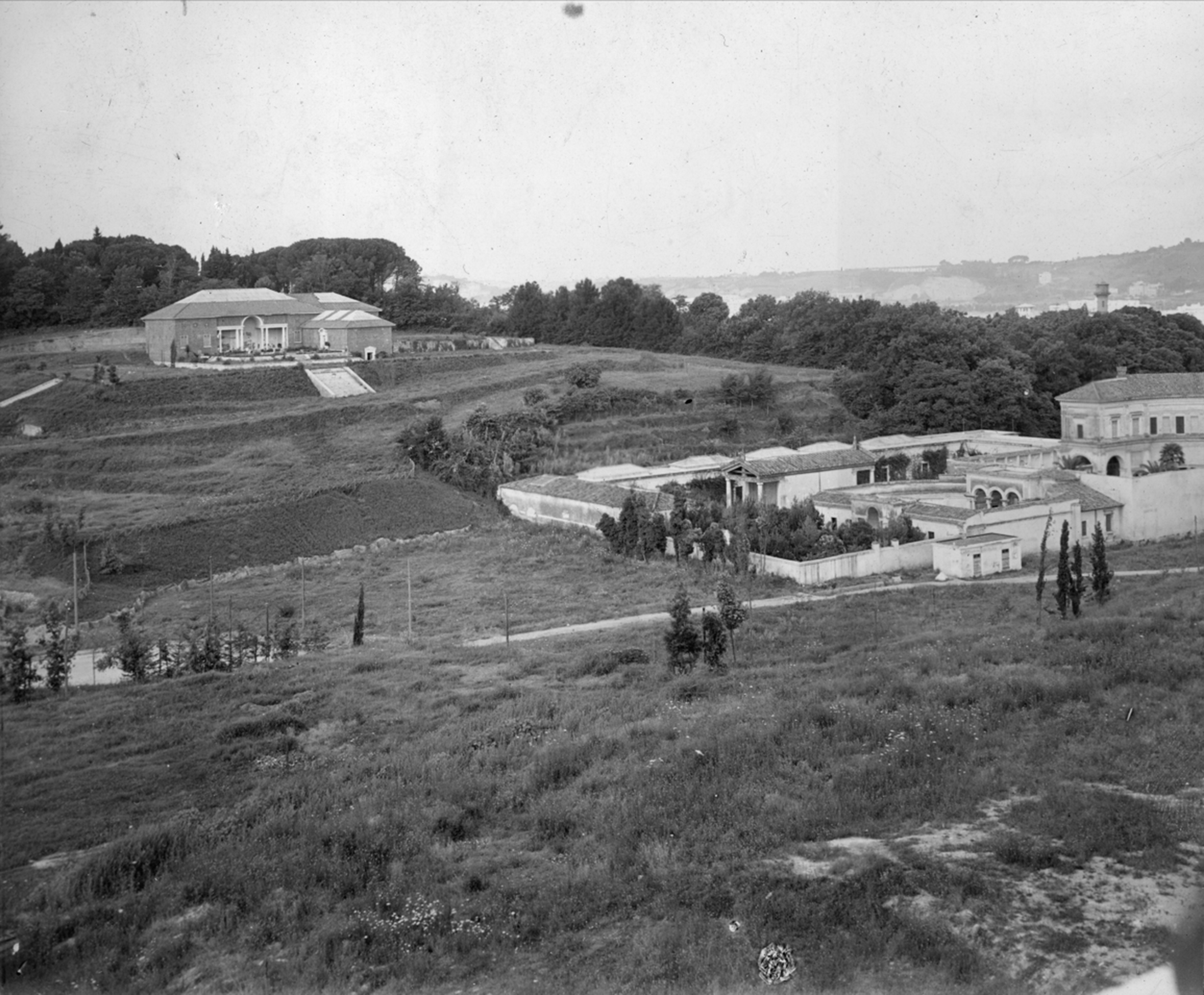
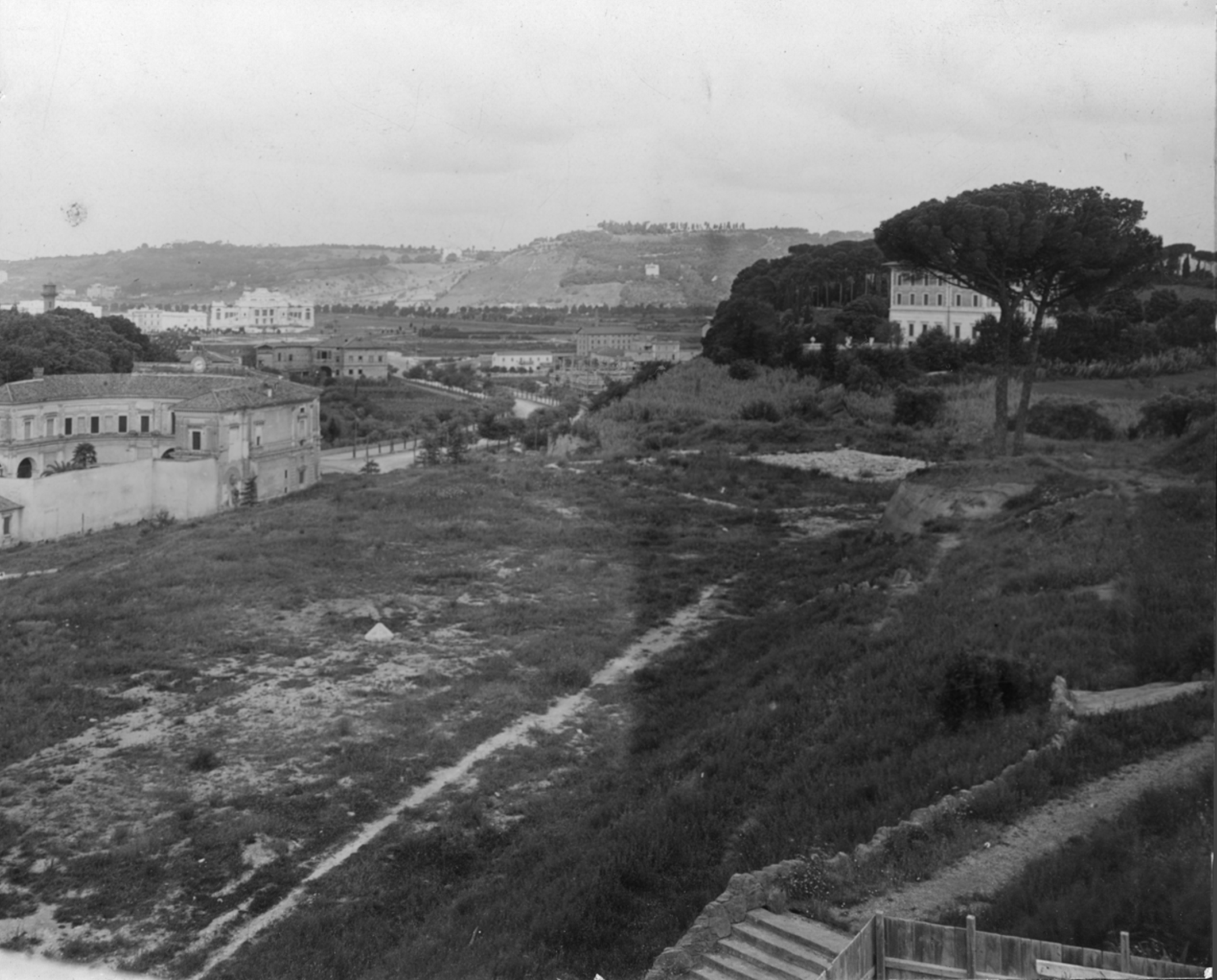
The view looking south west from top of the Façade, 1916 (BSR Photographic Archive, BS Collection)
Lutyens split his time at the BSR with the large-scale project for the Viceroy’s Palace in New Delhi. This, along with some construction problems and the outbreak of the First World War, caused numerous delays and the new building was finally opened on 30 April 1916.
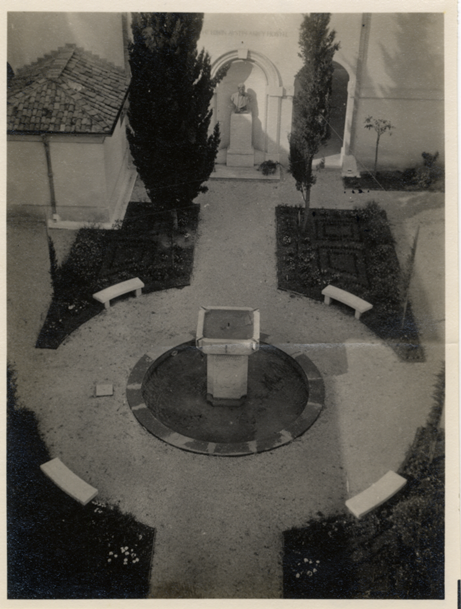
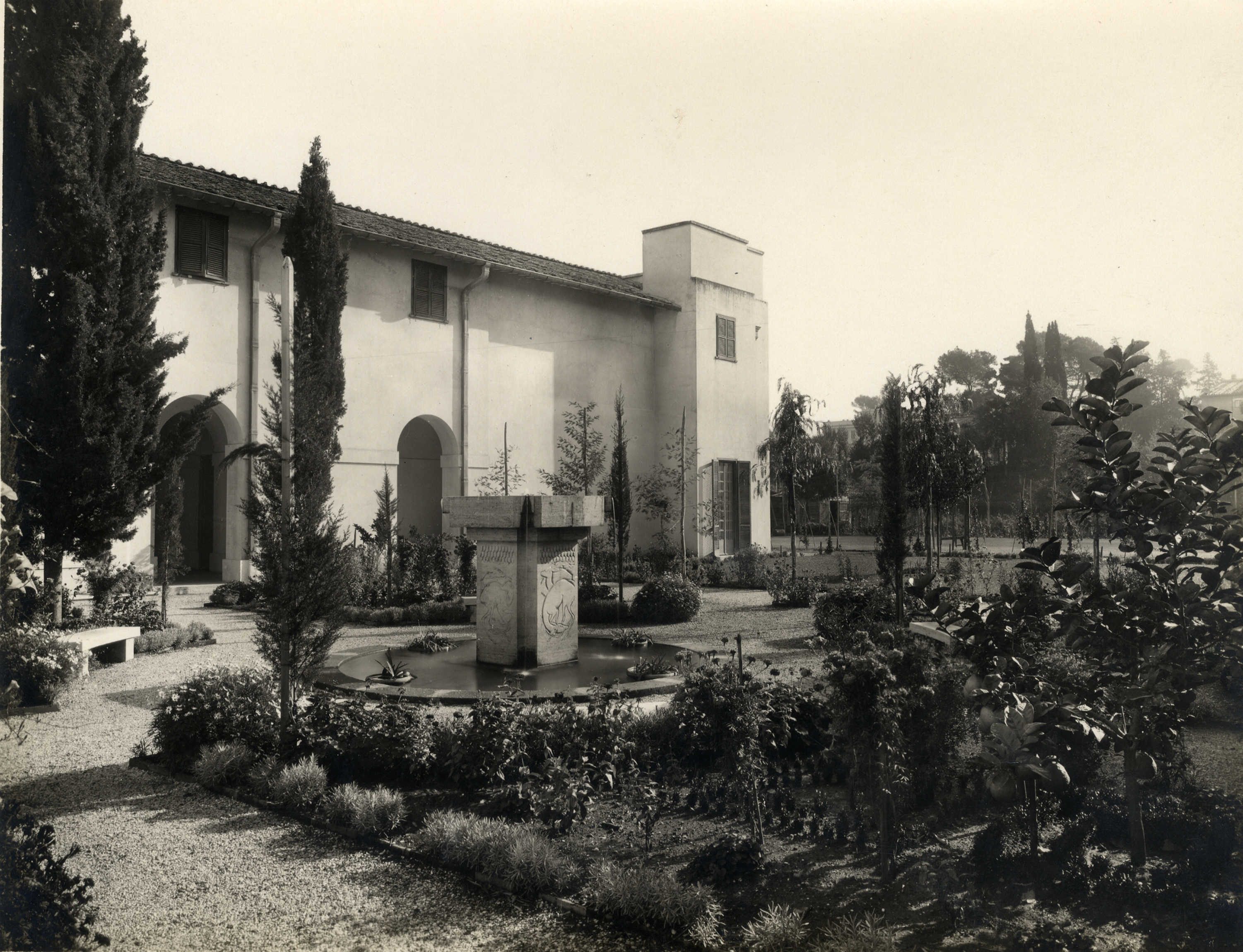
The courtyard of the BSR, facing west, 1927 (BSR Photographic Archive, BS Collection)
During the tenure of the BSR’s Director C. A. Raleigh Radford (1936–45), the new east wing was designed by H. C. Bradshaw, the BSR’s architect and a winner of the very first 1913 Rome Prize in Architecture. During 1962–3, the library extension was completed. 1965 saw an opening of the archaeological workroom presided over by the notable archaeologist Dr Mary Aylwin Marshall, who was known to contemporaries as Molly Cotton. It was Cotton’s generous bequest that allowed for the transformation of the workroom into a modern archaeological laboratory equipped for collaborative post-excavation analyses.
Facilities at the BSR have been updated more recently, thanks to sponsorship and support from the Packard Humanities Institute and Lord and Lady Sainsbury of Preston Candover’s Linbury Trust and other donors. In 2002, the lecture theatre and gallery spaces were opened by the BSR’s President, HRH Princess Alexandra.
Learn about more recent transformation of the BSR’s building here.
Where would you like to go next? Who would you like to meet?
The Rome Prize for Sculpture was established as part of the new Fine Arts Faculty in 1913. Its inception was part of a broader movement to create a new generation of British sculptors who, influenced by the classical and traditional sculpture of Rome, could contribute monumental works to public spaces in Britain. In T. P. Wiseman’s words, the stipulations to entrants in sculpture “reflected rigid conditions of classical study still firmly established in the art schools in Britain at the time”, with entrants asked to submit models, drawings and designs of set subjects. These included nude figures, drapery, hands, feet and architectural features to set sizes. In the final round of the competition entrants had to submit “a design for a Figure group or Relief (as determined by the Faculty of Sculpture) for a given purpose and to a given scale”.
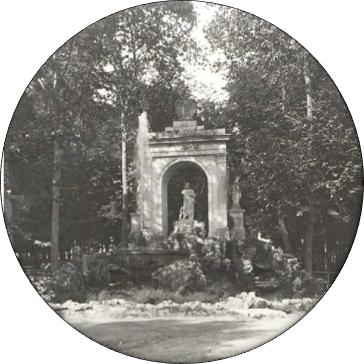
The fountain in the courtyard of the BSR was sculpted by J. R. Skeaping (c.1925). BSR Fine Arts Archive
The British sculptors awarded the Rome Prize in the early period of the BSR include Gilbert Ledward (1888–1960) in 1913 and C. S. Jagger (1885–1934) in 1914, both of whom left the school in order to fight in the First World War. Ledward joined the army and served in Italy, while Jagger never completed his Rome Scholarship after joining the Artists’ Rifles in 1914. Both went on to become some of Britain’s most notable sculptors of memorials to war.
After the war, Alfred F. Hardiman (1891–1949) had a productive residency at the School. He was followed by J. A. Woodford (1893–1976) in 1922, David Evans (1893–1959) in 1923 and John R. Skeaping (1901–80) in 1924. Skeaping was joined by Barbara Hepworth (1903–75), who lived at the BSR for a period with him over 1925–6. Later in this period, scholars included E. Jacot in 1925, H. Wilson Parker in 1927, C. Brown in 1928 and J. F. Kavanagh in 1930. Other sculptors such as Henry Moore and Hepworth visited the school as traveling scholars. Several of these sculptors came from artisanal, metalworking and working-class backgrounds, a result of the emerging focus on design in technical training in British educational institutes.
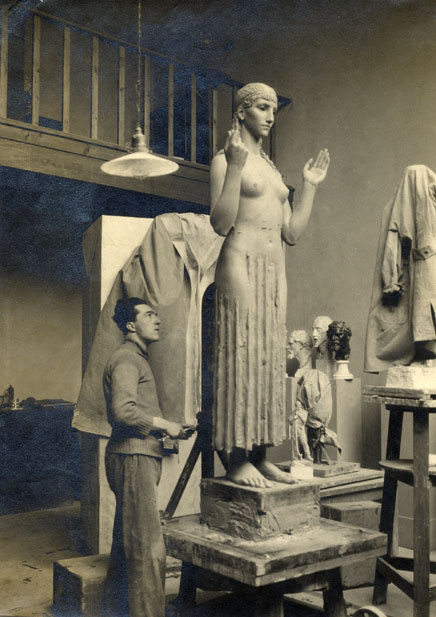
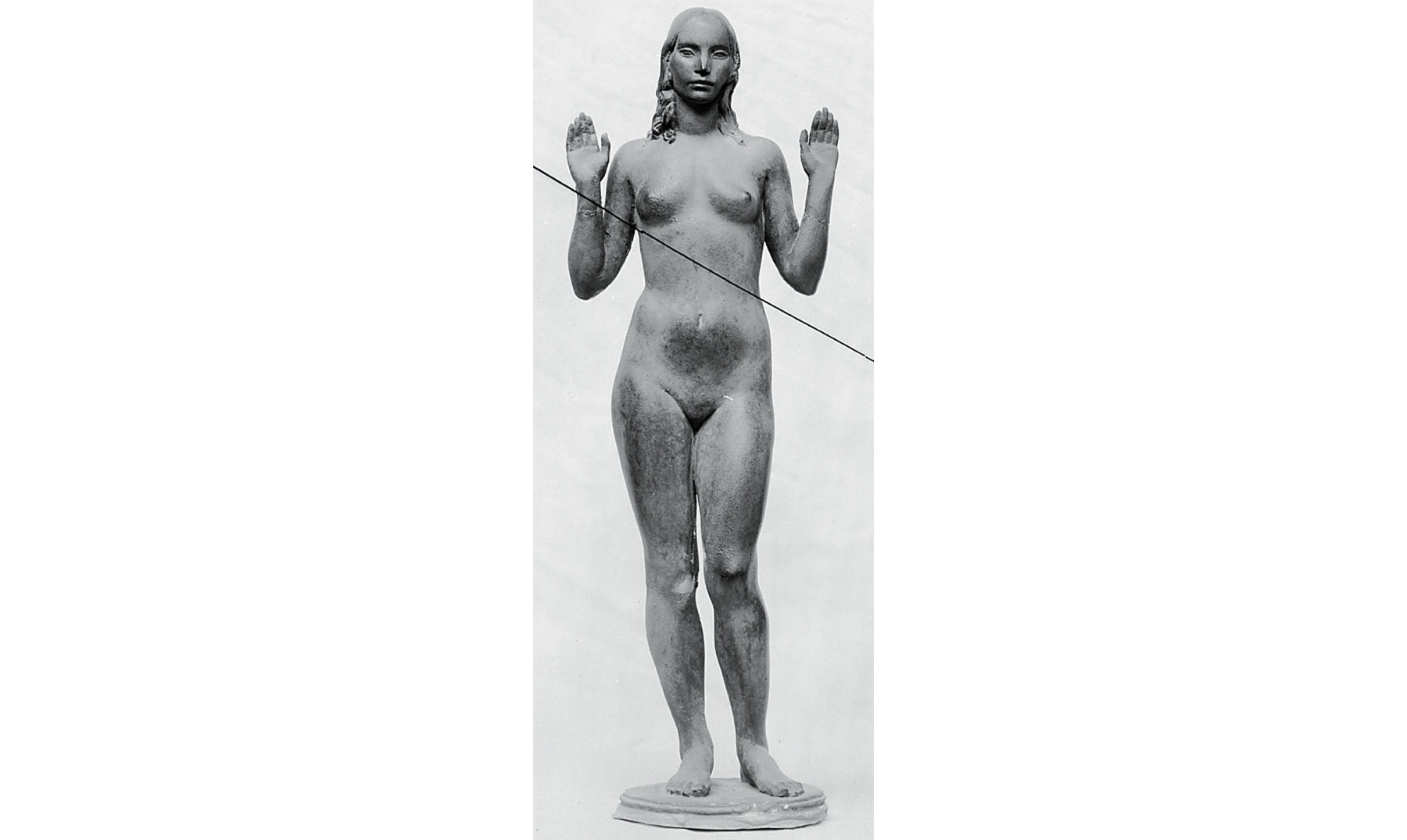
Alfred Hardiman working on Peace (1926) in the BSR studios, early 1920s, BSR Fine Arts Archive.
As was envisioned at the founding of the prize, the art, culture and environment of Rome, as well as the proximity of practitioners of architecture, archaeology and painting, were deeply influential on the sculpture scholars. The sheer abundance of Rome’s classical, Renaissance, Baroque and modern art, as well as the topography and archaeological findings that were being unearthed in surrounding regions at the time, all formed part of a rich nexus of artistic influence on the Rome Scholars.
Despite the traditionalist strictures of the prize and the School, several sculptors in the 1920s used their time in Rome to develop new ideas and techniques; many were influenced by the modernist trends coming out of France and Germany, as well as the recent interest in African and Oceanic sculpture. Henry Moore’s time in Italy and briefly at the BSR in 1924 greatly shaped his later work. And Barbara Hepworth met her first husband, fellow sculptor John Skeaping, whilst he was a scholar at the BSR (1924–6). Hepworth herself had been a runner-up for the Rome Prize which Skeaping had won and was in Italy on a traveling scholarship. They married in Florence and she lived with him at the school from 1925 until 1926, when they returned to Britain due to Skeaping’s ill health.
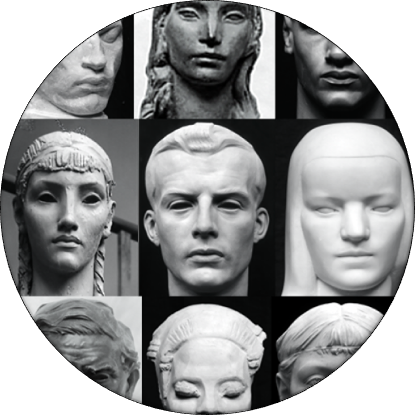
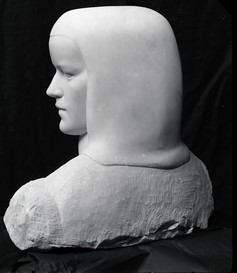
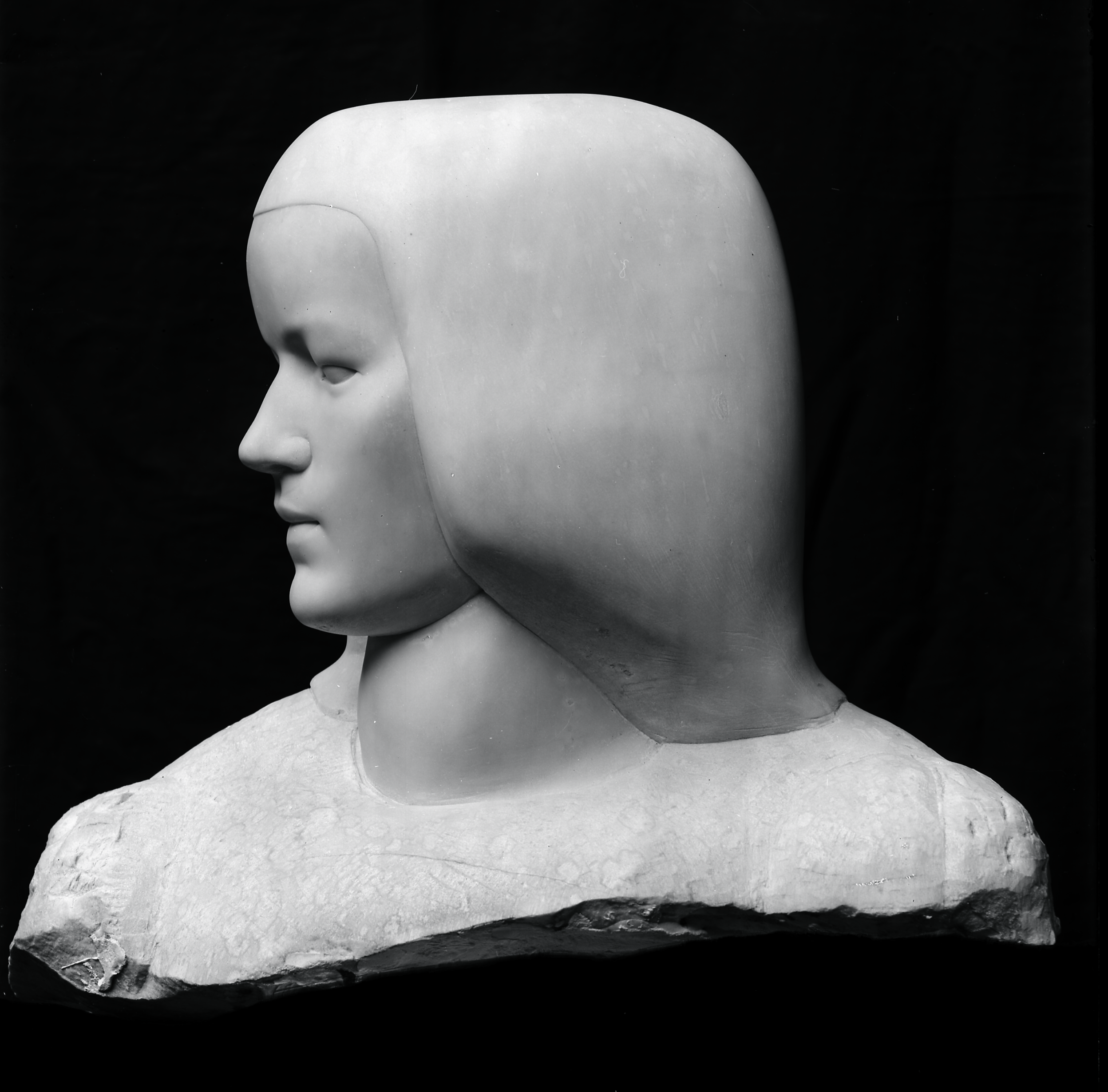
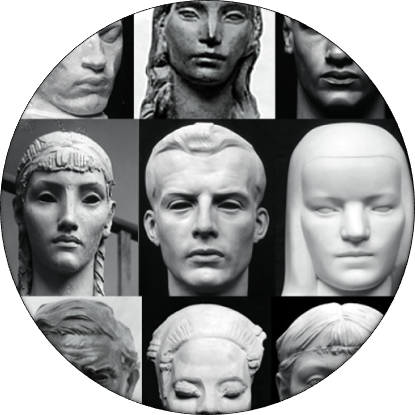
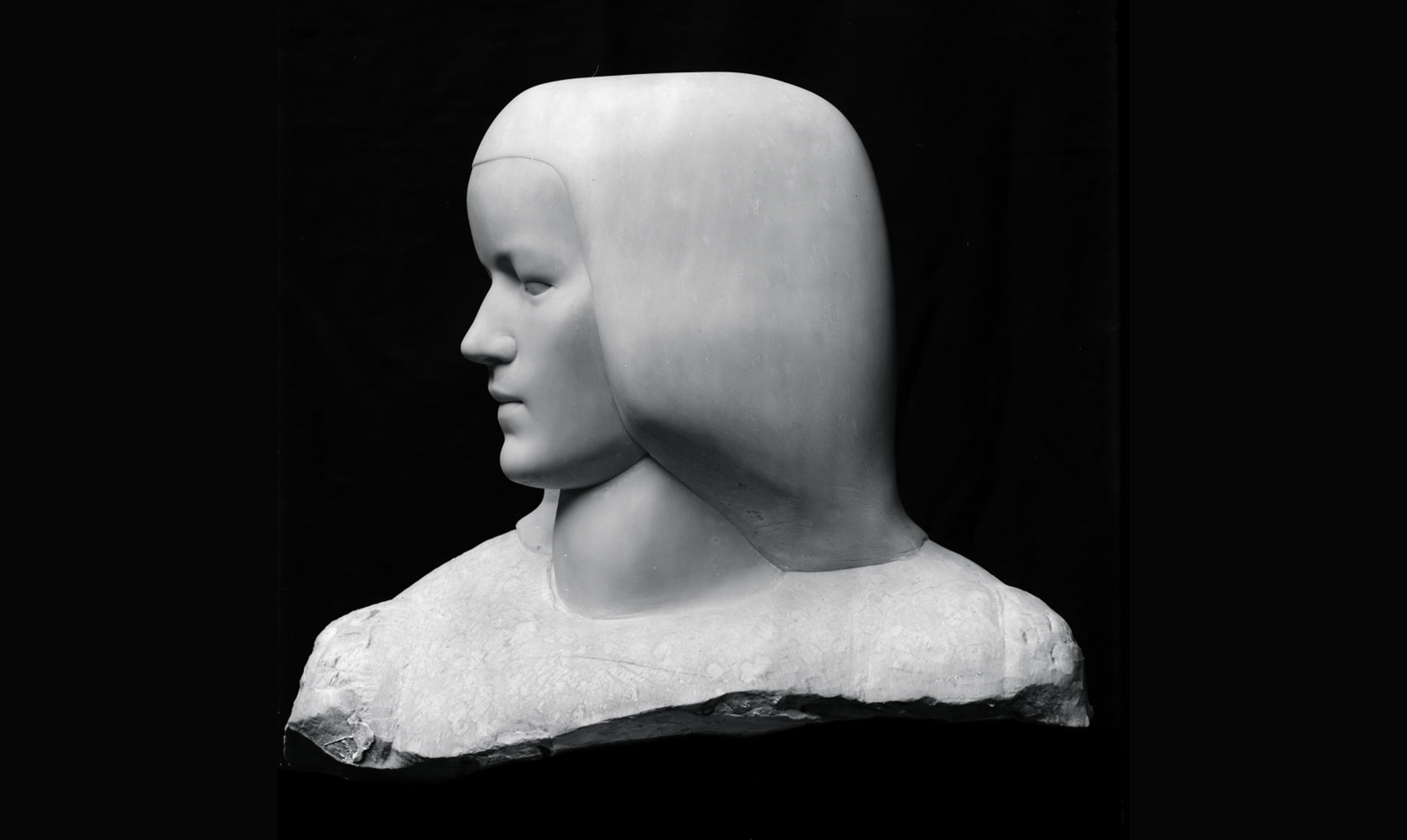
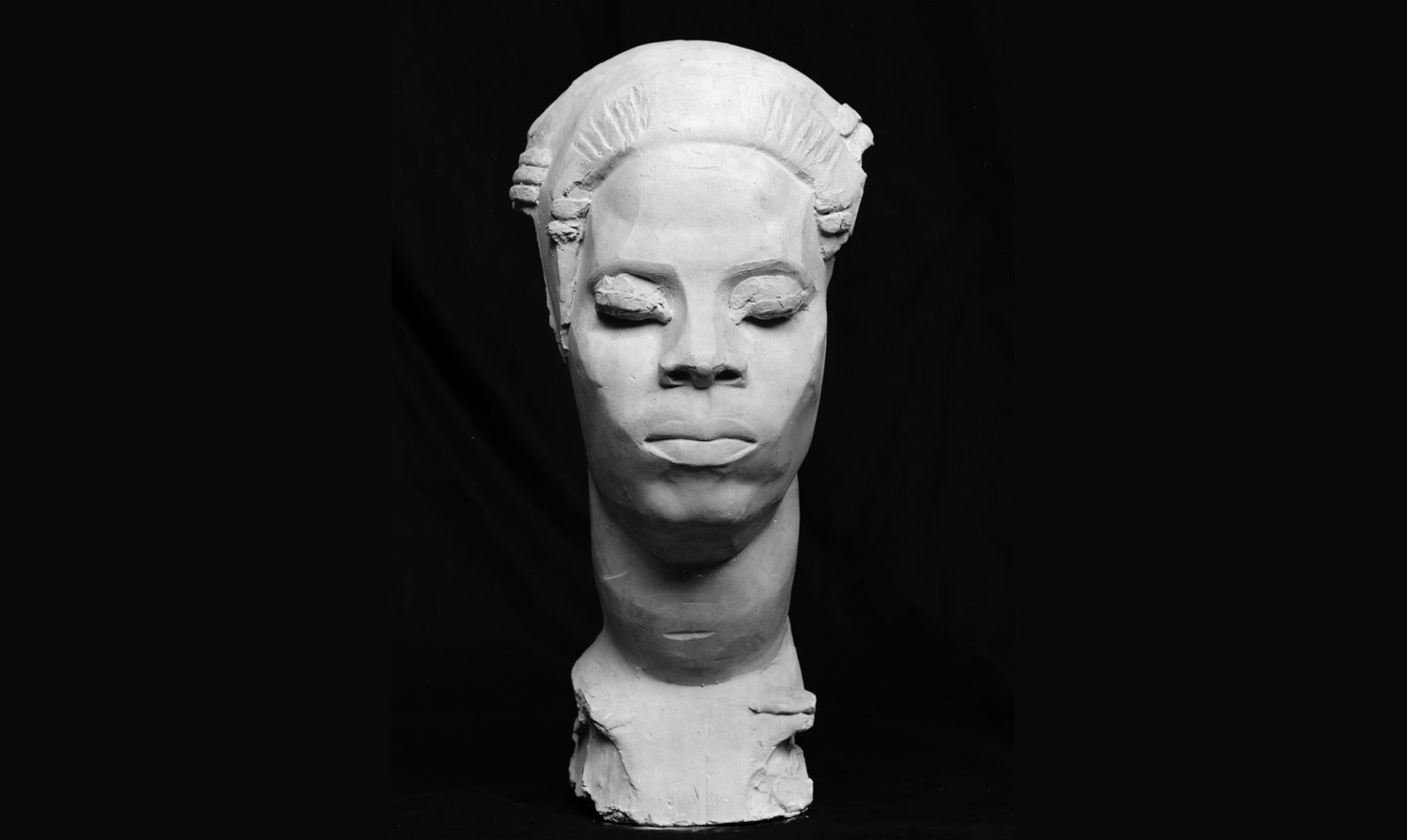
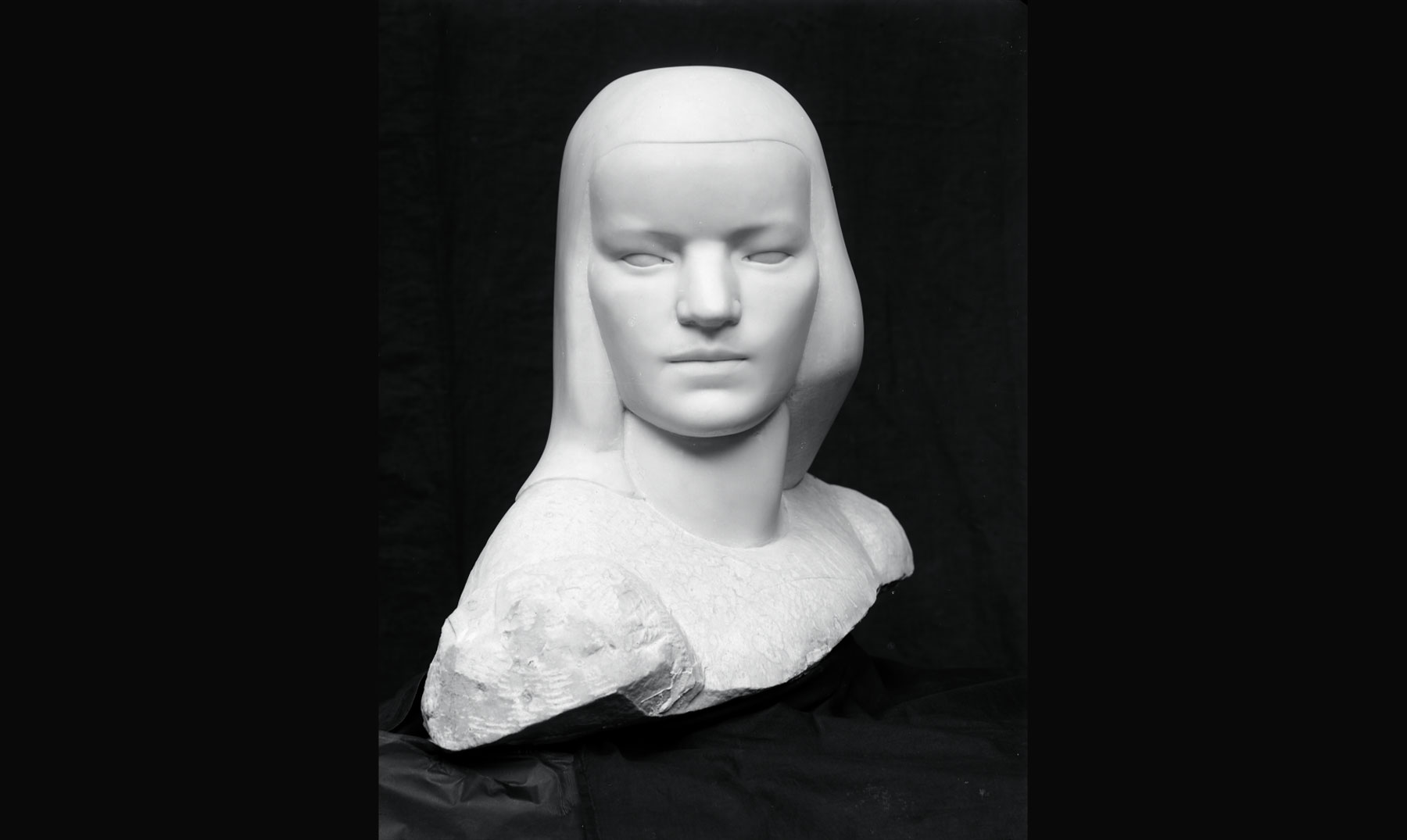
Bust of Barbara Hepworth by J. R. Skeaping, BSR Fine Arts Archive
Whilst in Rome, Hepworth and Skeaping learnt marble carving from Italian master carver, Giovanni Ardini. Ardini’s remark that “marble changes colour under different people’s hands” was particularly striking to Hepworth, and she wrote that Ardini’s mentorship “opened up a new vista for me of the quality of form, light, and colour contained in the Mediterranean conception of carving”.
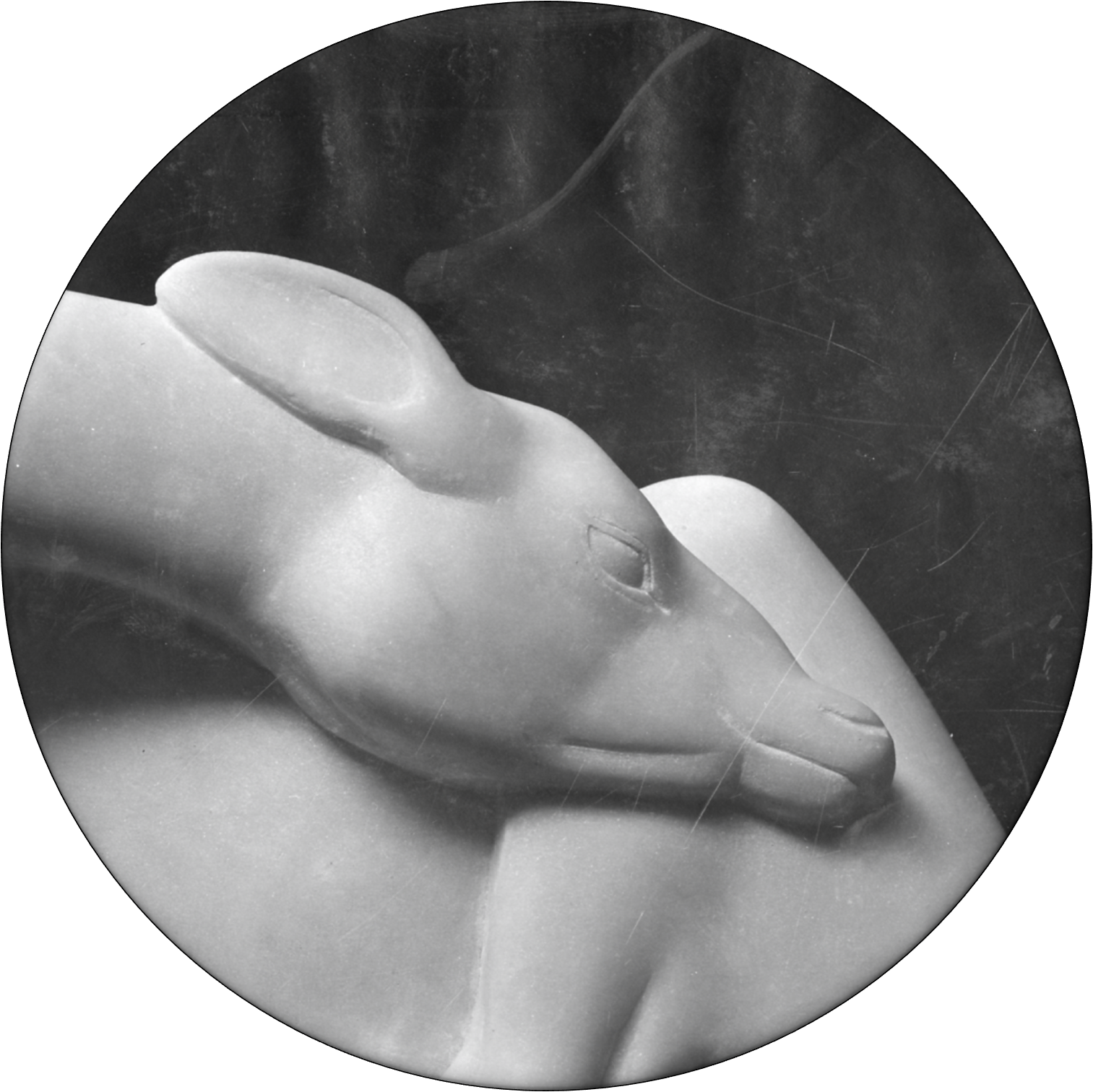
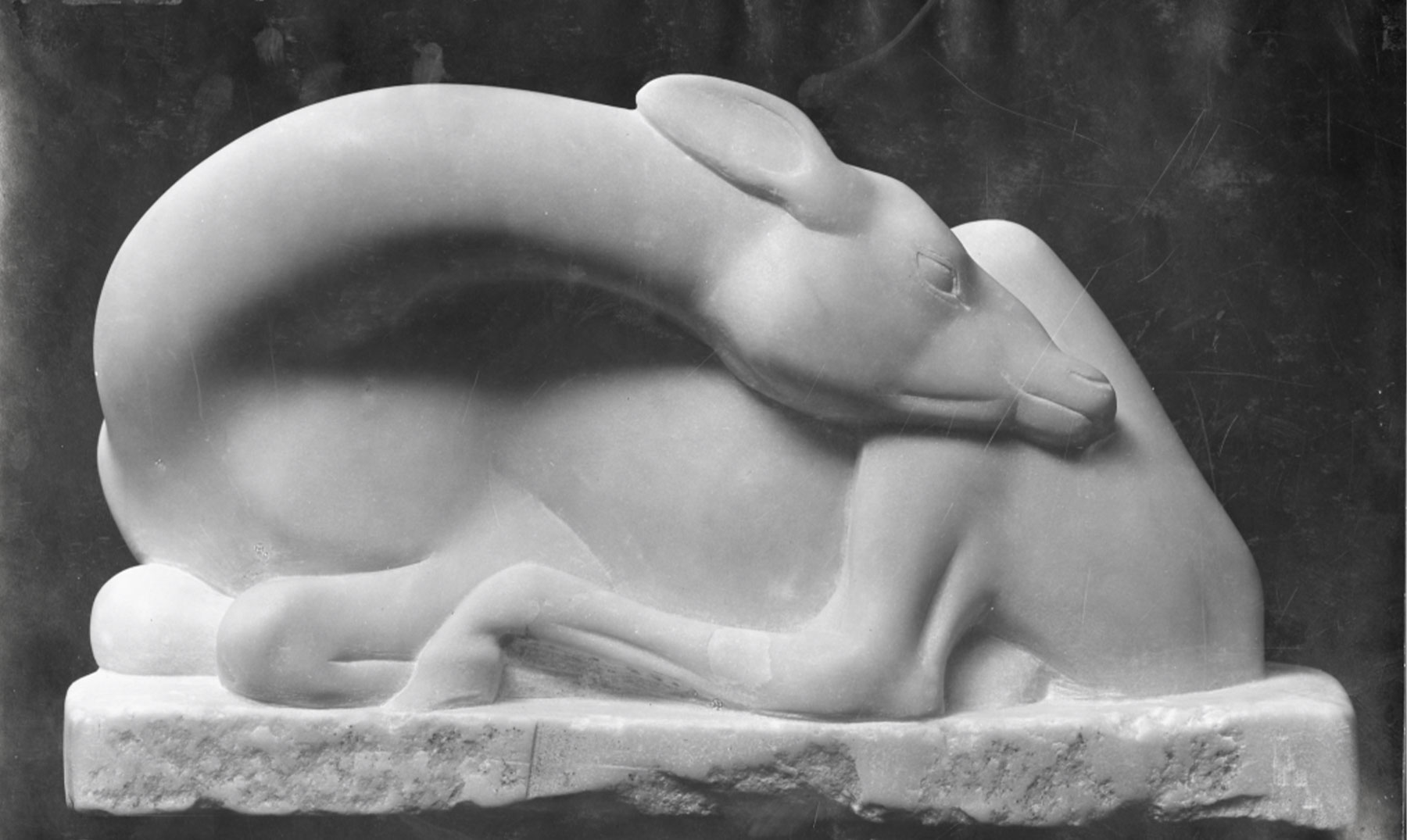
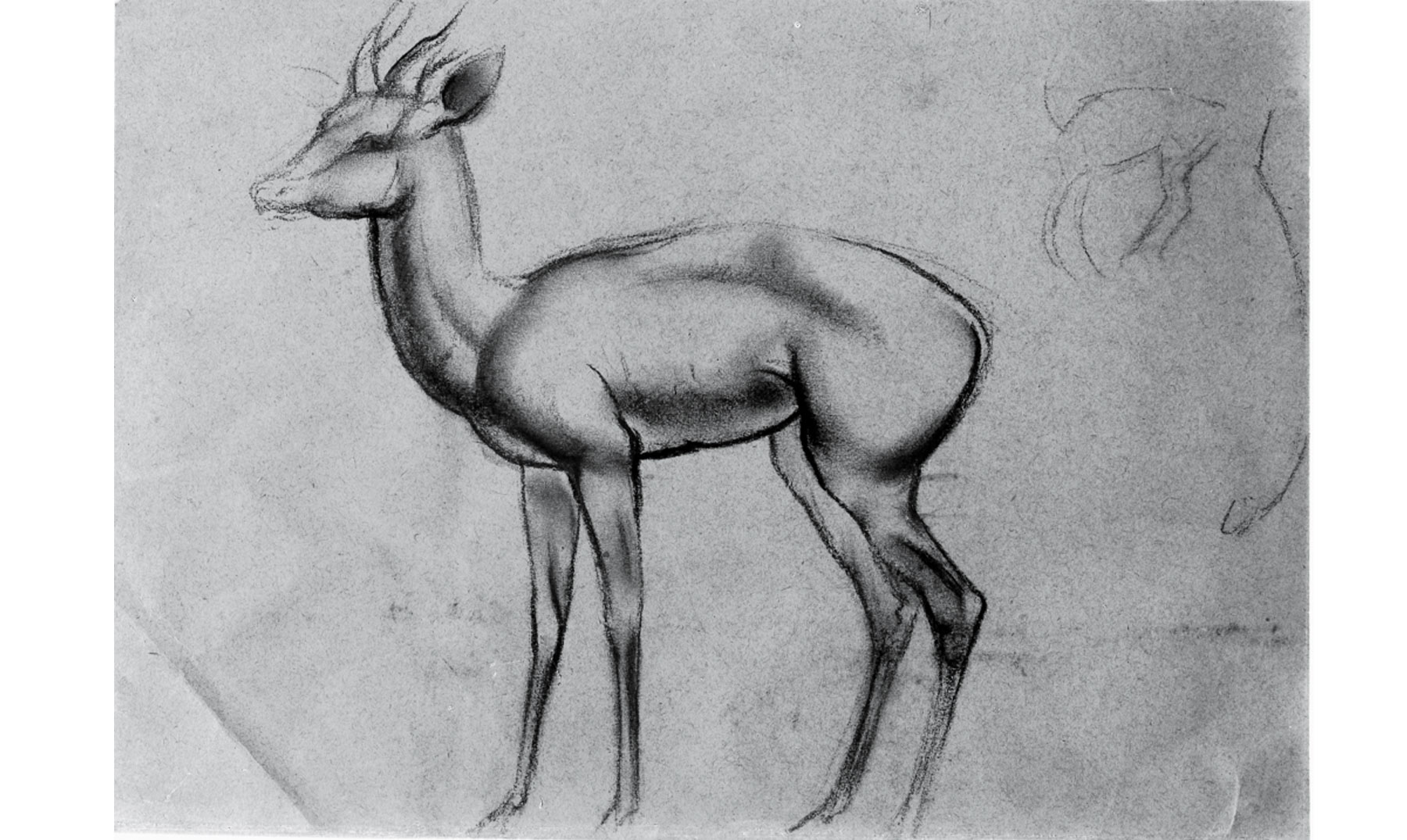
Skeaping was later known as a proponent of direct carving whereby works are shaped from the beginning out of the final material – usually stone or wood – thus emerging with the nature of that material itself. He was later known for his figures of animals and the designer of the fountain in the centre of the BSR courtyard, whose reliefs onto travertine depict the deer which went on to feature again in his later animal forms.
Sculptural practice took place in the BSR’s studios. Although materials were less costly in Italy than in Britain, the stipend for artists at the BSR was not substantial. Some sculptors such as Alfred Hardiman struggled to purchase the materials necessary to finally cast their works in expensive materials such as bronze. Several of the BSR sculptors worked alongside architects to realise monumental works, as envisioned by the School’s strategic aims. Hardiman, for example, went on to produce sculptures with Rome Architecture scholar S. R. Pierce at Norwich County Hall.
In the BSR Archive you can find correspondence between the scholars and faculty as well as several photographs of some of the Rome sculptors at work alongside images of the works they made and were inspired by.
Each of these sculptors received a Rome Prize medal, several of which are held in the BSR archives.
Where would you like to go next? Who would you like to meet?
Holman, V (2015). Alfred Hardiman, RA, and the Vicissitudes of Public Sculpture in Mid-twentieth-century Britain in Sculpture Journal, January 2015, 24(3):351-373.
Hepworth, B. (1946). ‘Approach to Sculpture’, The Studio, London, October 1946, vol. CXXXII, no. 643, p. 97.
Wallace-Hadrill, A. (Ed). (2001). The British School at Rome: One Hundred Years. Rome: BSR.
For a full bibliography and further reading, see here.
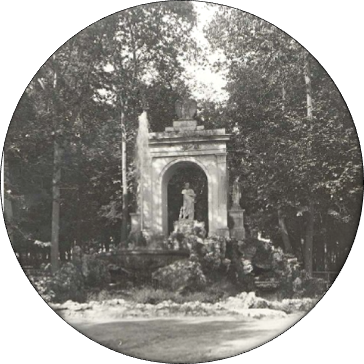
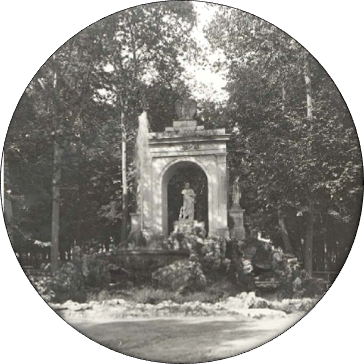
The Borghese gardens, known now as the Villa Borghese, are only a short walk away from the BSR. They are an historic site, converted from a vineyard in the seventeenth century by Scipione Borghese. In the nineteenth century they were redesigned as a landscape garden, inspired by the English style. Despite this influence, they far surpassed the English gardens in the eyes of some commentators.
The American author Nathaniel Hawthorne describes the Borghese gardens in his novel, The Marble Faun (1860). The gardens, according to Hawthorne, had a “sylvan character”; “the scenery amid which the youth now strayed was such as arrays itself in the imagination when we read the beautiful old myths, and fancy a brighter sky, a softer turf, a more picturesque arrangement of venerable trees, than we find in the rude and untrained landscapes of the Western world. The ilex-tress, so ancient and time-honored were they, seemed to have lived for ages undisturbed, and to feel no dread of profanation by the axe any more than overthrow by the thunder-stroke”.
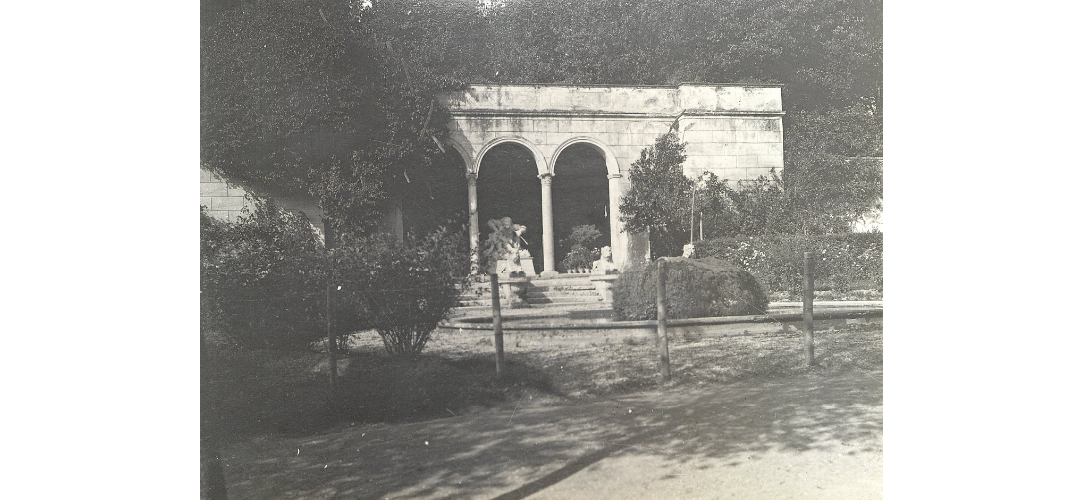
Photograph of the Loggia and the Fountain of the Lions at the Villa Borghese, taken by Peter Paul Mackey c.1890-1901 (BSR Digital Collections, ppm-1254)
The gardens were filled with trees and flowers that seemed to almost overwhelm the senses. As Hawthorne writes, “in other portions of the grounds the stone-pines lifted their dense clump of branches upon a slender length of stem, so high that they looked like green islands in the air … there were avenues of cypress, resembling dark flames of huge funeral candles, which spread dusk and twilight round about them instead of cheerful radiance”. There were “anemones of wondrous size, both white and rose-colored, and violets that betrayed themselves by their rich fragrances, even if their blue eyes failed to meet your own.” Thus, Hawthorne concludes, “these wooded and flowery lawns are more beautiful than the finest of English park-scenery, more touching, more impressive”.
It is “an ideal landscape, a woodland scene that seems to have been projected out of the poet’s mind.” There are fountains, and statues of Roman figures: “The result of all is a scene, pensive, lovely, dream-like, enjoyable and sad, such as is to be found nowhere save in these princely villa-residences in the neighborhood of Rome; a scene that must have required generations and ages, during which growth, decay, and man’s intelligence wrought kindly together, to render it so gently wild as we behold it now.”
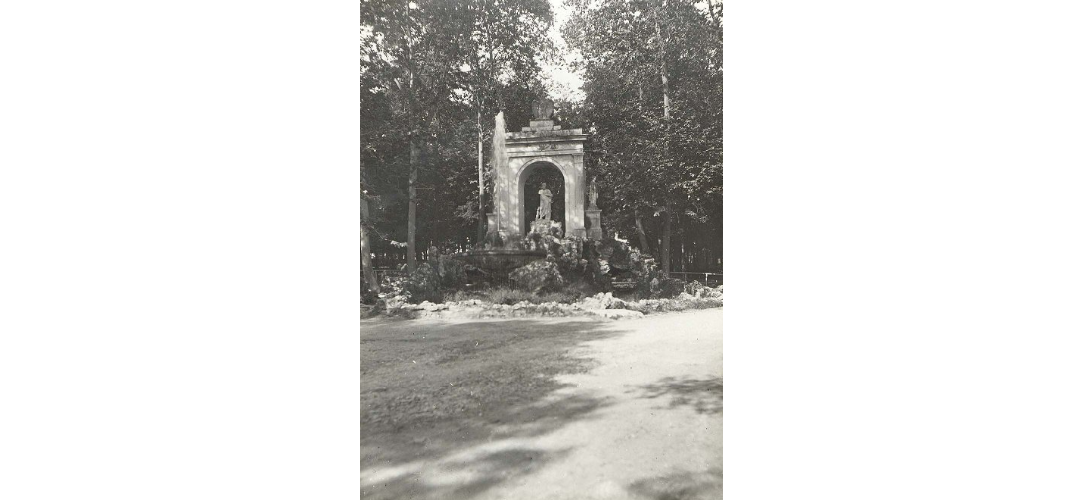
Photograph of the Fontana di Esculapio at the Villa Borghese, taken by Peter Paul Mackey c.1890-1901 (BSR Digital Collections, ppm-1253)
They were open informally to the public since their inception, with Hawthorne writing that the gardens offer “a seclusion, but seldom a solitude; for priest, noble, and populace, stranger and native, all who breathe Roman air, find free admission, and come hither to taste the languid enjoyment of the daydream that they call life.” This was formalised in 1903 when the gardens were bought by the commune of Rome. They did not lose their ability to inspire the arts. In 1924, Ottorino Respighi finished the Pini di Roma, a four-movement orchestral piece, arranged as a symphonic poem (a piece of music written to evoke the content of a poem). This piece depicted the pine trees of Rome; the first movement was centred on the pines of the Borghese gardens. The light, high tempo opening movement portrayed children playing loudly by the pines, dancing in circles and pretending to be soldiers.
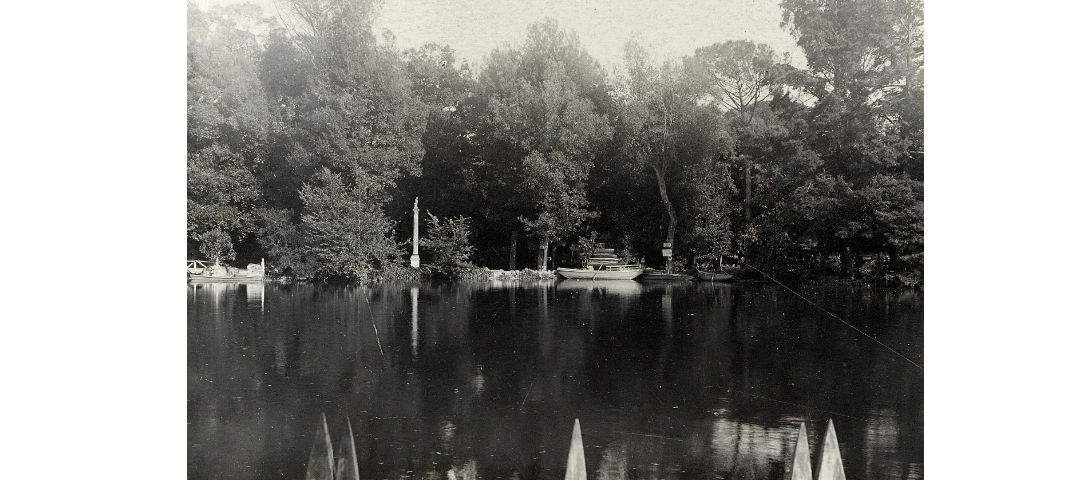
Photograph of the Giardino del Lago at the Villa Borghese, taken by Peter Paul Mackey c.1890-1901 (BSR Digital Collections, ppm-1257)
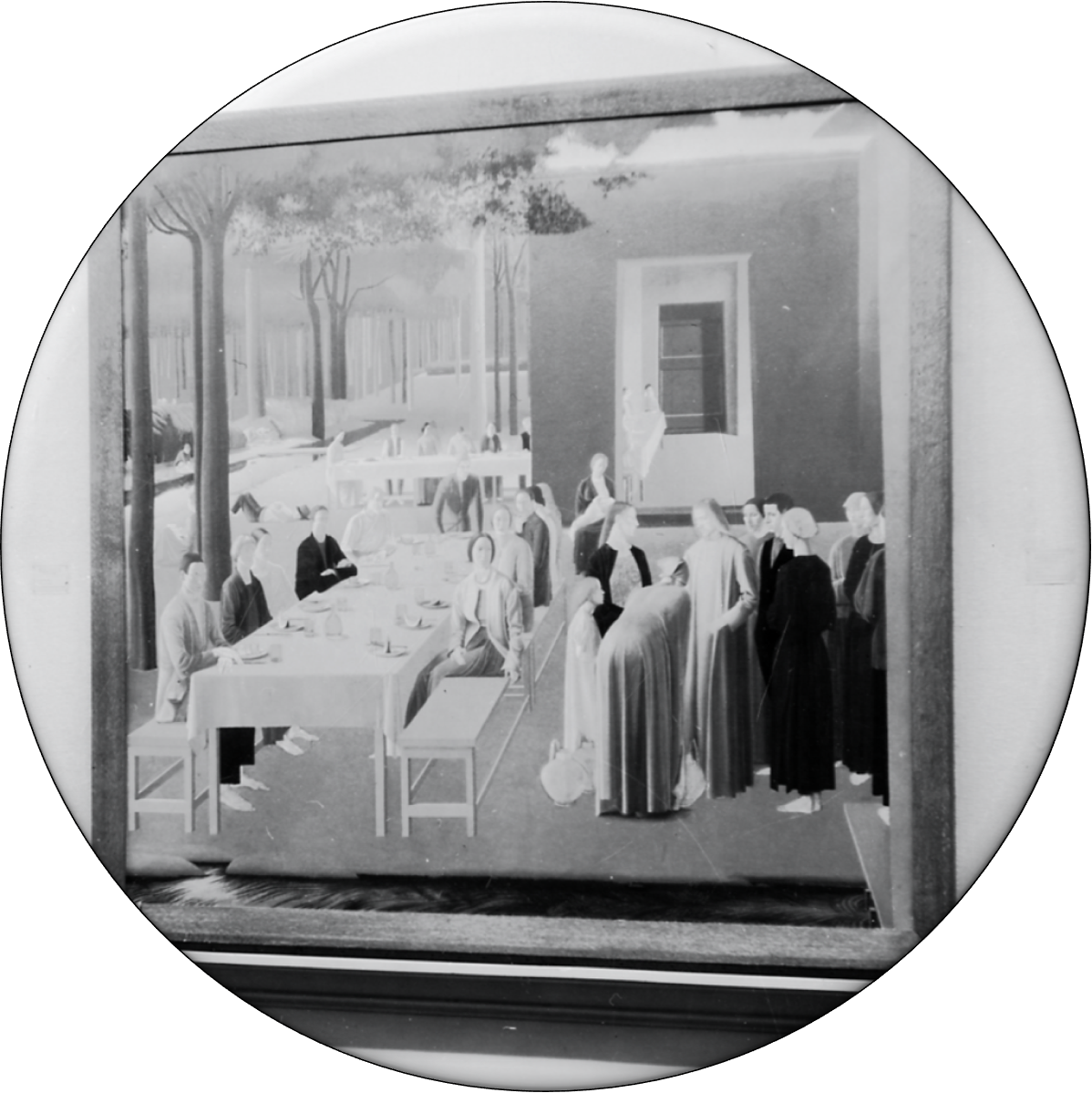
It was not just in music that the gardens featured. They were present in the paintings of several artists from the BSR, including those of Tom Monnington and Winifred Knights. Monnington’s The Annunciation, painted over 1924 and 1925, was set in the Borghese gardens. The scene features several figures stood talking beneath the trees, with a gentle woodland set in the background. The shape of the trees, and the articulation of their branches and leaves, were almost certainly inspired by the gardens close by. The pond, and the pathways around it, similarly mirror this picturesque landscape. The gardens also served as the setting for Knights’ The Marriage at Cana. A figure who is portrayed sketching by a tree may be a reference to her own time spent in the gardens. The tall trees and woodland background, along with the serene and restful body of water, are inspired by this “gently wild” locale.
The Rome scholars undoubtedly spent much of their time relaxing in this space, soaking in the atmosphere, and enjoying a Roman scenery that, though it may well have been inspired by the landscape gardens of England, was unavailable to them back home.
Where would you like to go next? Who would you like to meet?
Meet Sir Walter Thomas Monnington (1902-1976)
Meet Winifred Knights (1899-1947)
Visit the BSR’s Building
Explore the Winifred Knights Collection in the BSR’s Fine Arts Archive
Explore the Sir Walter Thomas Monnington Collection in the BSR’s Fine Arts Archive
Alfred Hardiman (1891-1949) was the 1920 winner of the Rome Prize for Sculpture and resident at the BSR for four years. One of a new wave of artists emerging from British artisanal communities, he was born the son of a master silversmith in Highbury, London in 1891. He studied and worked as an engineering draftsman before coming to artistic study at the Royal College of Art and the Royal Academy. Whilst a student, Hardiman came into contact with the sculptures of Augustes Rodin and Ivan Meštrović, which influenced his work throughout the 1920s. Whilst studying, he also met contemporaries Charles Wheeler and his predecessors as Rome Sculpture scholars, Gilbert Ledward and Charles Sargeant Jagger. He would practice his art by using other scholars as models. Amongst these was fellow Rome Scholar and painter, Winifred Knights.
Hardiman served as a draughtsman in Royal Naval Reserve in the First World War and was elected a member of the British Society of Sculptors before being awarded the Rome Prize. He was a Rome Scholar from 1920 to 1923, staying an extra year at the school with his wife, Violet Hardiman (née White) who worked as Bursar and Secretary for the School. As the BSR administration did not permit married couples to cohabit at the School until later in the 1920s, the Hardimans had to live off premises.
Alfred Hardiman working on Peace (1926) in the BSR studios, early 1920s, (BSR Photographic Archive, BS Collection)
Hardiman’s practice was strongly influenced by his time in Italy where he produced several of his most notable works in the BSR studios, including busts of his fellow Rome scholar Winifred Knights (1899-1947) and BSR director Thomas Ashby (1874-1931). He was particularly struck by the classical art he was exposed to in Italy and the scholarship of the BSR community. Several relics of Etruscan art, the culture of the Italian peninsular prior to the Roman empire, had only recently been re-discovered in Rome and were exhibited at the nearby Villa Giulia. The BSR’s Eugénie Sellers Strong (1860-1943) had studied and lectured on the period. One such work was the Apollo of Veii (c.510 BC) excavated by Guilio Giglioli in 1916 which had also had an influence on Hardiman’s contemporary, Italian sculptor Arturo Martini (1889-1947).
Another clear influence on Hardiman’s sculptures was the Charioteer (c.475-470 BC) from Delphi. Hardiman was one of several sculptors and artists of the period, such as Martini and Ledward, who were incorporating elements of classicism into their works, aligning with some of the primitivist modernist trends of the period and the ‘return to order’ after the violent disruption of the First World War. Avant Garde cultural movements such as Futurism and Novecento Italiano had grown up in Italy in the previous years. While artists like Hardiman brought some modernist elements into his approach, the traditionalism of the Rome Prize may have curbed too much deviation away from classicism. Valerie Holman describes Hardiman and other sculptors of the time as having an admiration for the “uncorrupted purity of form”of Greek and Roman art, an aesthetic tendency that cannot be separated from the context of the Fascist political movements emerging after the First World War in Italy and Europe at this time.
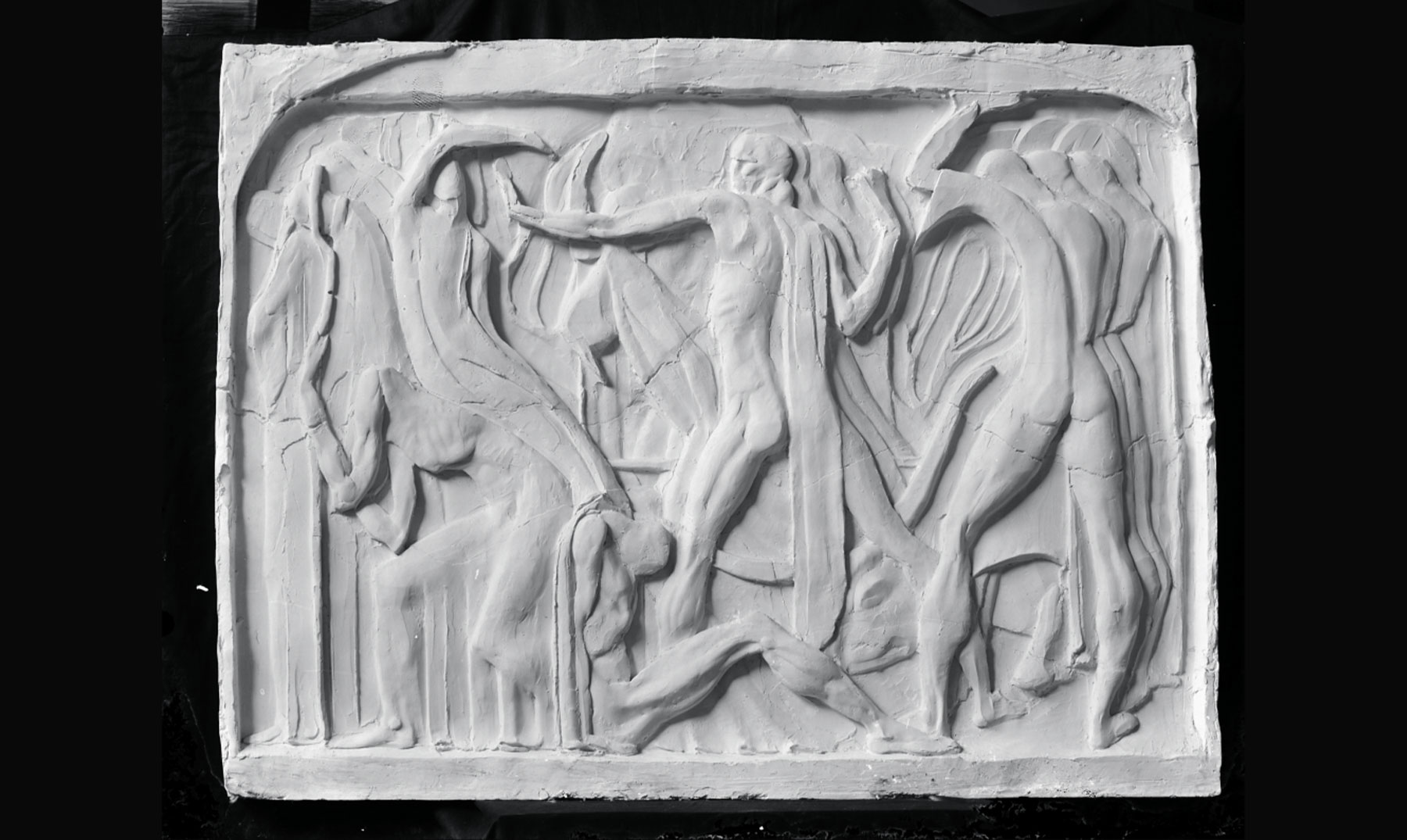
Both classical and modernist influences can be seen in the key work Hardiman made in Rome, Peace (Piccadilly Gardens, 1926), which now stands as the sculptor’s own memorial in St James’s garden in Piccadilly, London. Several versions of this two-metre high statue were made whilst at the BSR, but the final version was not cast until 1926 due to the cost of materials. Numerous images of this work in progress can be found in the BSR archive. The sculptures Hardiman made in Rome mark a period where he was not yet constrained by the requirements of the later public commissions which he was to become known for. Hardiman also became a member of the Faculty of Sculpture and went on to collaborate with the architects associated with the School.
After his period in Rome, Hardiman worked alongside architects on public works and building projects in Britain which remain standing today. One of his statues was extremely controversial. In making the Haig memorial, Hardiman struggled to balance the swings of opinion and public taste, the requirements of Haig’s widow and supporter, with his own aesthetic and practical intent. Other more striking successes can be found at Norwich County Hall, where he worked with fellow Rome Architecture scholar S. R. Pierce (1896–1966), and in several other cities across the UK. During the blitz in the Second World War, Hardiman’s studio and home took a direct hit from a bomb. The buildings, his possessions, materials and many original pieces, models and casts were completely destroyed and he struggled to receive full compensation for his losses. He died of cancer in 1949.
Where would you like to go next? Who would you like to meet?
Explore the Alfred Hardiman Collection in the BSR Fine Arts Archive
Meet Winifred Knights (1899-1947)
Learn more about Sculpture at the BSR, 1913-1930
Meet Stephen Rowland Pierce (1896-1966)
Sources and Further Reading
Mapping the Practice and Profession of Sculpture in Britain and Ireland, 1851 – 1951. https://sculpture.gla.ac.uk/ Henry Moore Institute.
Holman, V (2015). Alfred Hardiman, RA, and the Vicissitudes of Public Sculpture in Mid-twentieth-century Britain in Sculpture Journal, January 2015, 24(3): 351-373.
For a full bibliography and further reading, see here.
John Rattenbury Skeaping (1901-1980) was born in Woodford, Essex. He studied at Goldsmiths, the Central School of Arts and Crafts, the Royal Academy schools, and won the Rome Prize in 1924. Skeaping was resident at the BSR until 1926. Whilst in Italy he spent time with Barbara Hepworth (1903-1975), who had been runner up to the prize in 1924 and was in Italy on a traveling scholarship. They married in Florence in May 1925 and lived at the BSR until 1926 when Skeaping returned to Britain due to ill health.
In Rome, Skeaping developed his method of direct carving, joining Hepworth to study with Italian master marble carver Giovanni Ardini. The Rome Prize stipulated traditional forms and methods, but whilst in Italy, Skeaping, along with Hepworth, began to experiment with new ideas and form a distinctive aesthetic.
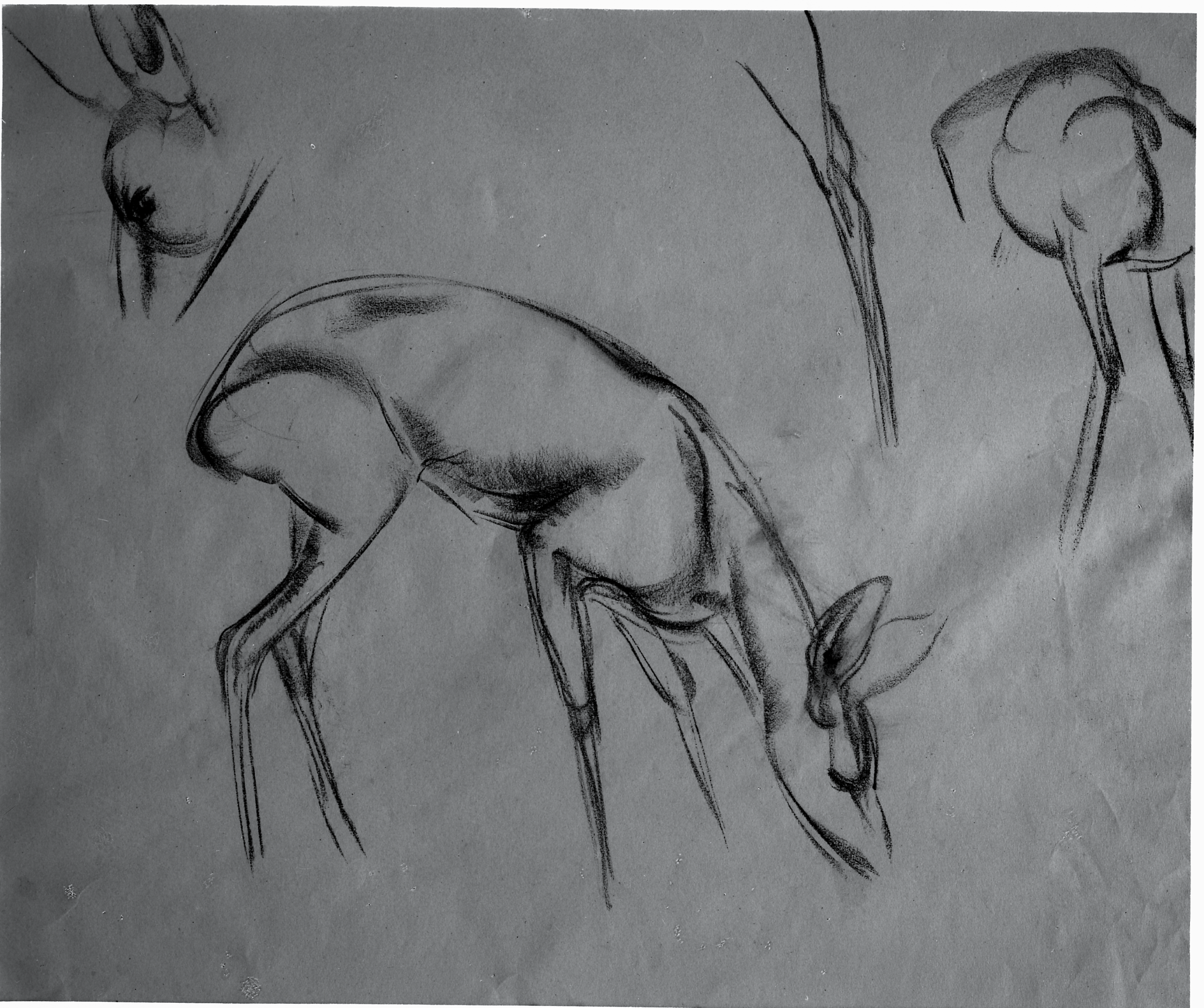
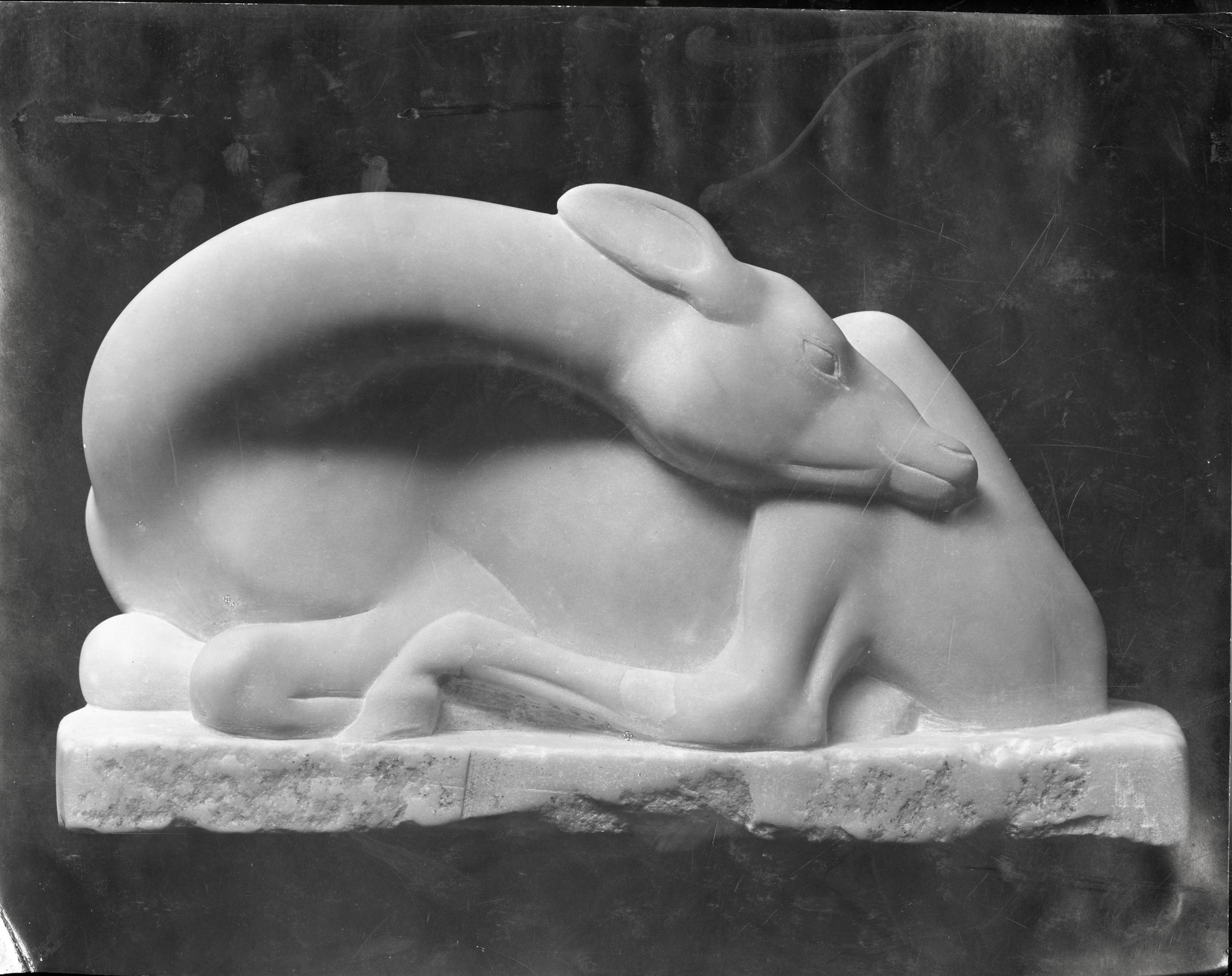
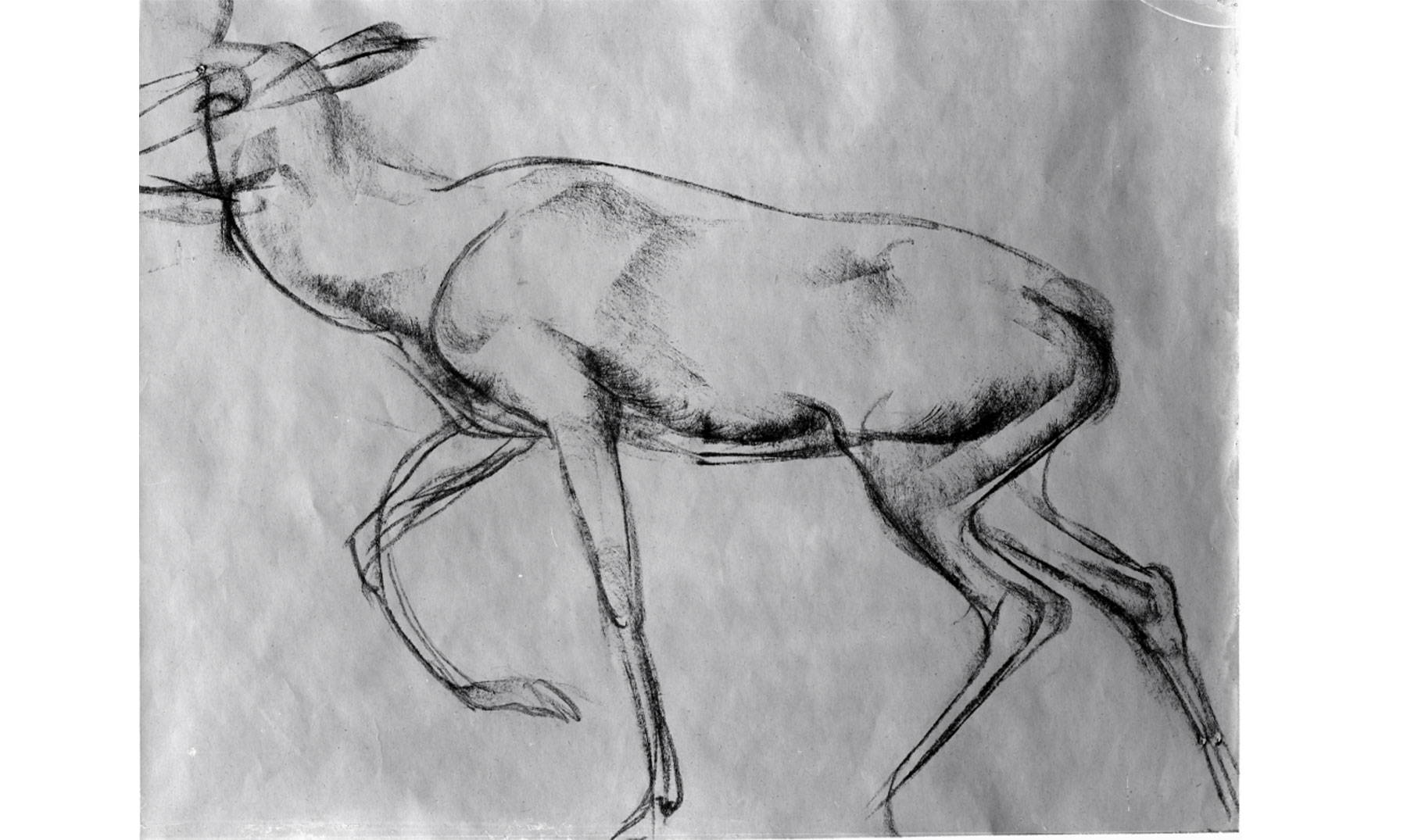
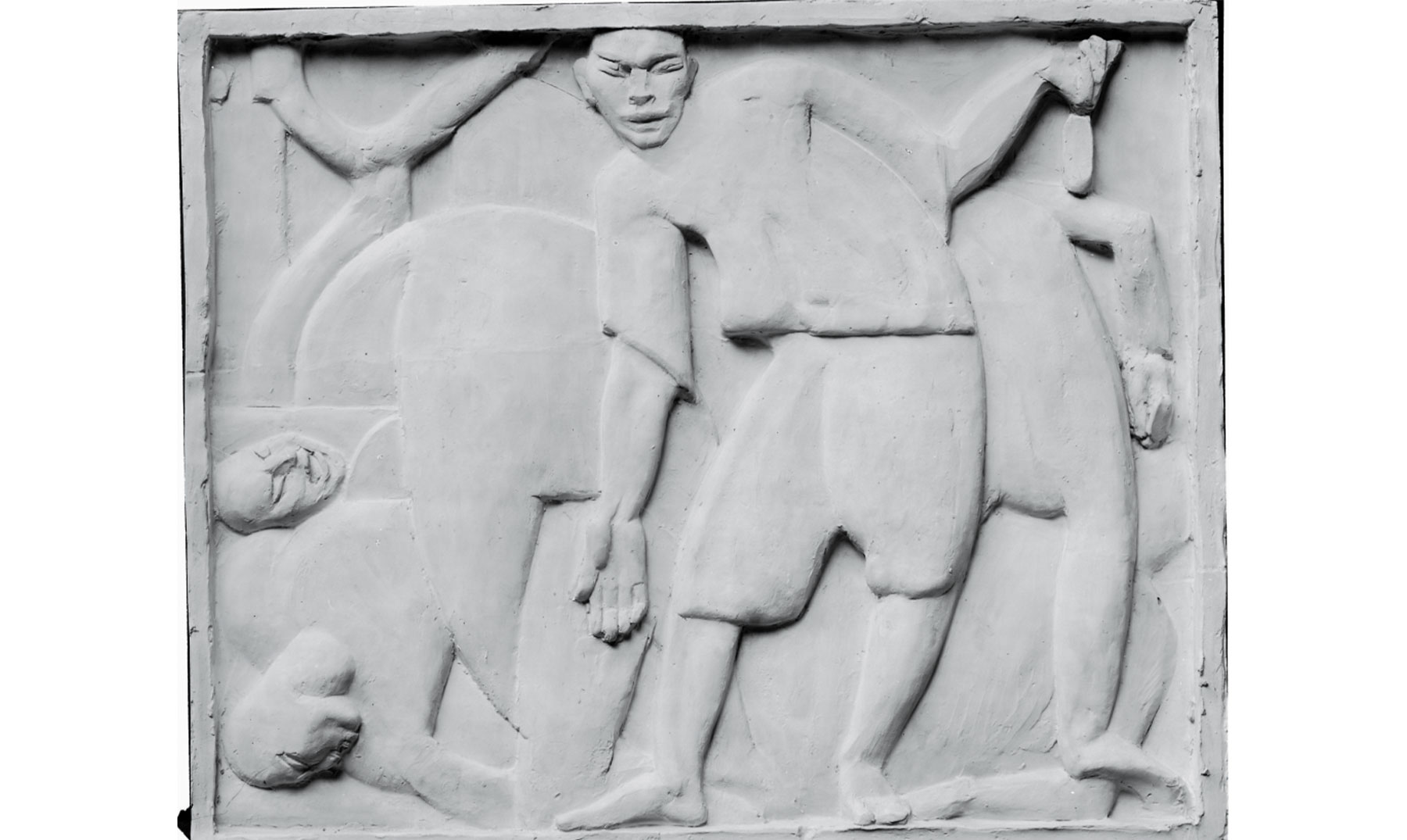
We can find at the BSR an early example of Skeaping’s fascination with animals which would go on to define his career. The BSR commissioned Skeaping to create reliefs for the fountain in the School’s garden courtyard (c.1925). Four travertine panels depict deer grazing, tripping and dozing under geometrically stylised leaves. Their slender hooves and curved forms are still a subtle but evocative and constant presence in the centre of life at the School. As Skeaping’s practice developed and became more confident in questioning traditional sculpture with modernist methods and forms, his sculptures began to emphasise the dynamism of animals. His later pieces are worked out of unusual materials, such as precious stone, to emphasise a creature’s bodily forms and the possibility of movement. Skeaping teased out a remarkable muscular potential: animals are poised to jump or swiftly move through space, or indeed sleep; their power emerges from the stillness of wood and stone.
After his time in Rome, Skeaping went on to become one of the most admired sculptors of the twentieth century in Britain, exhibiting alongside Hepworth and Henry Moore (1898-1986) as part of the London Group. Although Hepworth and Skeaping divorced in the early 1930s, the period of time spent together in Italy and back home in Britain was to have a lasting influence on both artists’ careers.
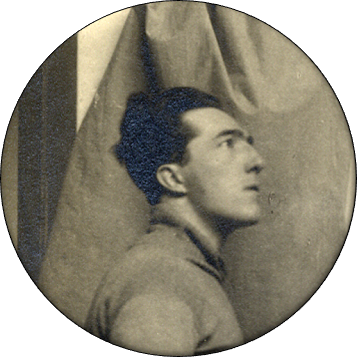
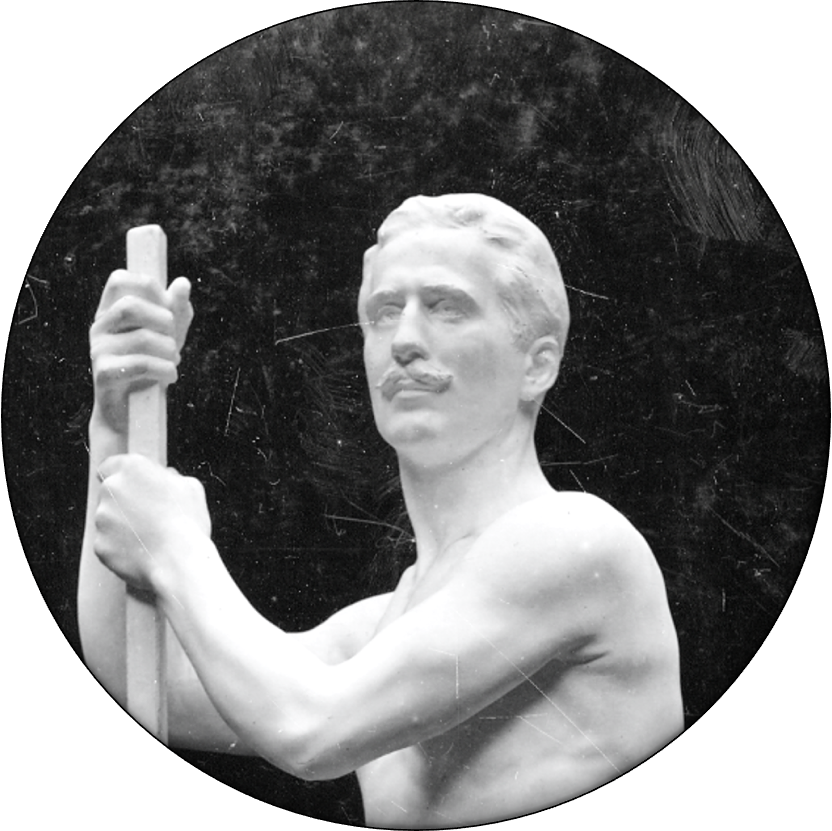
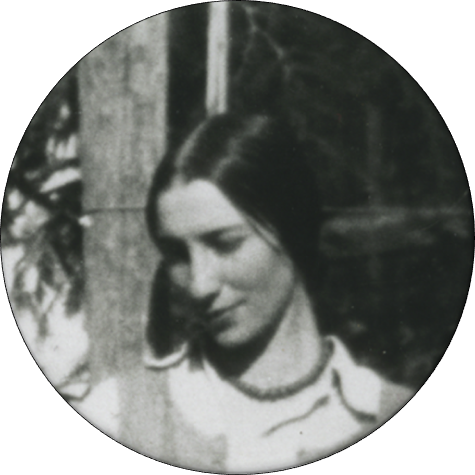
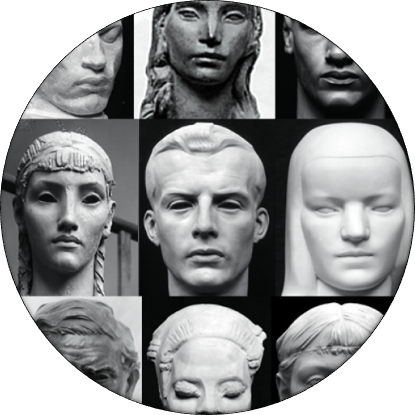
John Skeaping collection 08. Fountain BSR Courtyard, BSR Fine Arts ArchiveJohn Skeaping collection 13. BSR Fine Arts ArchiveJohn Skeaping collection 19. Bust of Barbara Hepworth. BSR Fine Arts Archive
Skeaping’s archival material in the BSR collections includes correspondence detailing the development of his practice and his time in Italy as well as his later views on arts practice and education. There are also photographs of his works in progress and finished pieces.
Where would you like to go next? Who would you like to meet?
Explore the John Skeaping Collection in the BSR Fine Arts Archive
Visit the BSR Building
Learn more about Sculpture at the BSR, 1913-1930
Meet Alfred Frank Hardiman (1891-1949)
Sources and Further Reading
Mapping the Practice and Profession of Sculpture in Britain and Ireland, 1851 – 1951. https://sculpture.gla.ac.uk/ Henry Moore Institute.
Blackwood, J. (2011). Sculpture of John Skeaping (The British Sculptors and Sculpture Series). London: Lund Humphries.
Hepworth, B. (1946). ‘Approach to Sculpture’, The Studio, London, October 1946, vol. CXXXII, no. 643, p. 97.
Wallace-Hadrill, A. (Ed). (2001). The British School at Rome: One Hundred Years. Rome: BSR.
Wiseman, T.P. (1990). A Short History of the British School at Rome. Rome: BSR.
For a full bibliography and further reading, see here.
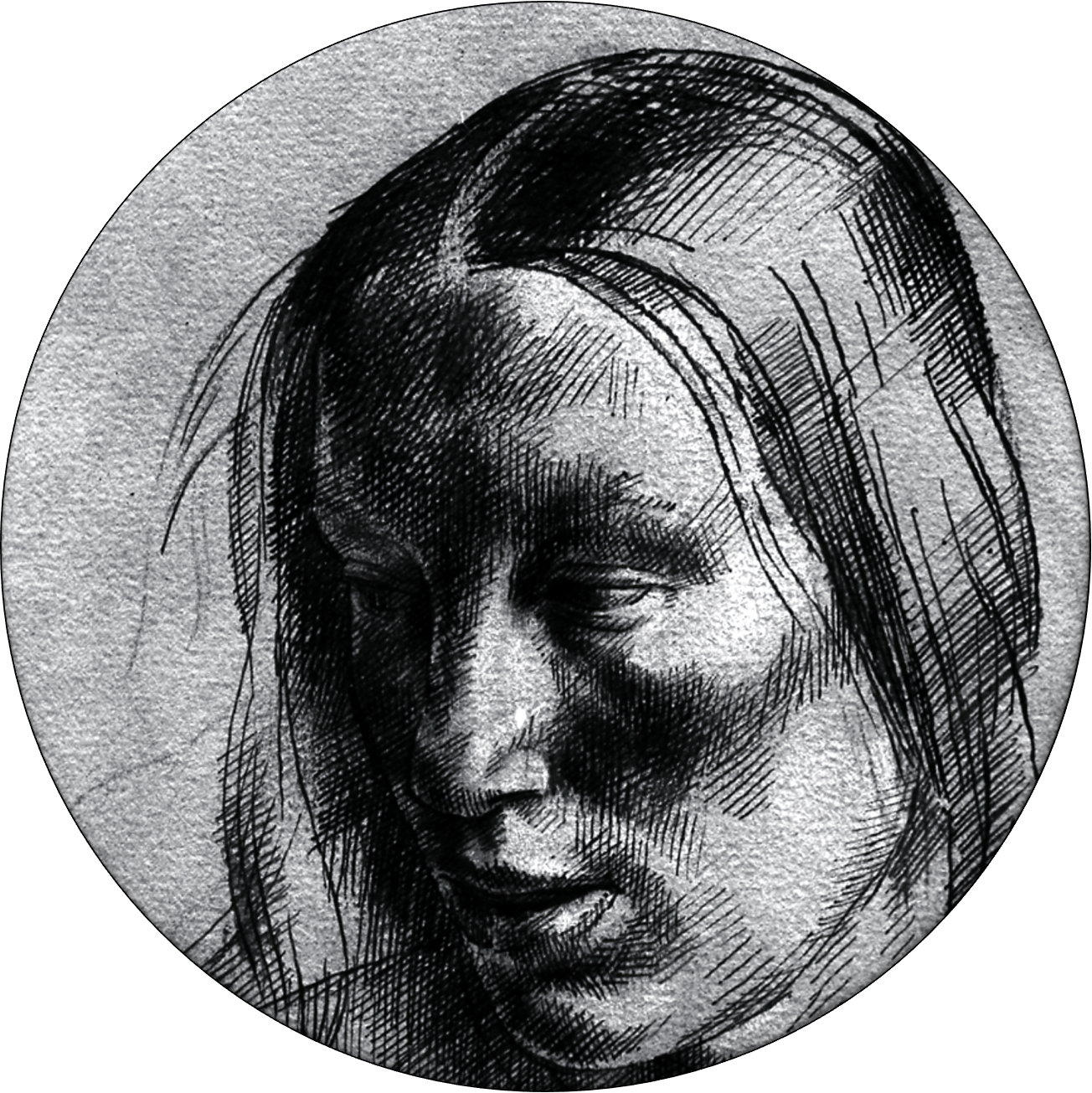
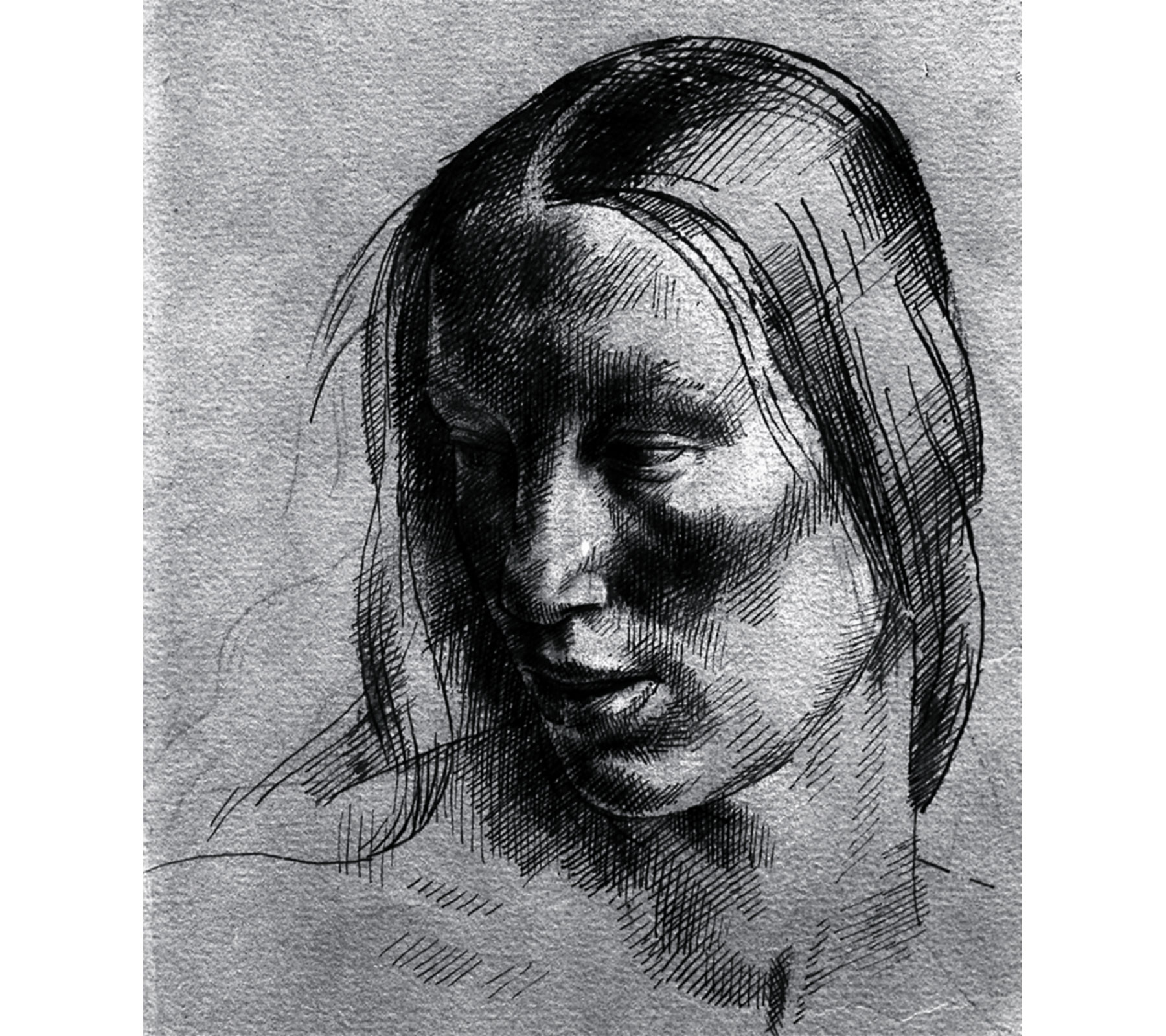
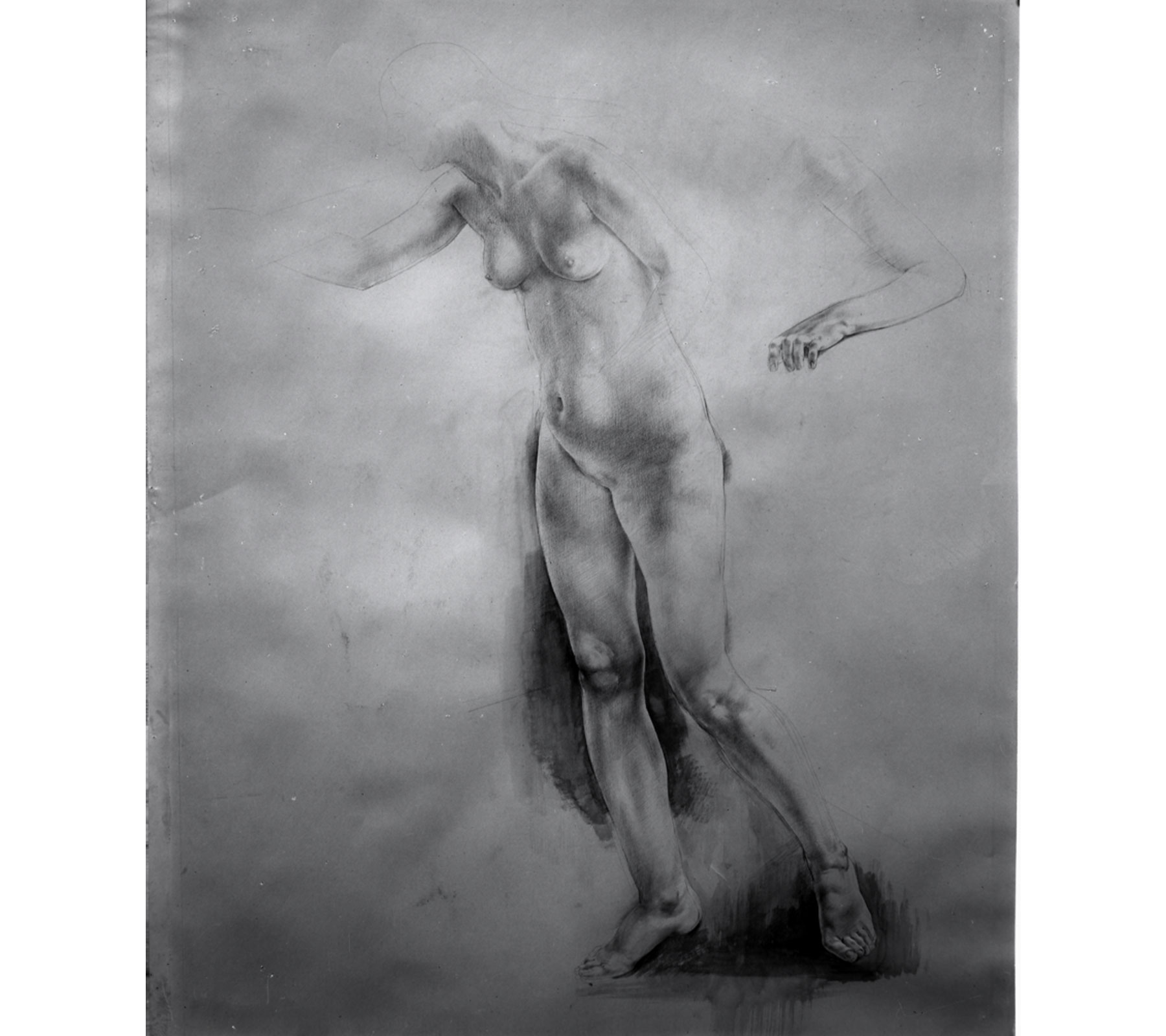
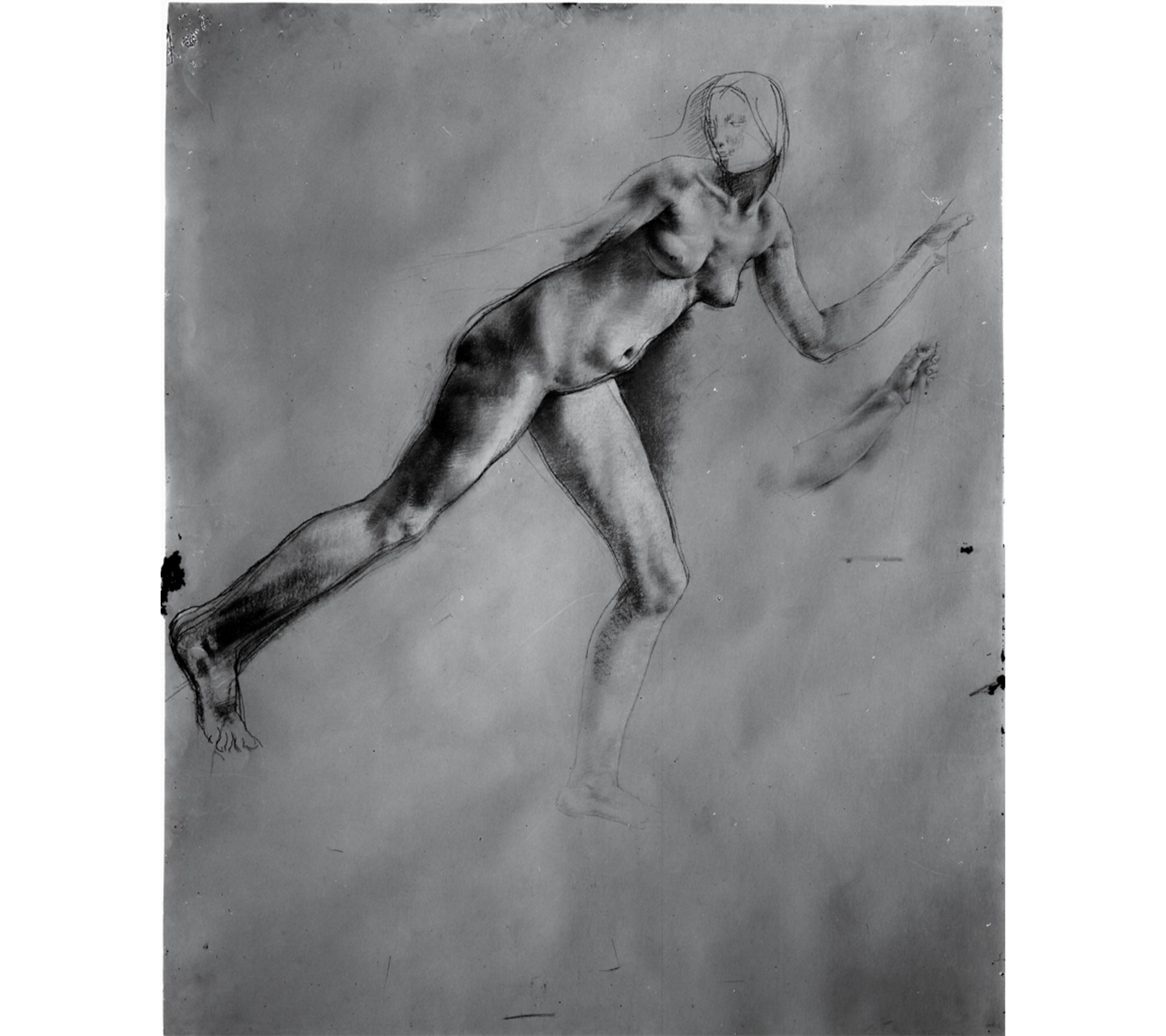
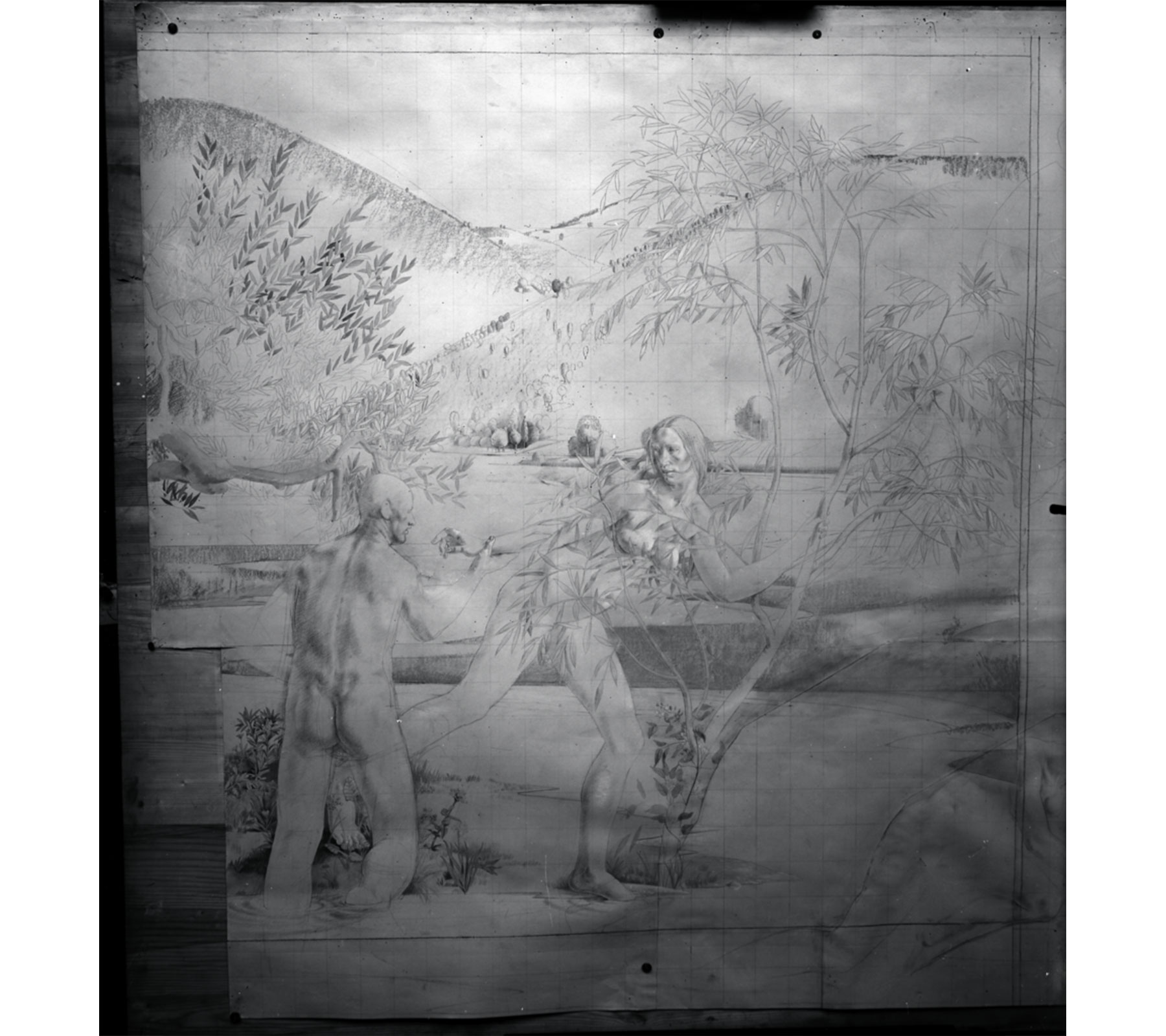
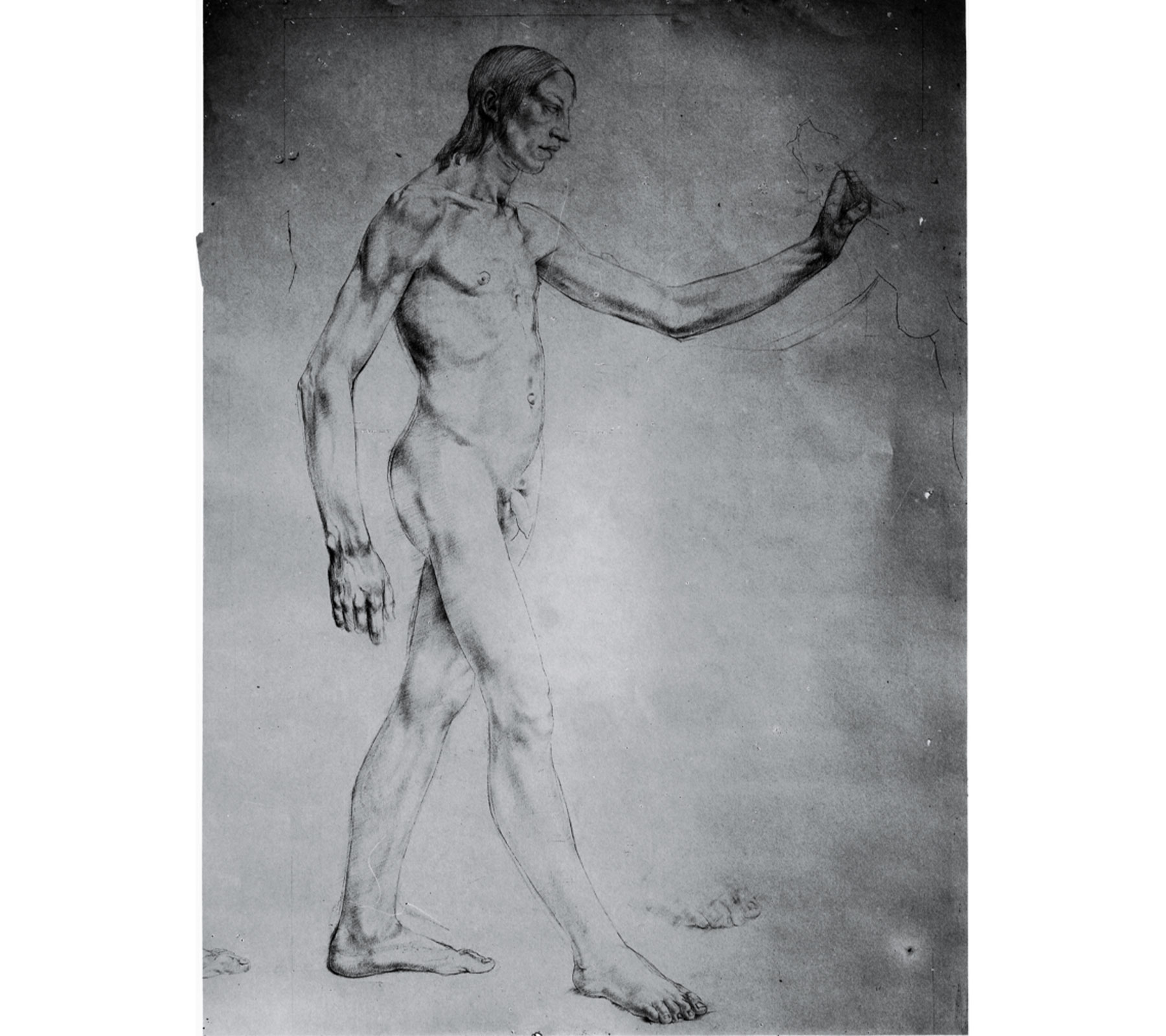
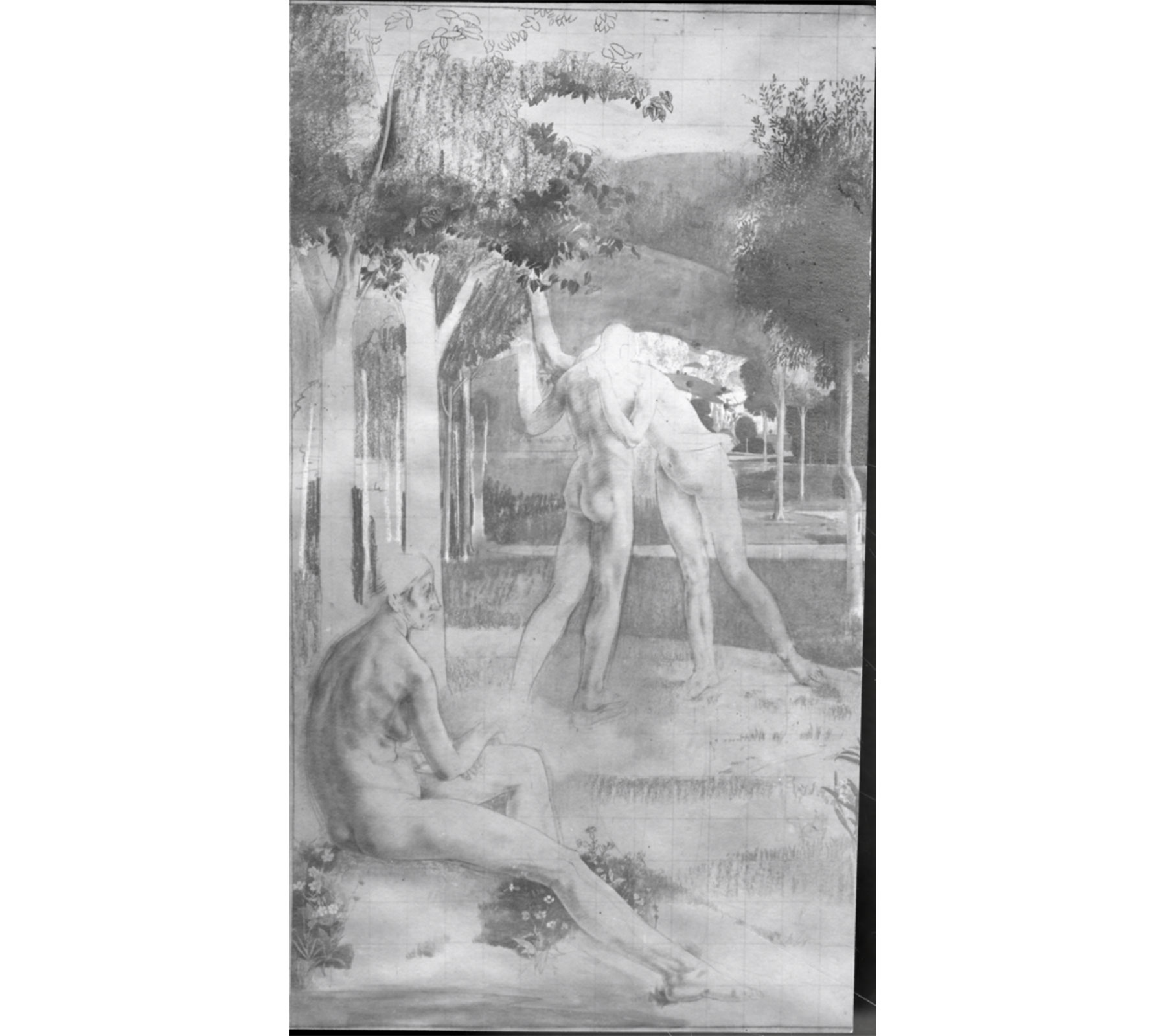
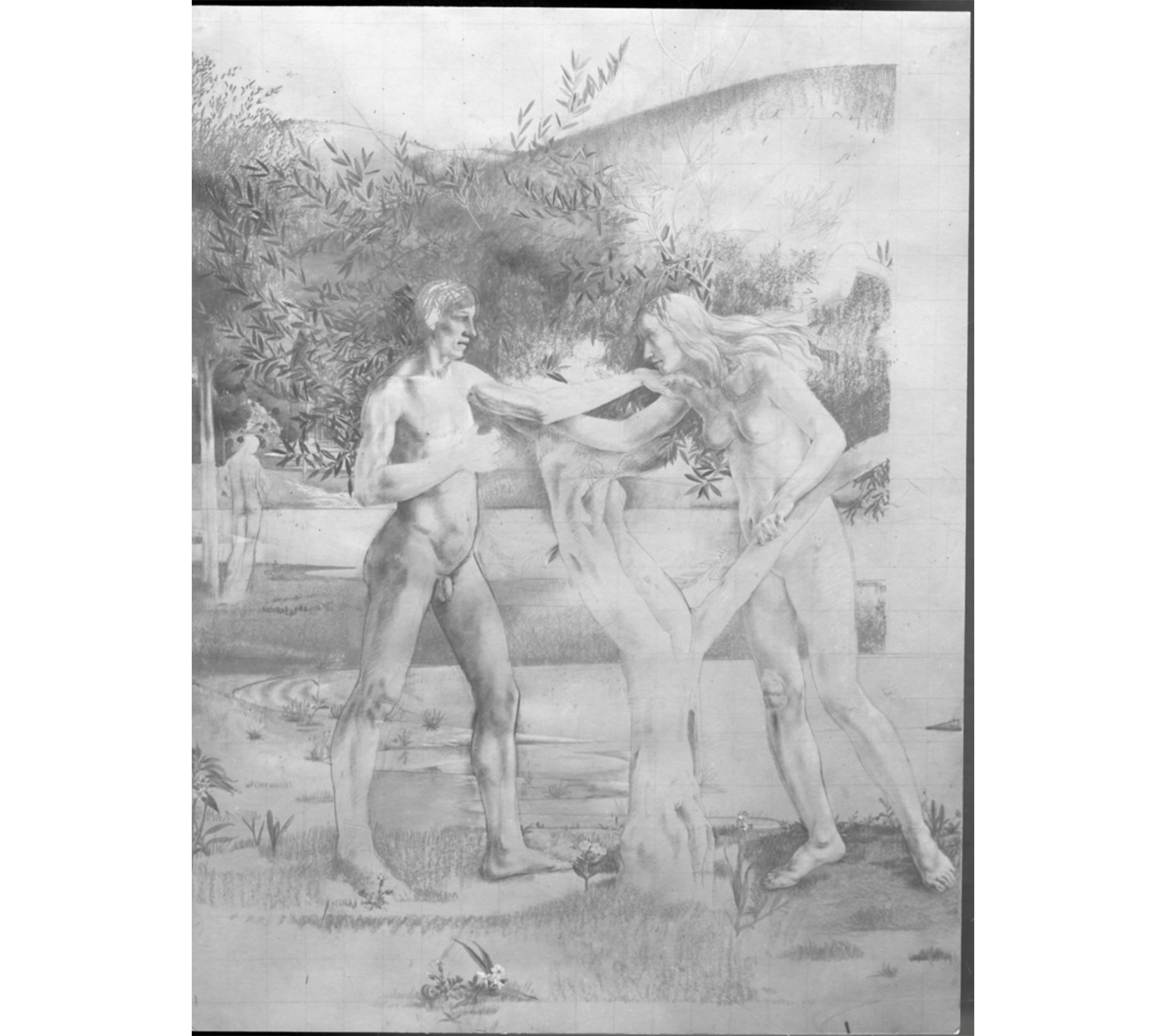
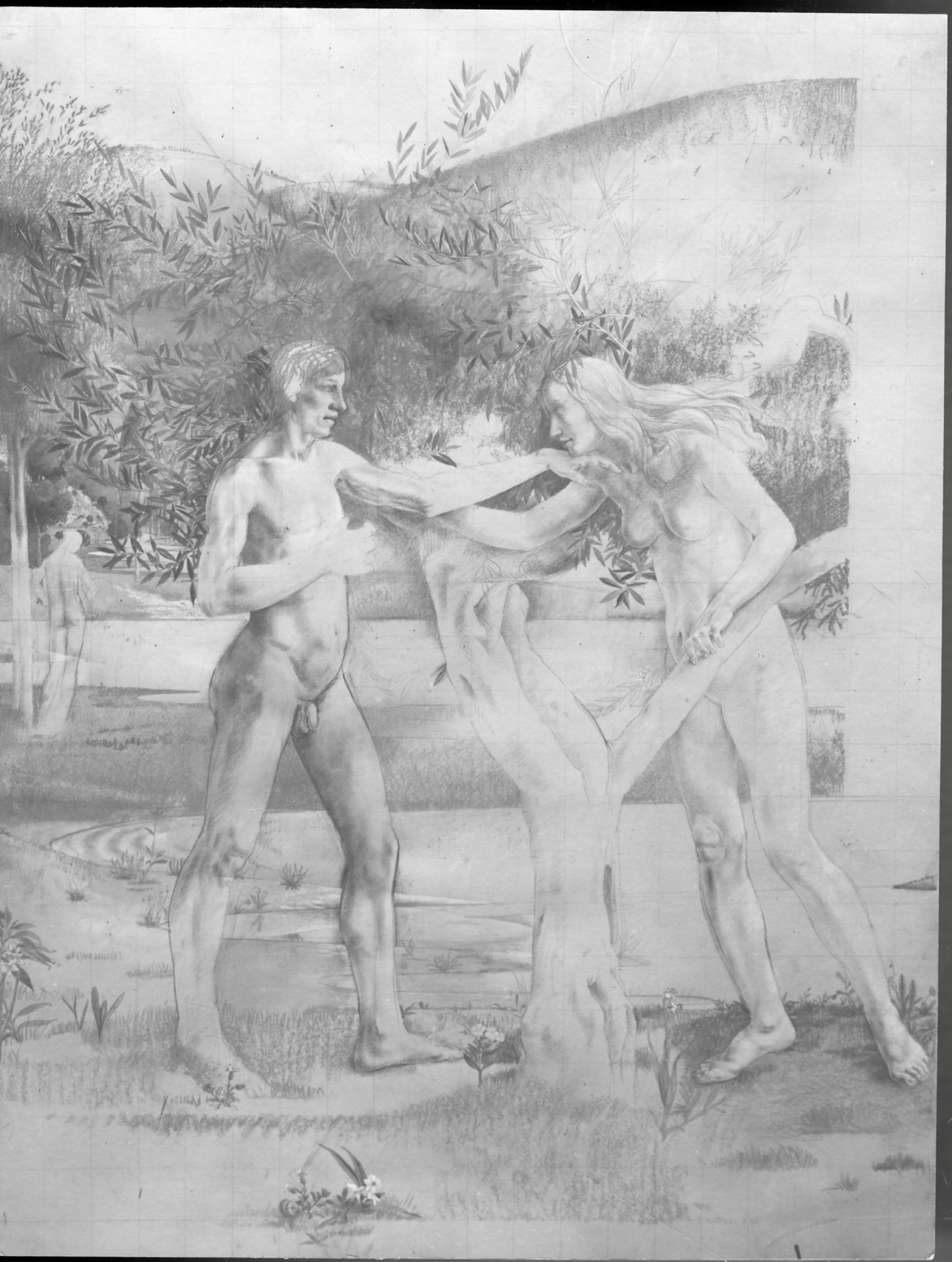
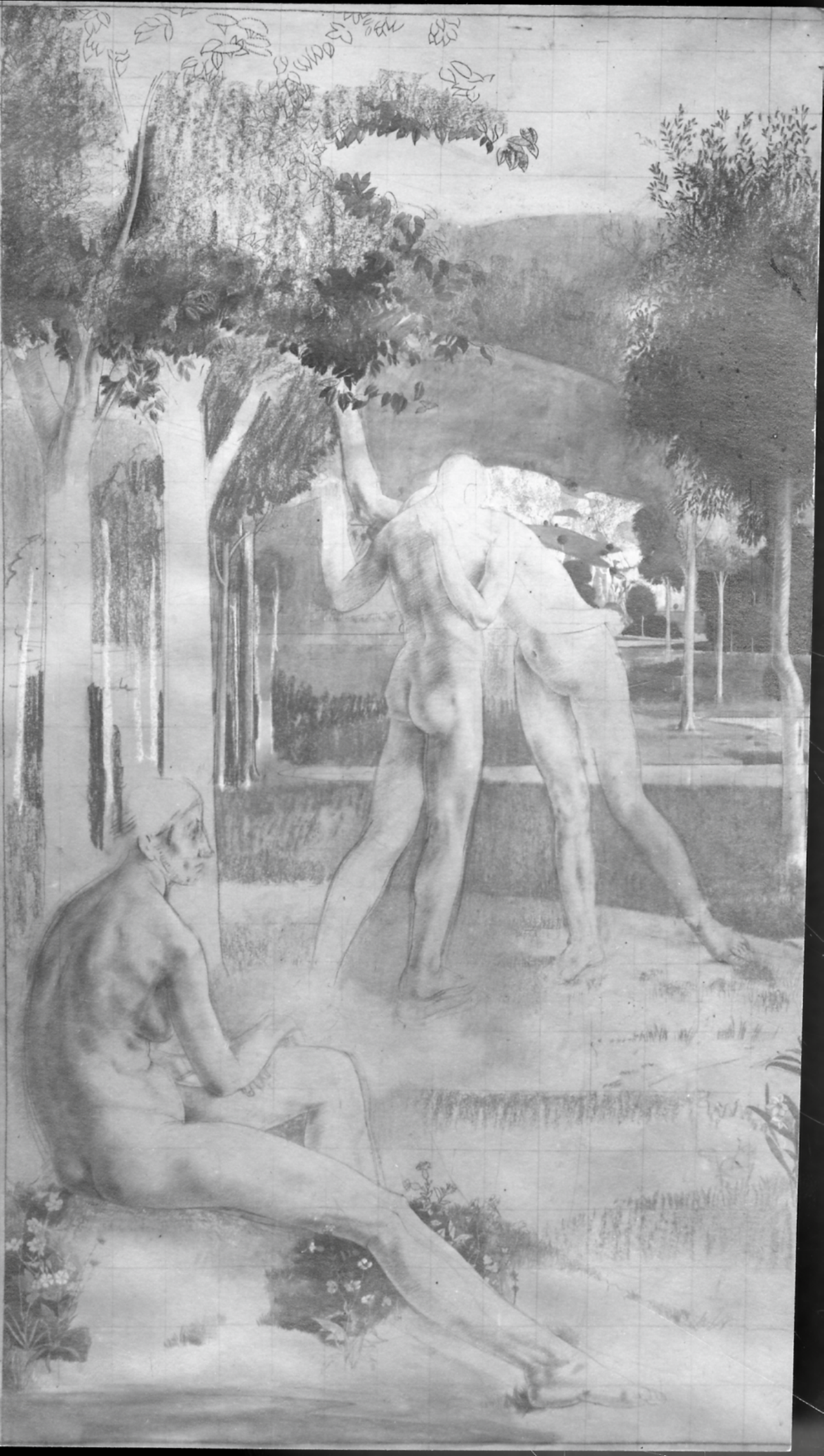
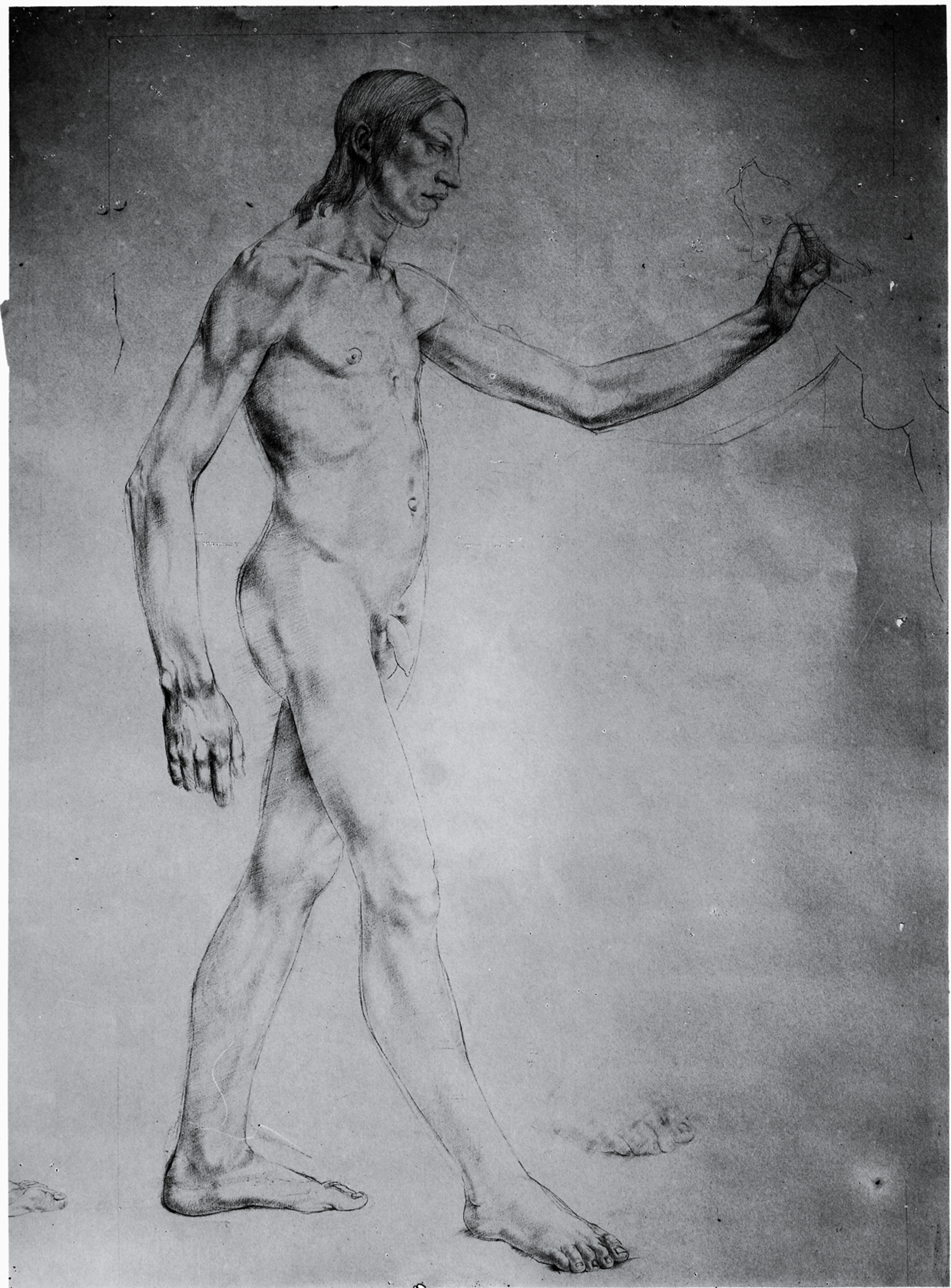
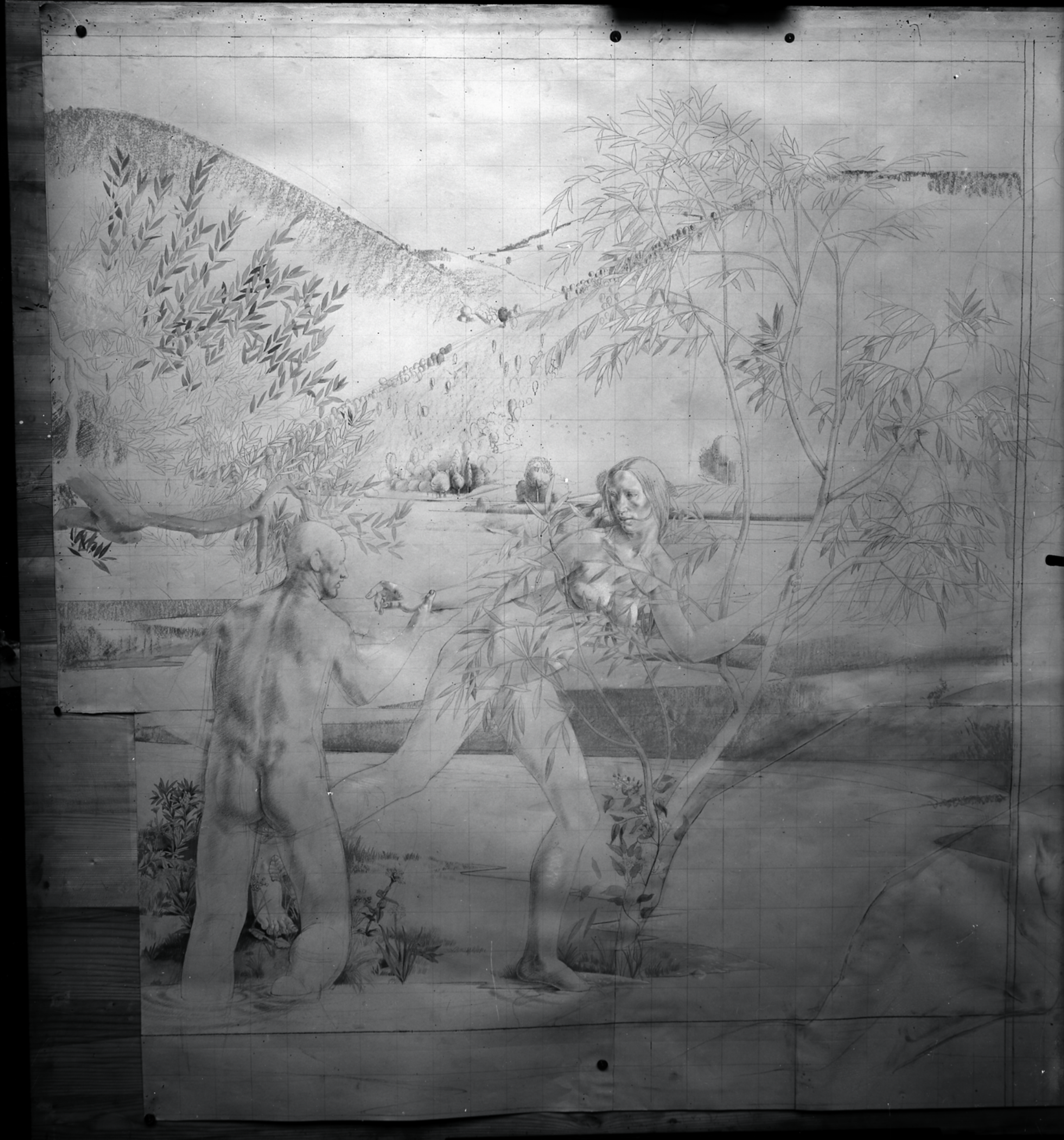
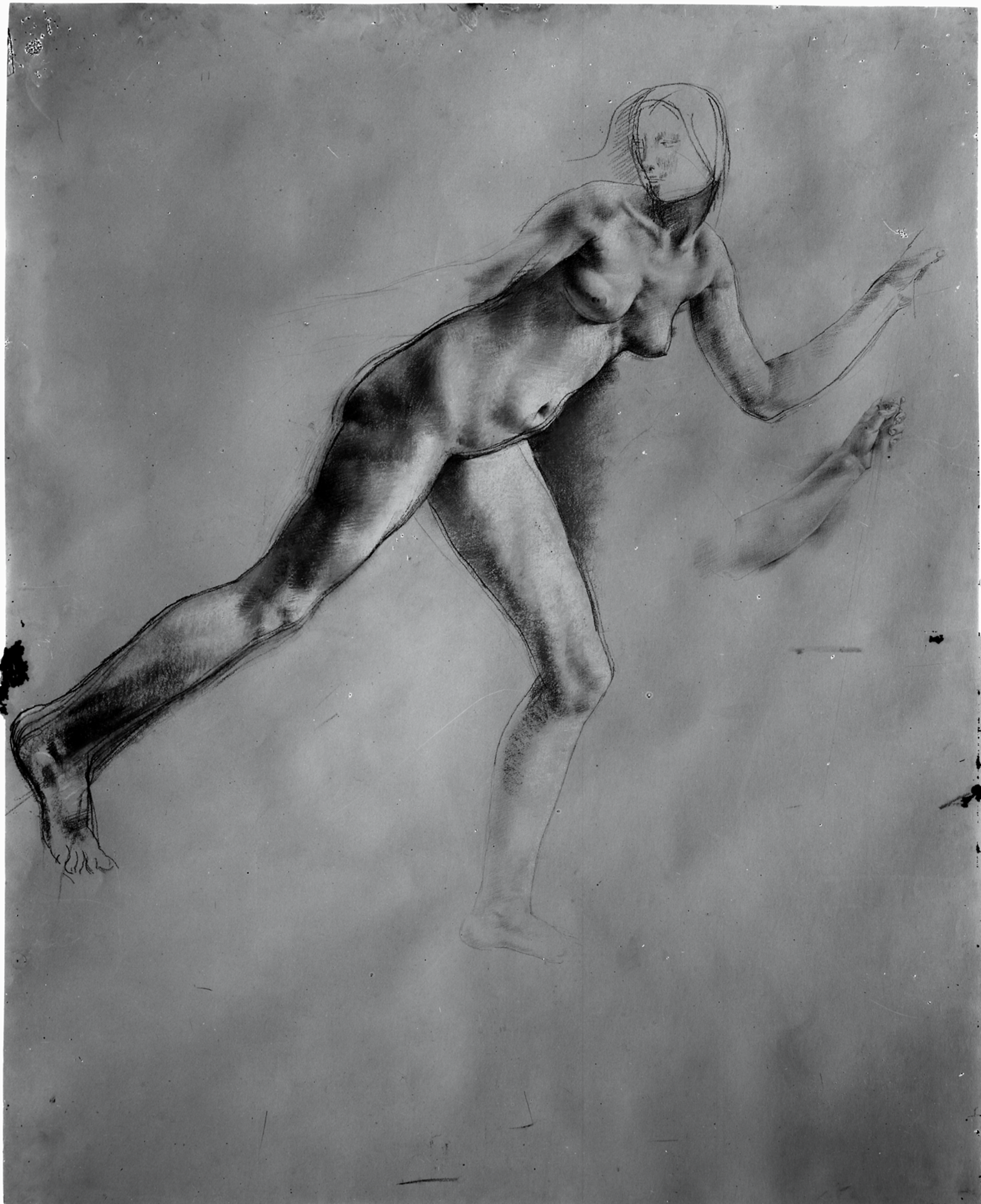
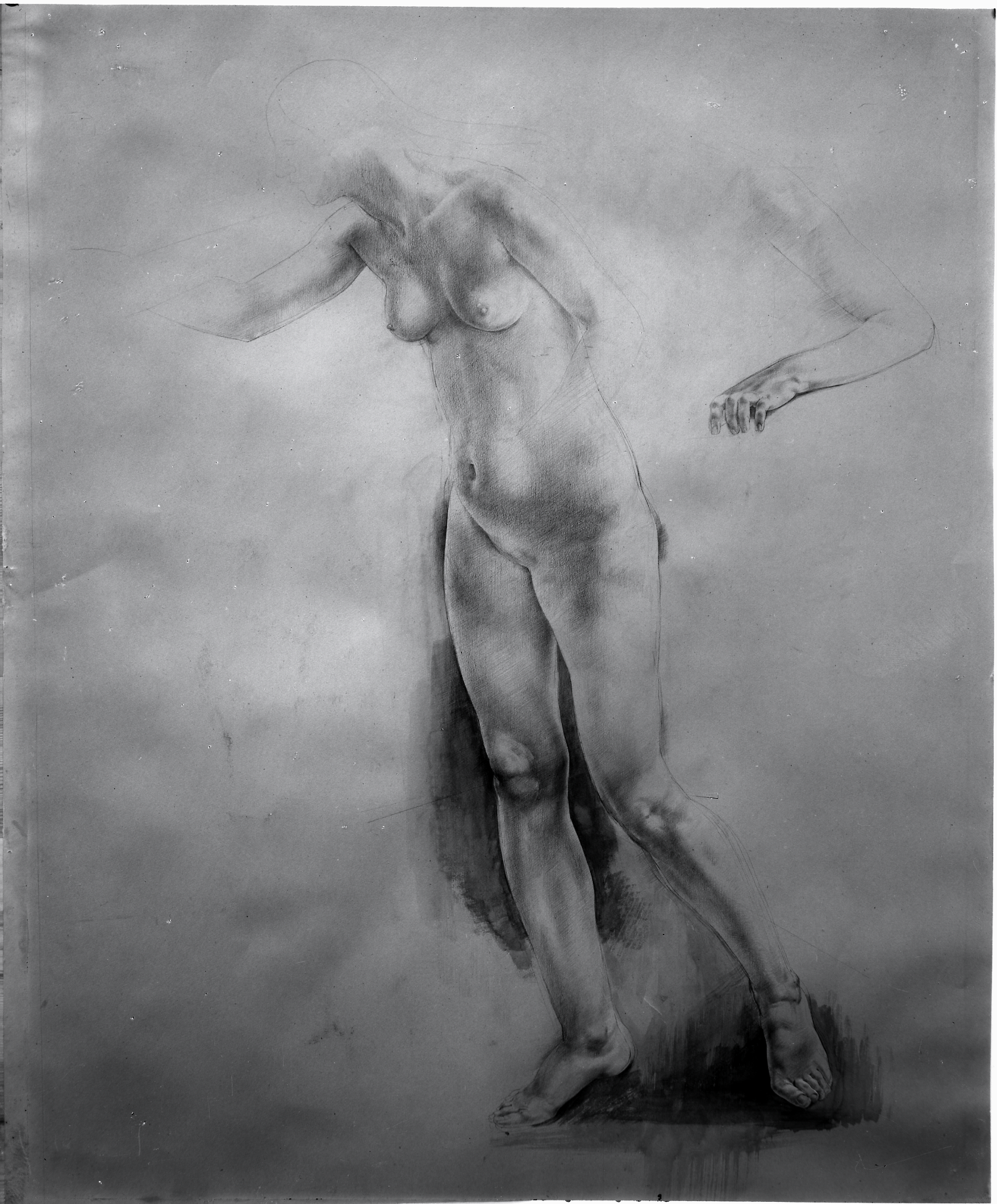
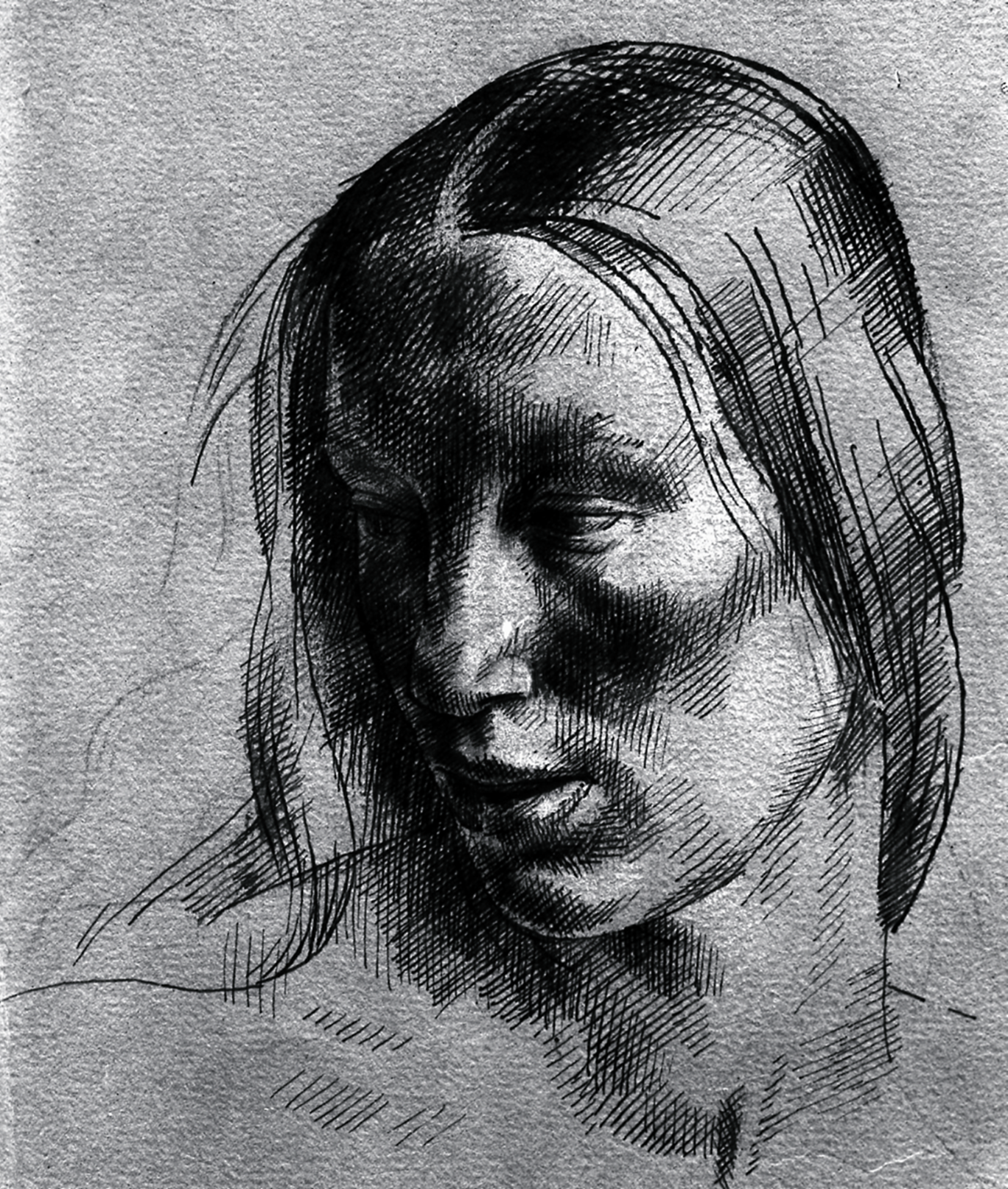
The archival holdings relating to Sir Thomas Monnington (1902-1976) illuminate the progress of one of his most significant earlier works, Allegory (Tate, 1924). The studies in this slideshow show how he developed the poses and facial expressions of his subjects, as well as the shading and placement against the light. They reveal the experimentations Monnington conducted with these elements. Notice, too, how some of these studies carry more detail than the final version, which was deliberately left ‘unfinished’ in places.
Monnington Collection, study for allegory woman’s face 1 (BSR Fine Arts Archive)
Monnington Collection, study for allegory woman’s body 1 (BSR Fine Arts Archive)
Monnington Collection, study for Allegory man 1 (BSR Fine Arts Archive)
Monnington Collection, study for Allegory right 1 (BSR Fine Arts Archive)
Monnington Collection, study for Allegory man 1 (BSR Fine Arts Archive)
Monnington Collection, study for Allegory left 1 (BSR Fine Arts Archive)
Monnington Collection, study for Allegory centre 1 (BSR Fine Arts Archive)
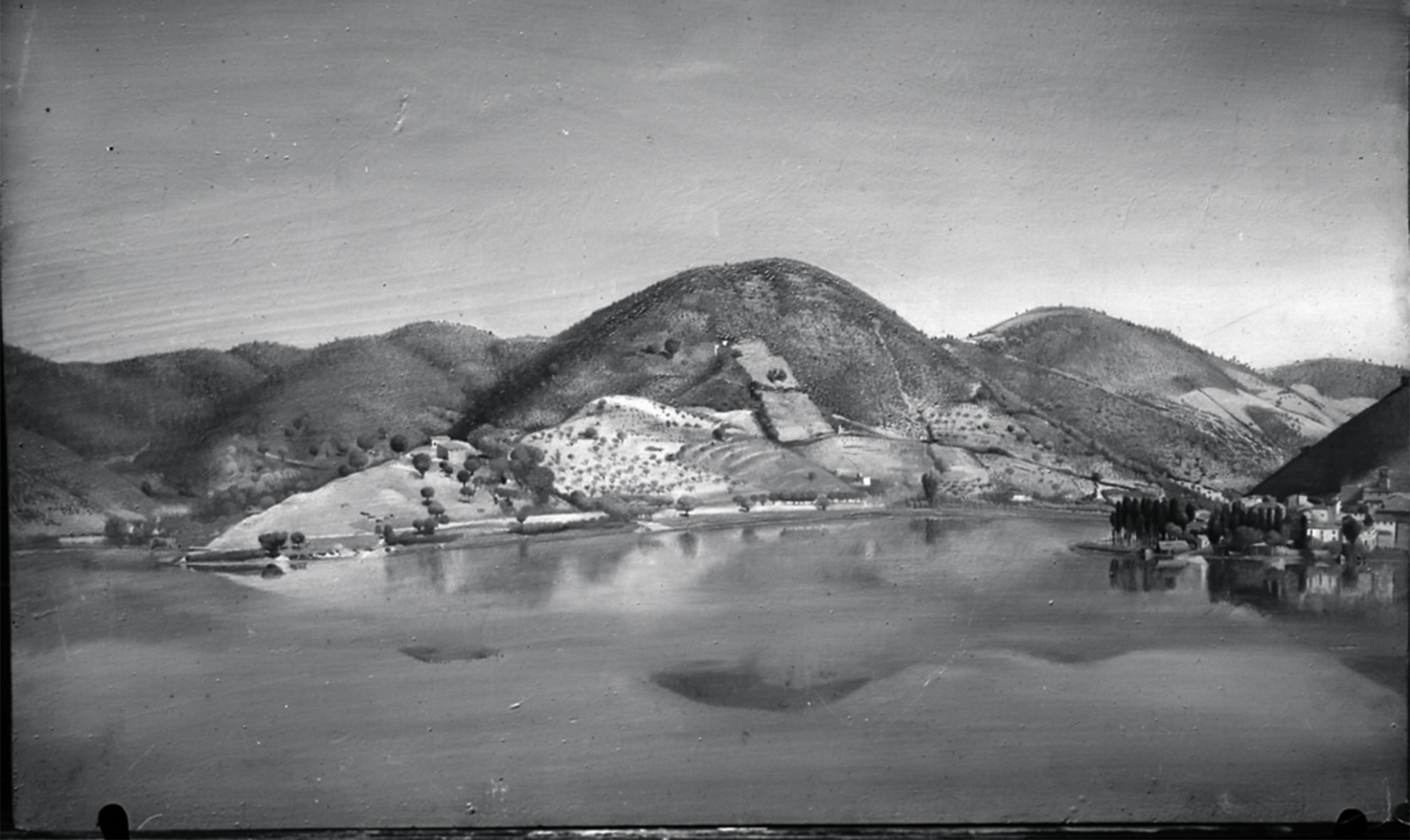
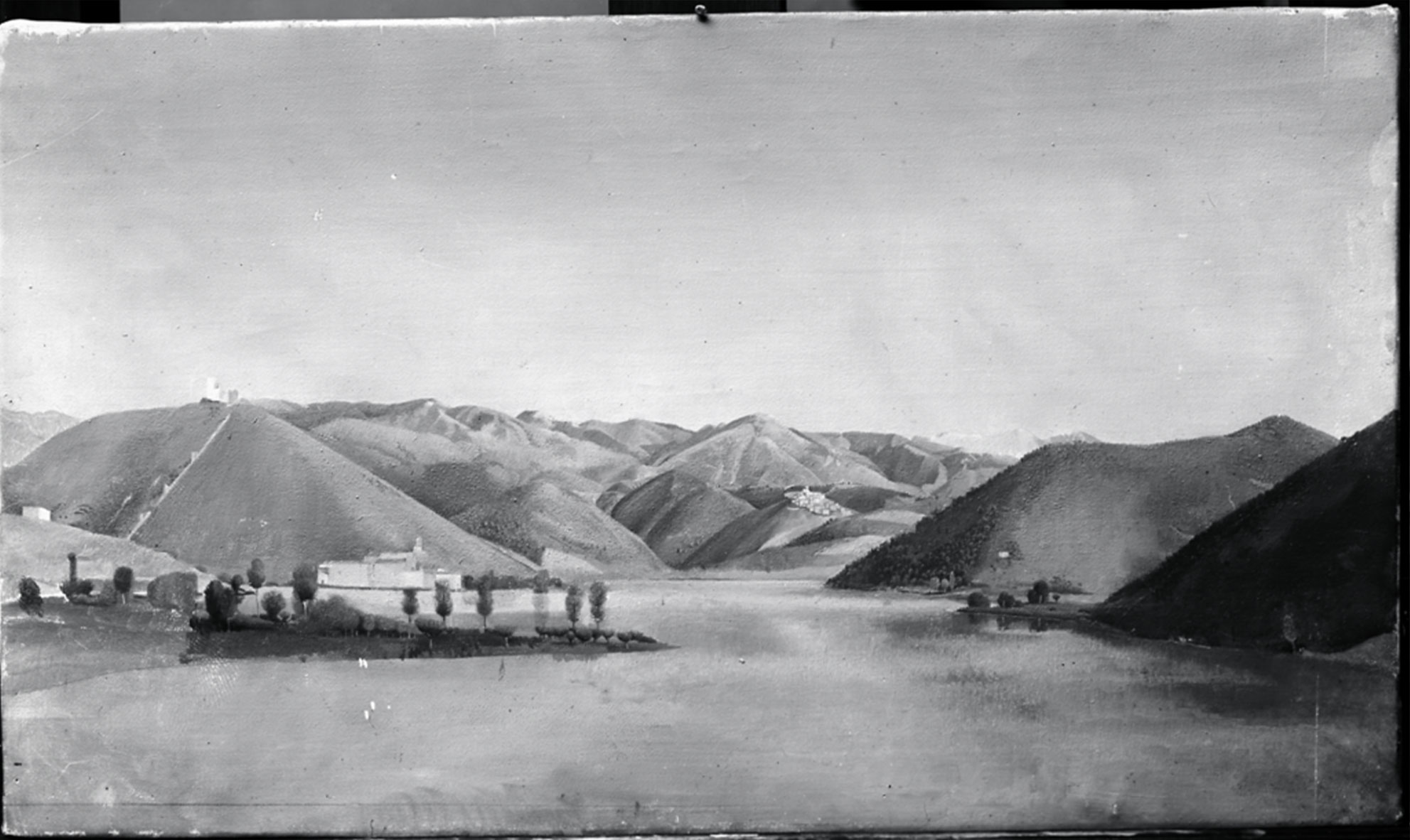
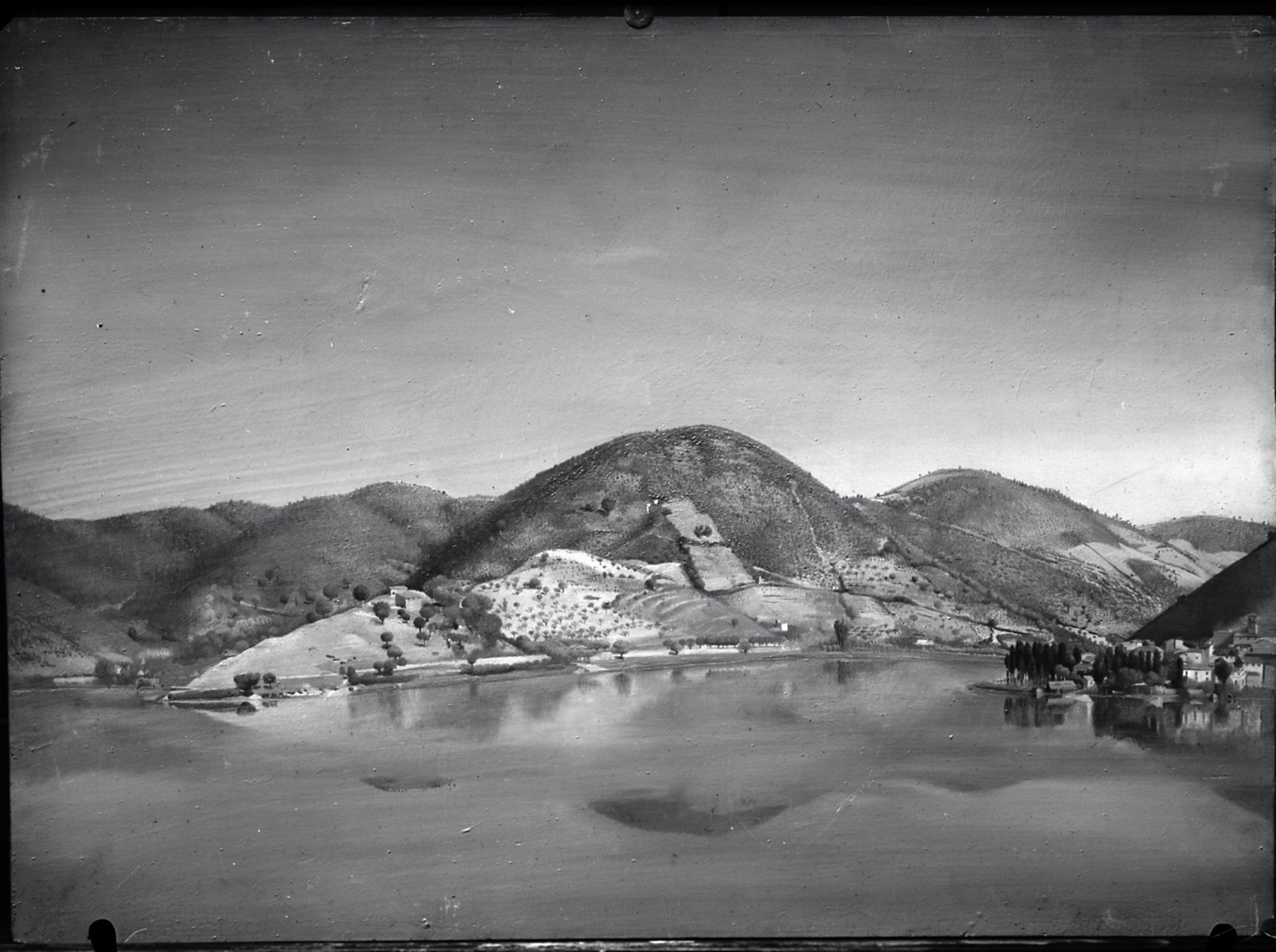
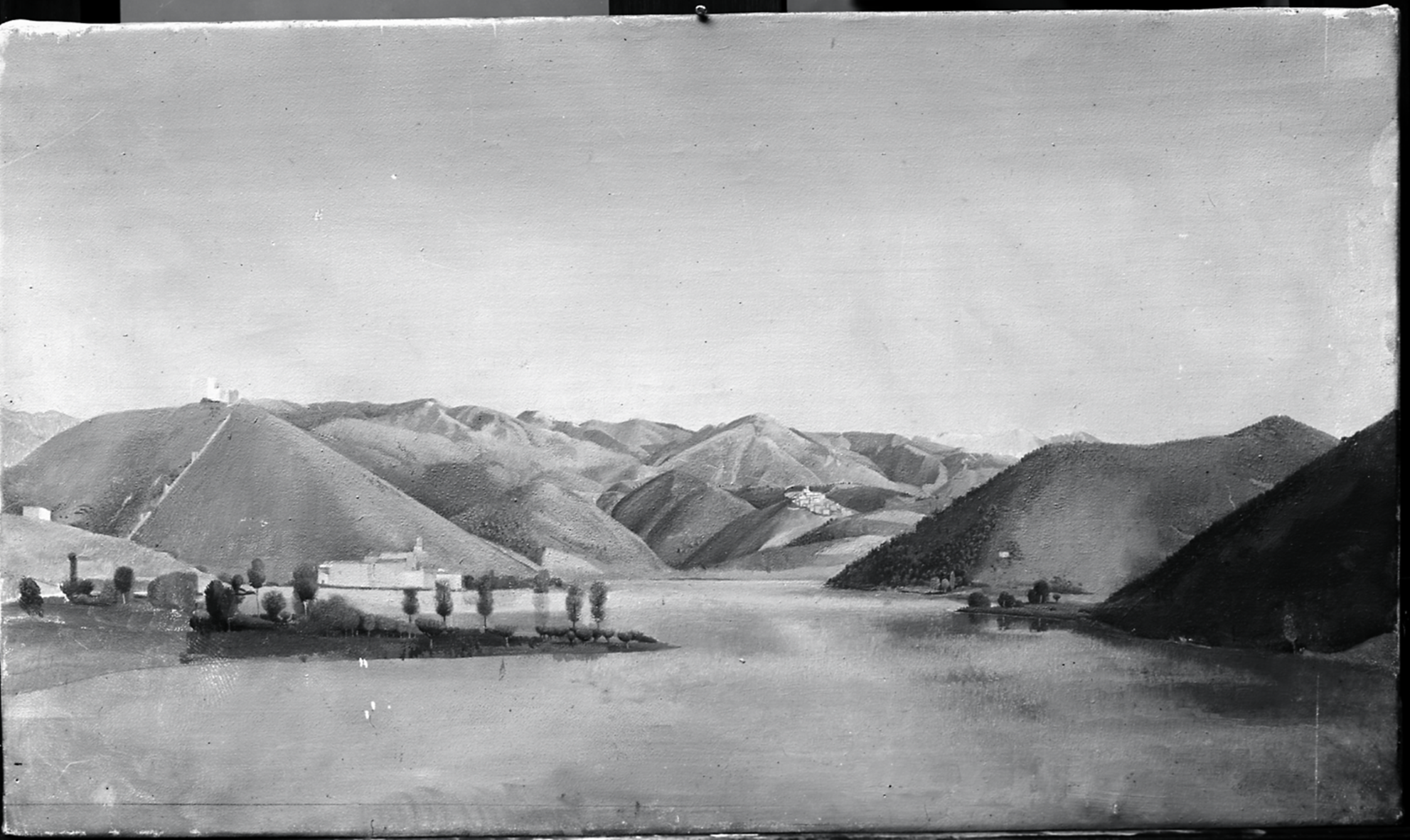
The figures of Allegory were set against the back drop of Piediluco, a lake that marks the border between Lazio and Umbria. This was a favourite spot for Monnington and he painted other landscapes of the area.
Photograph of Thomas Monnington’s Piediluco, c.1924 (BSR Fine Arts Archive)
Photograph of Thomas Monnington’s Piediluco, c.1924 (BSR Fine Arts Archive)
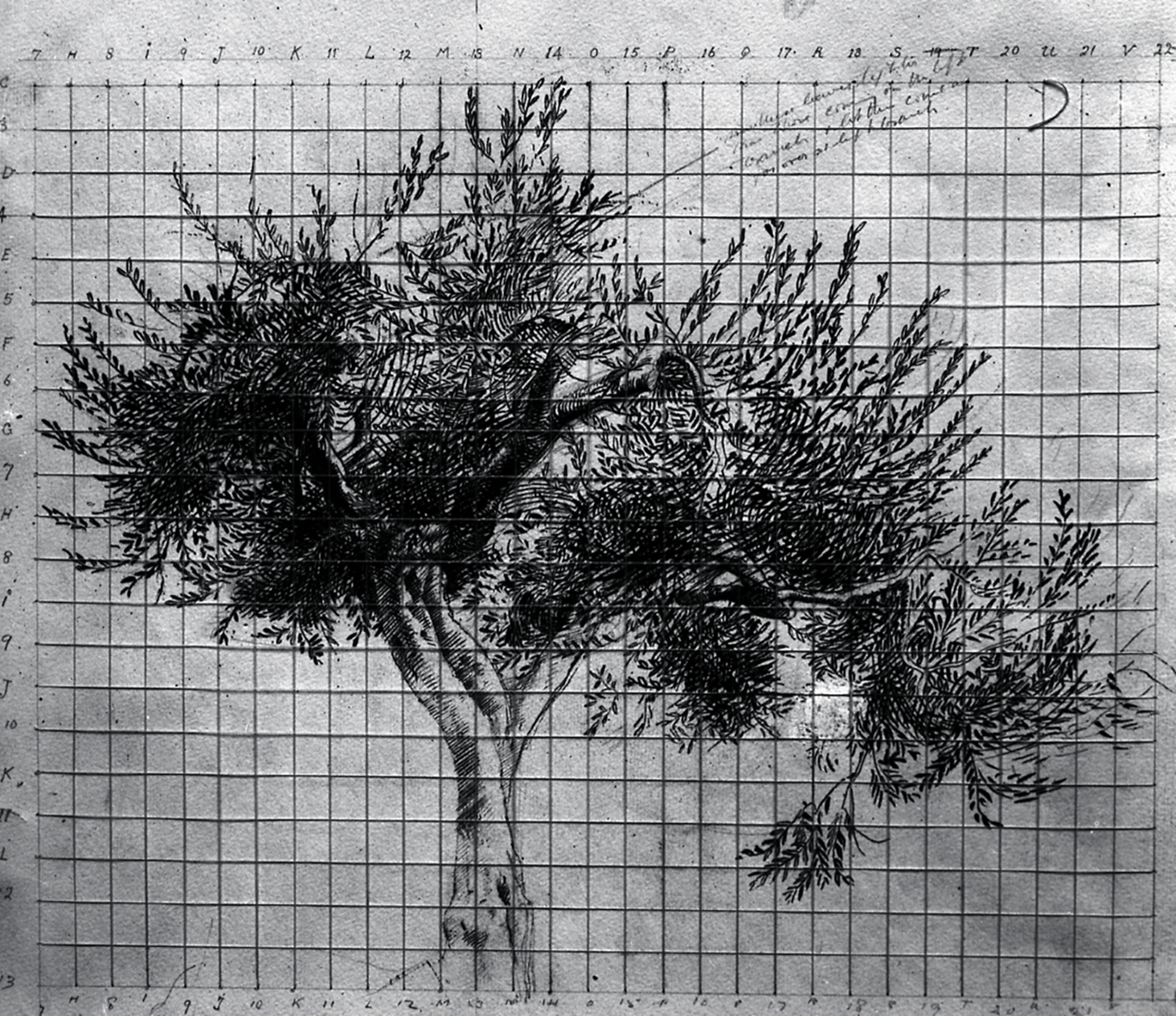
This study of a tree, likely from the Borghese gardens that are in close proximity to the BSR, reveals the attention to detail that artists must pay to shape and proportionality. The grid here is a traditional method used for accuracy and it was key to the pedagogy of the Slade School of Art at the time.
Monnington Collection, Study of a Tree 1 (BSR Fine Arts Archive)
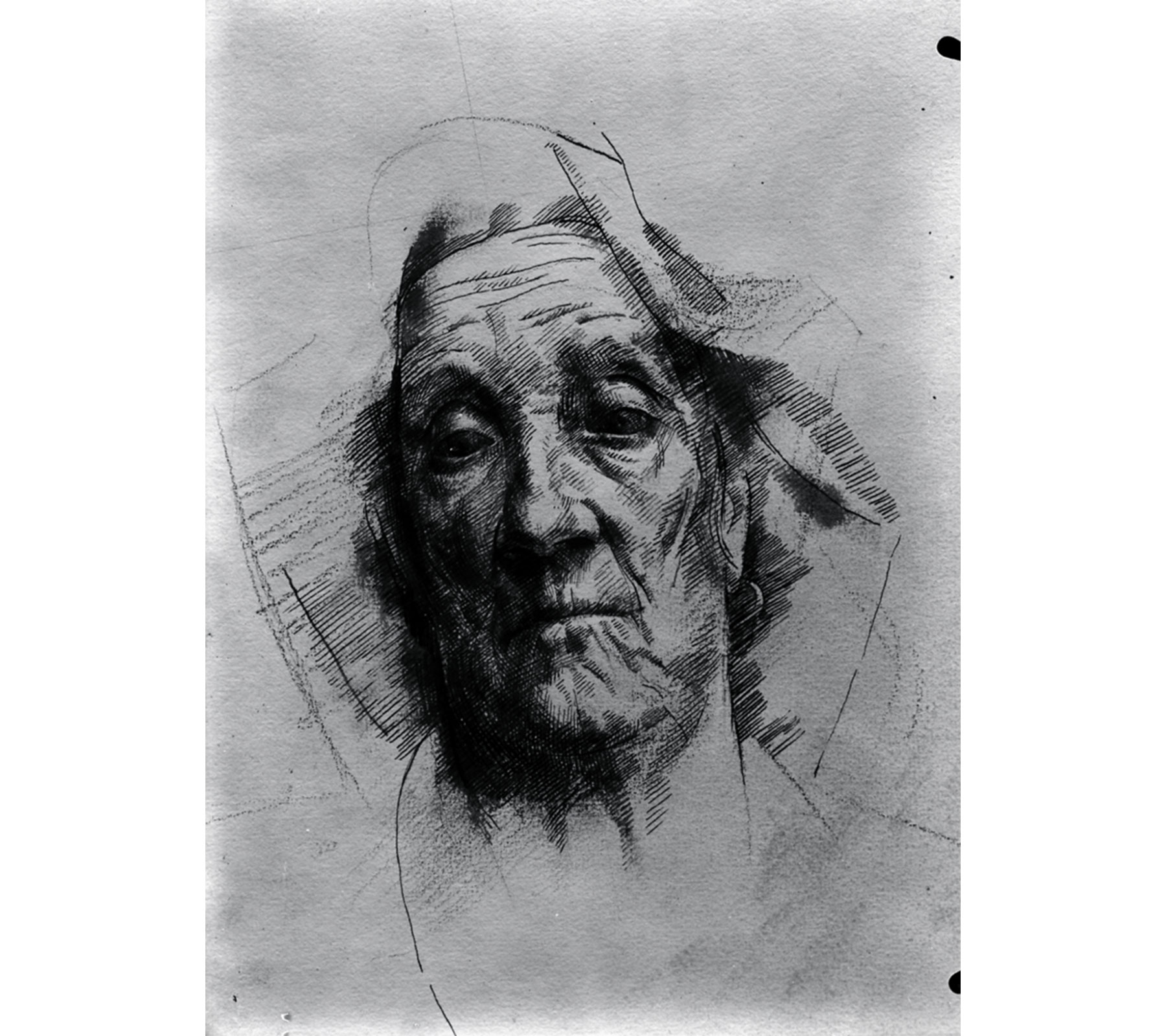
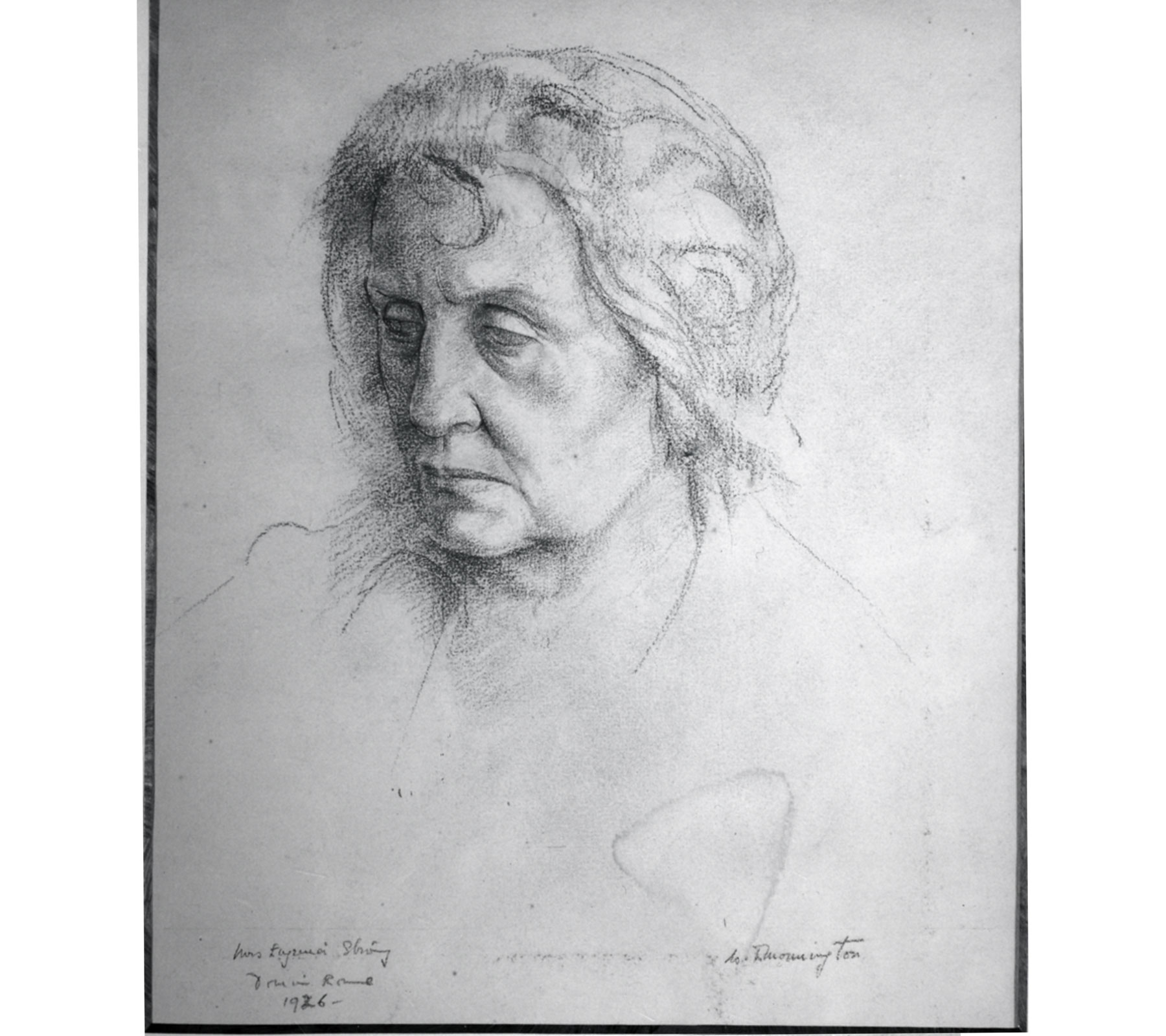
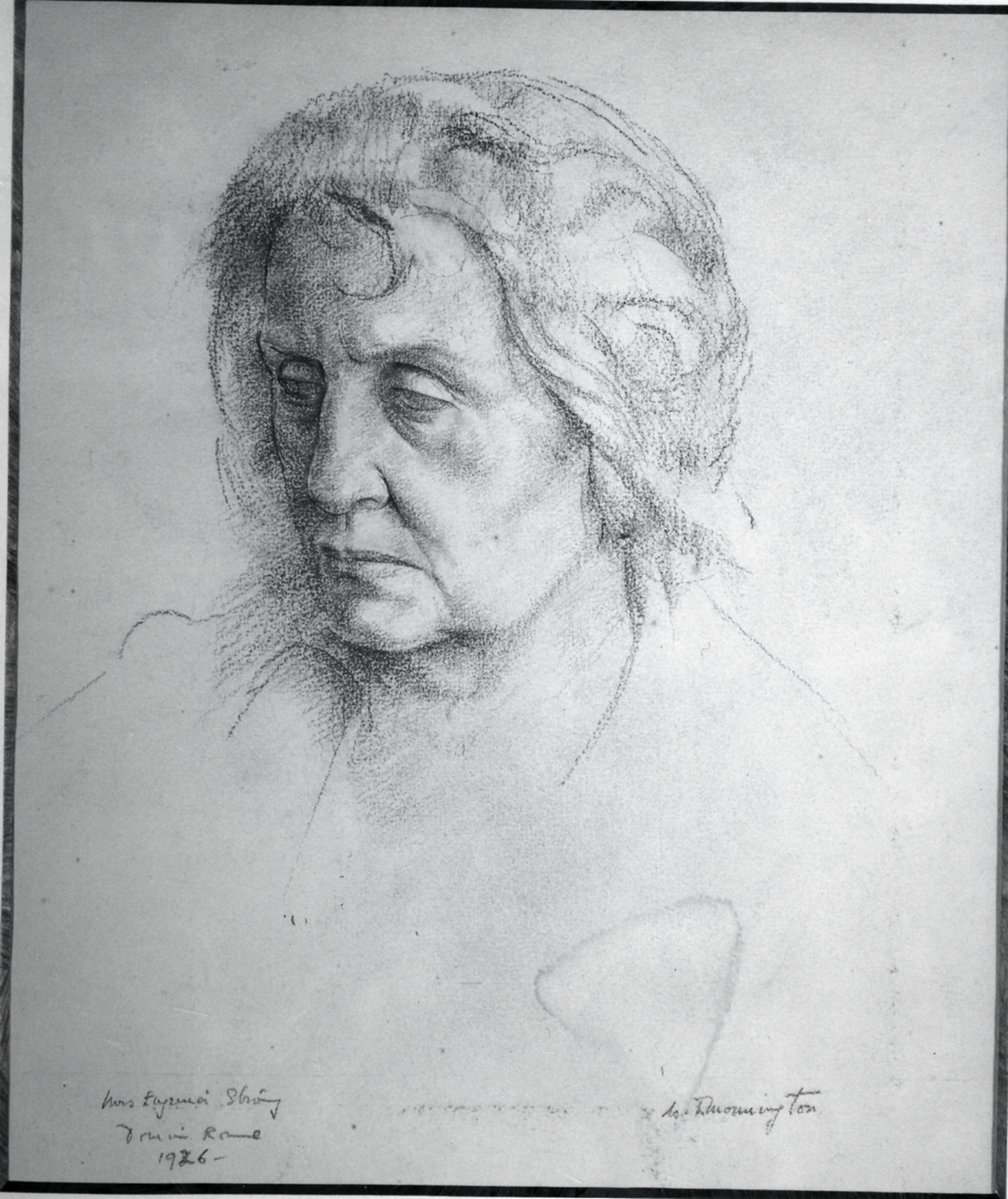
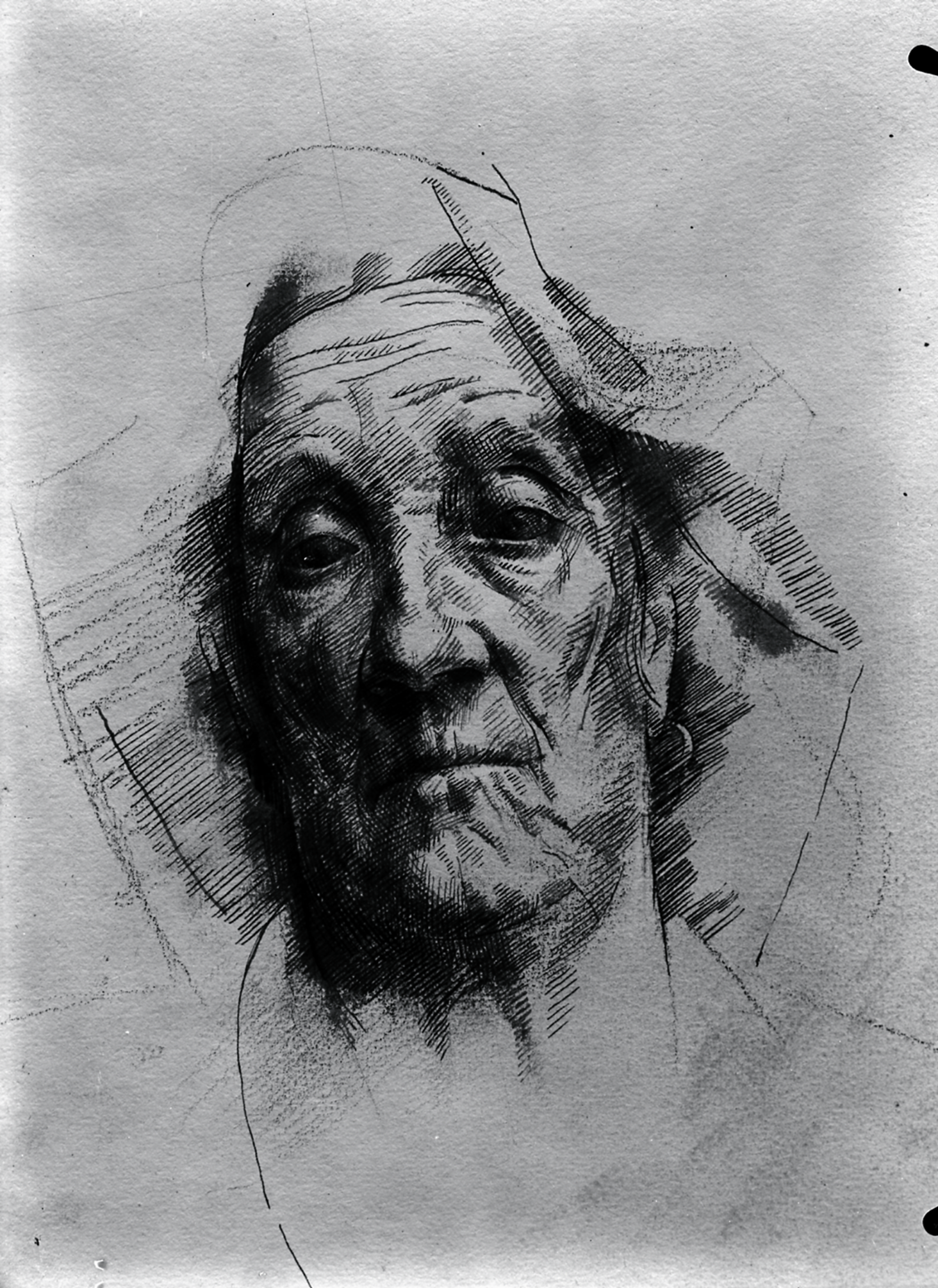
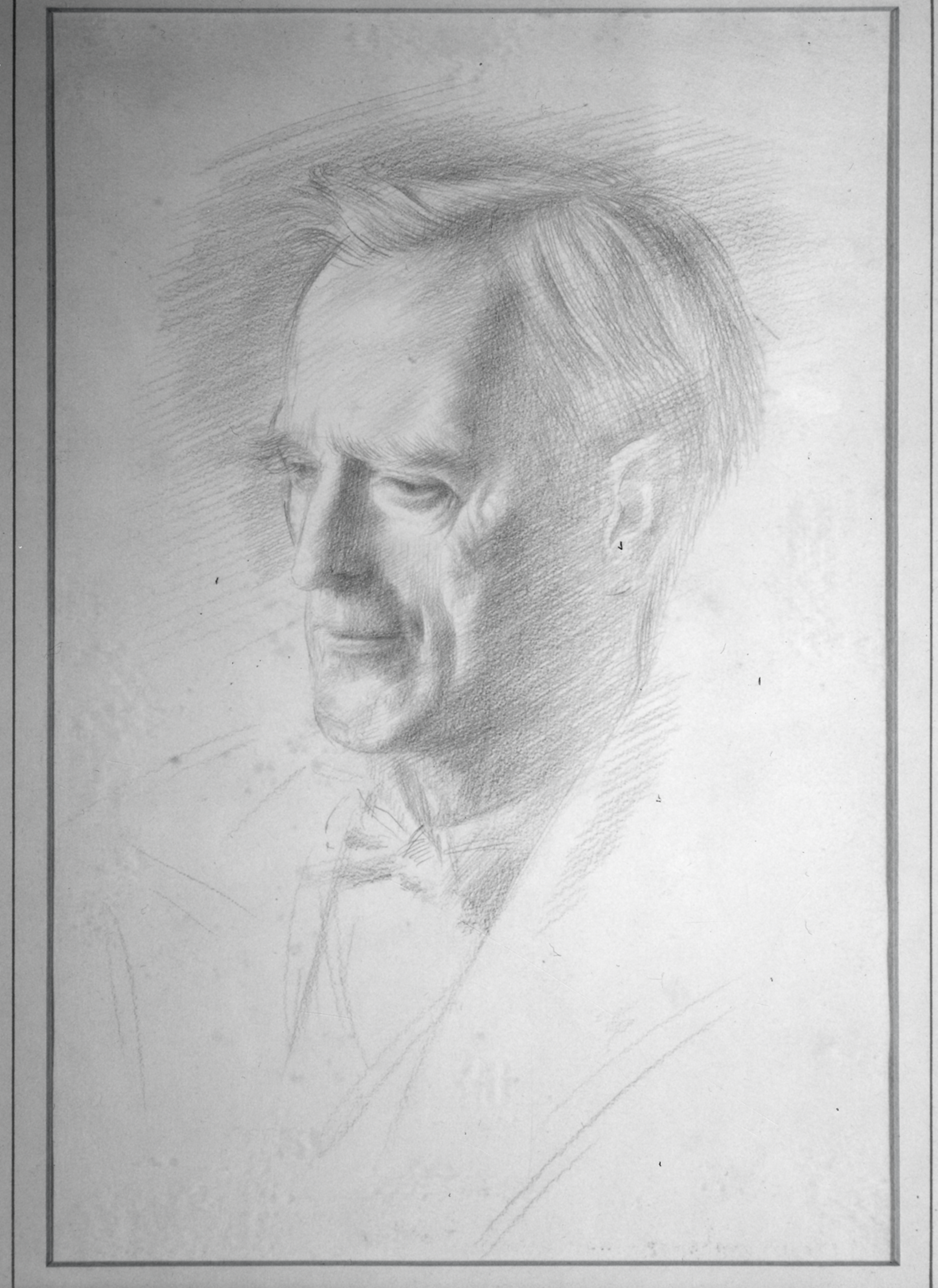
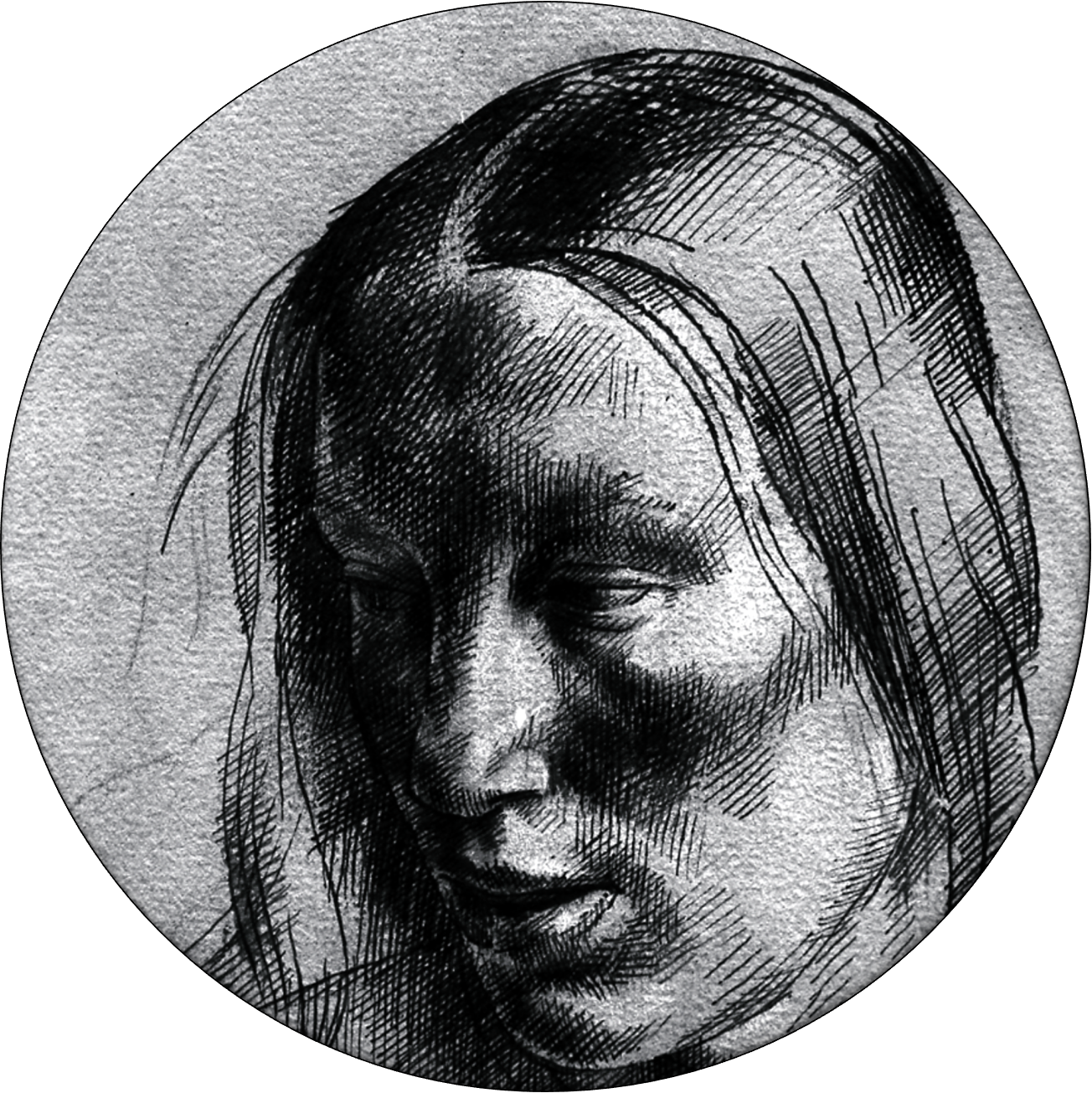
Other portrait studies show Monnington’s training in capturing the details of people’s faces.
Monnington Collection, Portrait study 1 (BSR Fine Arts Archive)
Monnington Collection, Portrait study of Eugénie Strong, 1926 (BSR Fine Arts Archive)
Monnington Collection, Portrait study 3, (BSR Fine Arts Archive)
Where would you like to go next? Who would you like to meet?
Sir Walter Thomas Monnington (1902–1976)
Learn more about Photography at the BSR, 1913–1930
Visit the Borghese Gardens
Please click on the images to enlarge them.
Photograph of Thomas Monnington’s Piediluco (c.1924), BSR Fine Arts ArchiveMonnington Collection, Portrait study 2 Eugenie Strong 1926, BSR Fine Arts ArchiveMonnington Collection, Portrait study 3, BSR Fine Arts ArchiveMonnington Collection, Study of a Tree 1, BSR Fine Arts Archive
For a full bibliography and further reading, see here.
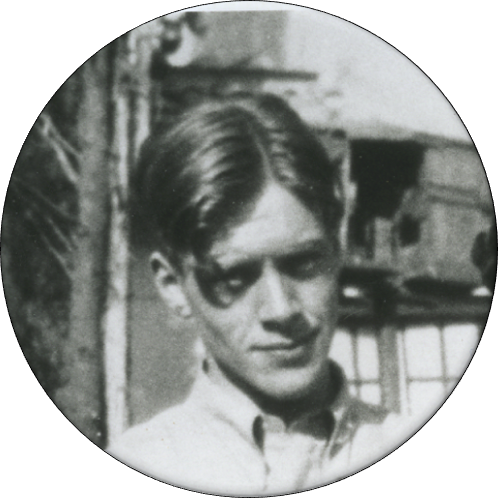
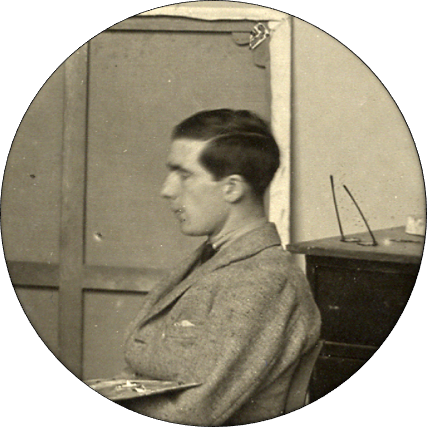
Sir Walter Thomas Monnington (1902-1976), or Tom Monnington to those who knew him, was under-appreciated for much of his lifetime, and has been seen as a somewhat enigmatic individual. In the early part of his career, he was valued within the artistic world more for his charm, intelligence and temperament than for his artistic skills. Despite the under-appreciation of his peers, and his own self-deprecation, he had a long life as an artist, going through two distinct phases in his career.
He began, as most Slade scholars did, as a classicist, his work earning him the Rome Prize in 1922 for decorative painting (the first to be awarded since 1920). Following the Second World War, he moved into abstractionism, inspired as he was by the technology of the period, and by his experience working during the war on camouflage and as a War Artist. Perhaps overshadowed by his wife, Winifred Knights (1899-1943), his work has since come to be appreciated more since his death in 1976.
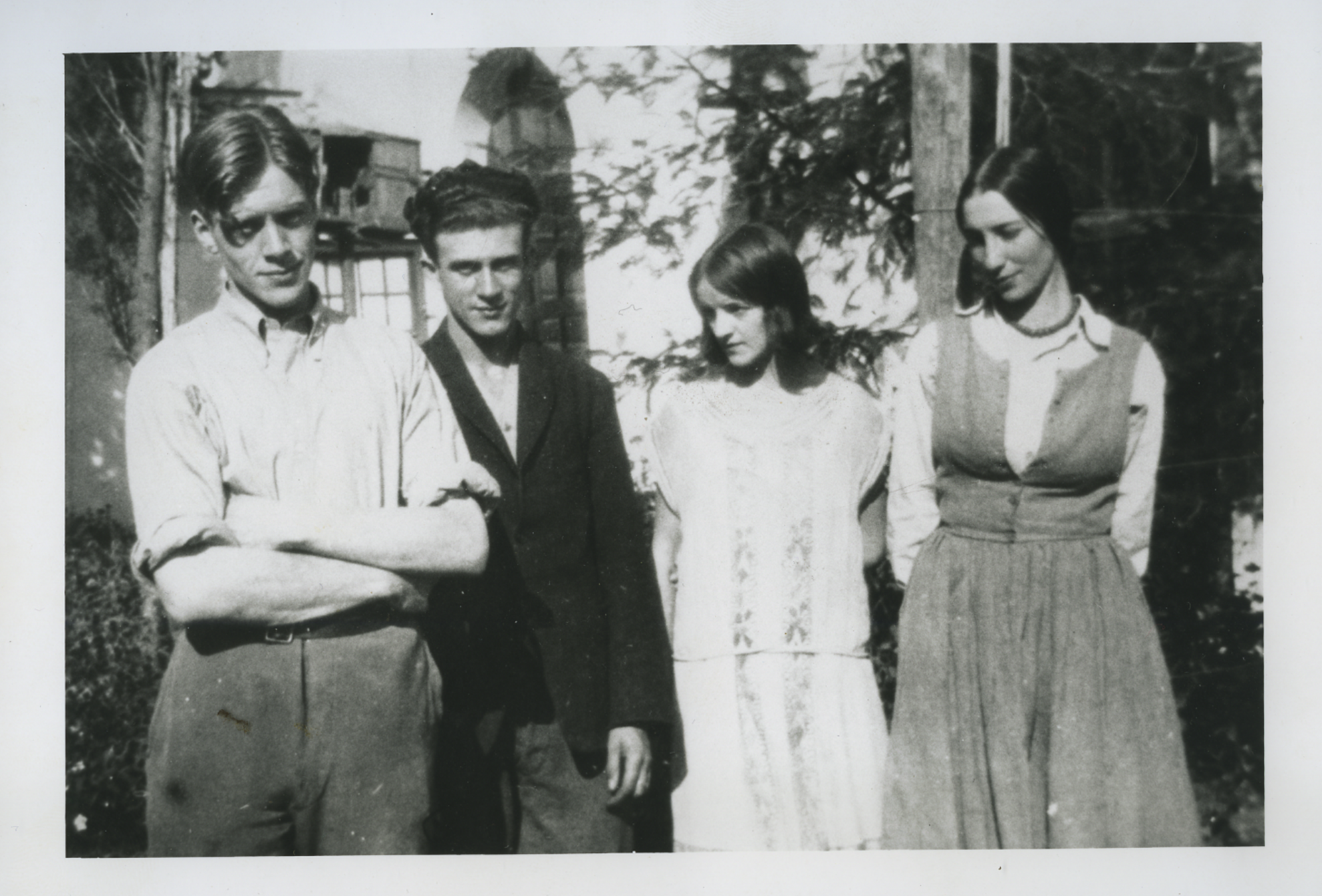
Tom Monnington (left), with J. R. Skeaping, Barbara Hepworth, and his future wife, Winifred Knights (right), 1925, (BSR Photographic Archive, BS Collection)
Monnington arrived at the BSR at the age of 21. He had studied at the Slade School of Art from 1919 to 1923, and was one of several artists from the School who took the natural step towards competing for the Rome Scholarship in Decorative Painting. Monnington won with his depiction of Winter (1921). The oil on canvas shows the influence of Italian Renaissance painting on his work, and in particular the work of Piero della Francesca. He produced his most significant painting, and to date arguably his most famous, whilst in Rome. Allegory (1924) painted during the early part of his scholarship, was purchased by the Tate in 1925. This piece, like others he produced, was inspired by the landscape surrounding him in Italy. Allegory was based on Monnington’s studies of Piediluco, a town within the province of Umbria, and home to the Lago di Piediluco, a picturesque lake about 45 miles north of Rome. Piediluco was depicted elsewhere in this work, too.
The Wine Press (c.1923), Monnington’s first major painting in Rome, shows several people involved in the traditional production of wine, with the grapes pressed by foot. The background, as in Allegory, was based on the Umbrian landscape, and some of the figures were similarly inspired by Piero della Francesca’s work. The Annunciation, (c.1924/1925), was set in the Borghese gardens that are adjacent to the BSR. These paintings display a particular feature of Mornington’s work, revealing how Modernist impulses were affecting his classical training. Allegory features in the foreground several figures, inspired by Adam and Eve. Some remained unfinished, not from apathy or forgetfulness, but as part of the aesthetic. The incomplete forms of some of the figures add to the imaginative quality, and give the piece a Modernist feel. Monnington took a similar approach to The Annunciation, with the central figures given more detail than those to the sides, again revealing Monnington’s instinct that ‘finishing’ the painting would diminish, rather than enhance, its quality.
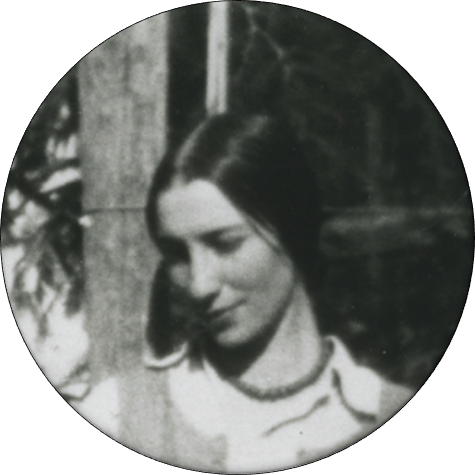
As well as showing the influence of Rome, these paintings also reveal Monnington’s connection with his fellow scholars. The most significant of these connections was with Winifred Knights, whom he married at Rome in April 1924. The Adam and Eve figures in Allegory were based on himself and Knights. A study exists of Knights for Allegory, showing Knights’ distinctive features embedded into the face of the Eve figure. Knights stayed with Monnington in Rome until the end of his scholarship, and long after hers had ended. Monnington left Rome in January 1926 to meet Knights, who had travelled out the month before to London.
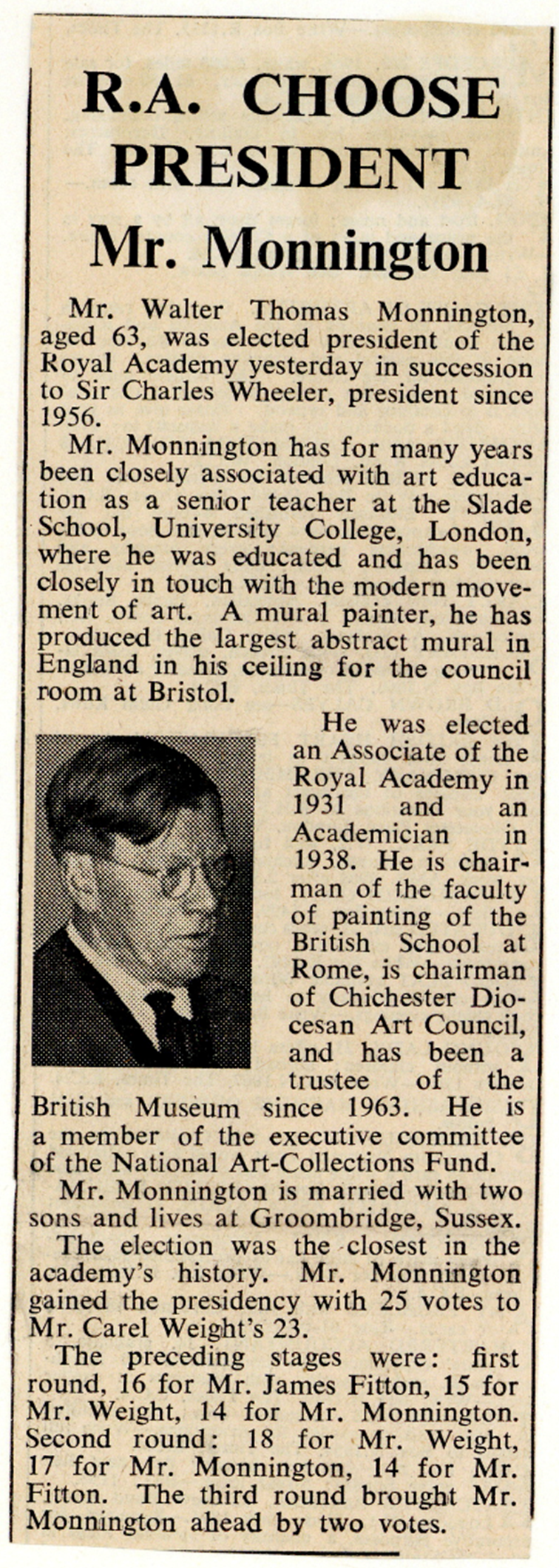
Clipping from The Times from the 7th December 1966 announcing Monnington’s appointment as president of the Royal Academy. He was elected, so contemporaries reported, for his personal, rather than artistic, qualities (BSR Administrative Archive)
Monnington found work, like other Slade and Rome scholars of his time, in large-scale public commissions. Like his contemporary Colin Gill (1892-1940), Monnington painted for St Stephen’s Hall at Westminster and the Bank of England. The former was a mural depicting the 1707 Articles of Union being presented to Queen Anne, while the latter depicted contemporary figures of the Bank. It was a disappointment to Monnington, who found the process uninspiring. His last major mural was Supper at Emmaus (Bolton Parish Church, 1931).
Monnington’s return to public painting in the 1940s showed a marked departure in tone and style, demonstrating the affects of his time as a War Artist, notably an interest in radar, aeronautics and geometry. His first major commission, and the first to show this departure, was a painting for the ceiling of the Bristol Council House (c.1953). This was followed by the Mary Harris Memorial Chapel at the University of Exeter (1956). His canvas paintings reveal a similar shift, moving away from the landscapes and images of aeroplanes that had dominated his wartime painting to a series of abstract pieces influenced by mathematics and geometric patterns. During this time, he also taught at Camberwell School of Art and at the Slade. He became President of the Royal Academy in 1966, was knighted in 1967, and served as President until his death in January 1976.
Where would you like to go next? Who would you like to meet?
Explore the Sir Walter Thomas Monnington Collection in the BSR’s Fine Arts Archive
Visit the Borghese Gardens
Meet Winifred Knights (1899-1947)
Meet Colin Gill (1892-1938)
Learn more about Mural Painting at the BSR, 1913-1930
Sources and Further Resources
Liss, P. et al. (1997). Sir Thomas Monnington 1902 – 1976. Rome: The Fine Art Society, Paul Liss and British School at Rome.
Liss, P. Llewelyn, S. Et al. (2013). British Murals & Decorative Painting 1920 – 1960. Bristol: Samson & Co.
Liss, P. Llewelyn, S. Et al. (2013). British Murals & Decorative Painting 1910 – 1970. Bristol: Samson & Co.
Wallace-Hadrill, A. (Ed). (2001). The British School at Rome: One Hundred Years. Rome: BSR.
Wiseman, T.P. (1990). A Short History of the British School at Rome. Rome: BSR.
For a full bibliography and further reading, see here.
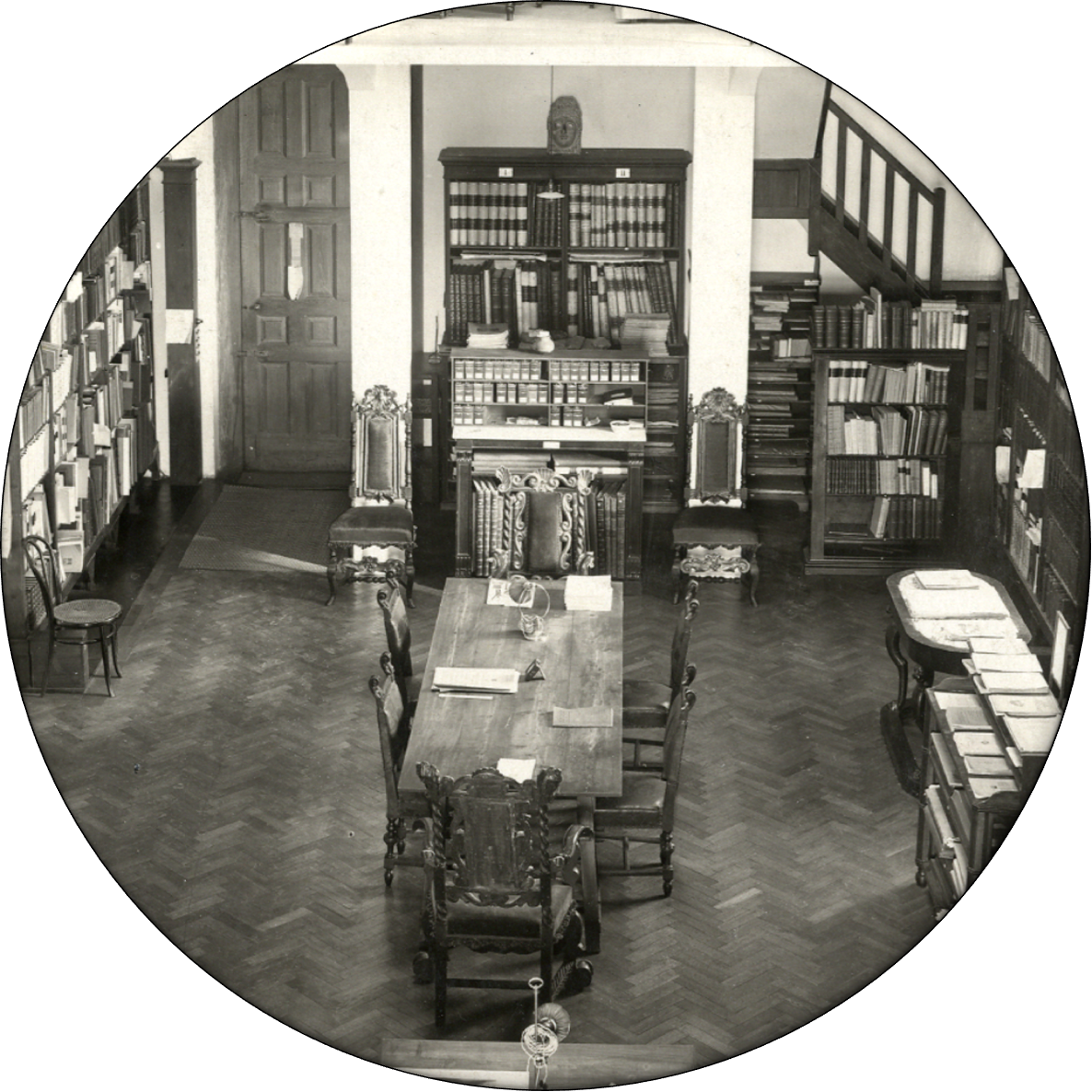
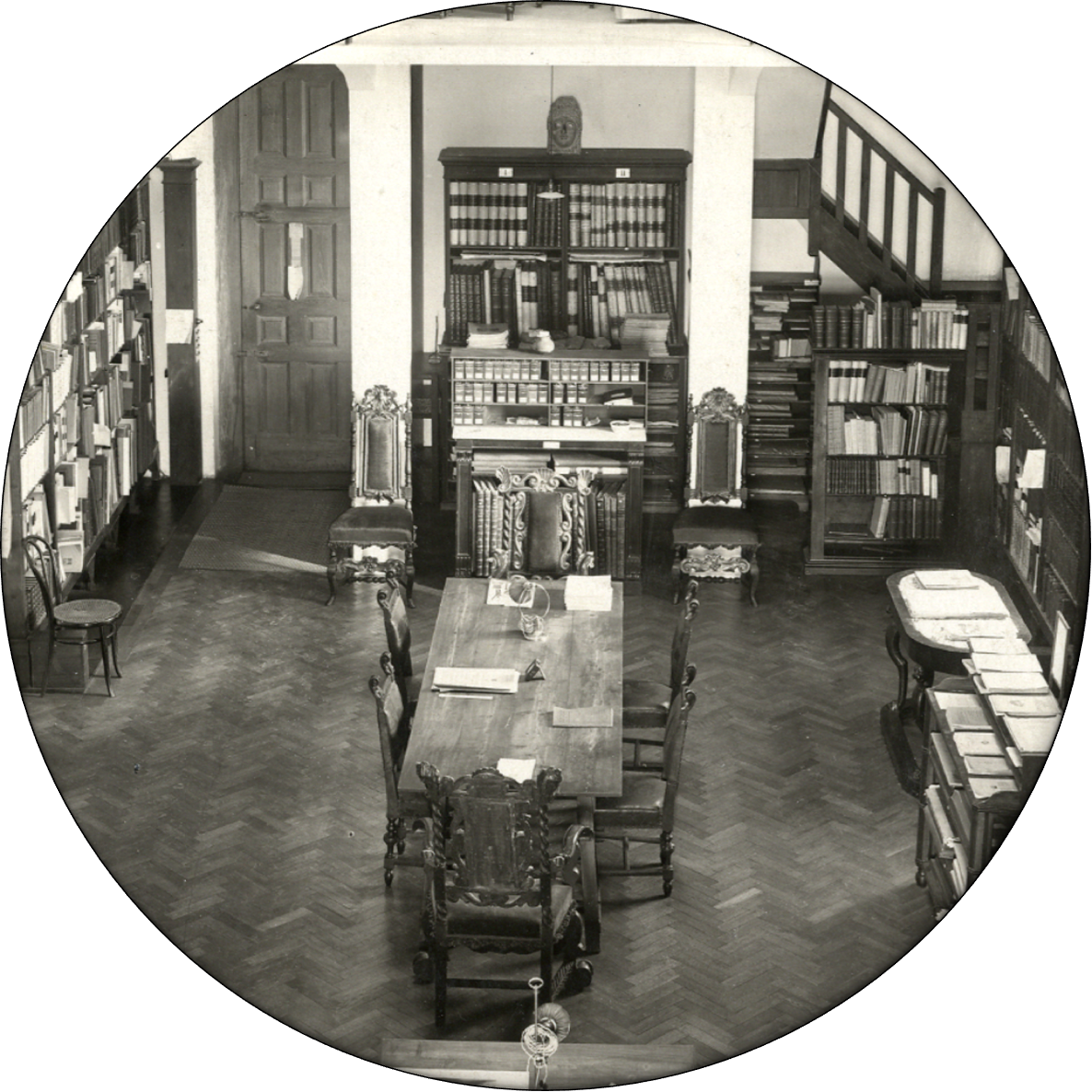
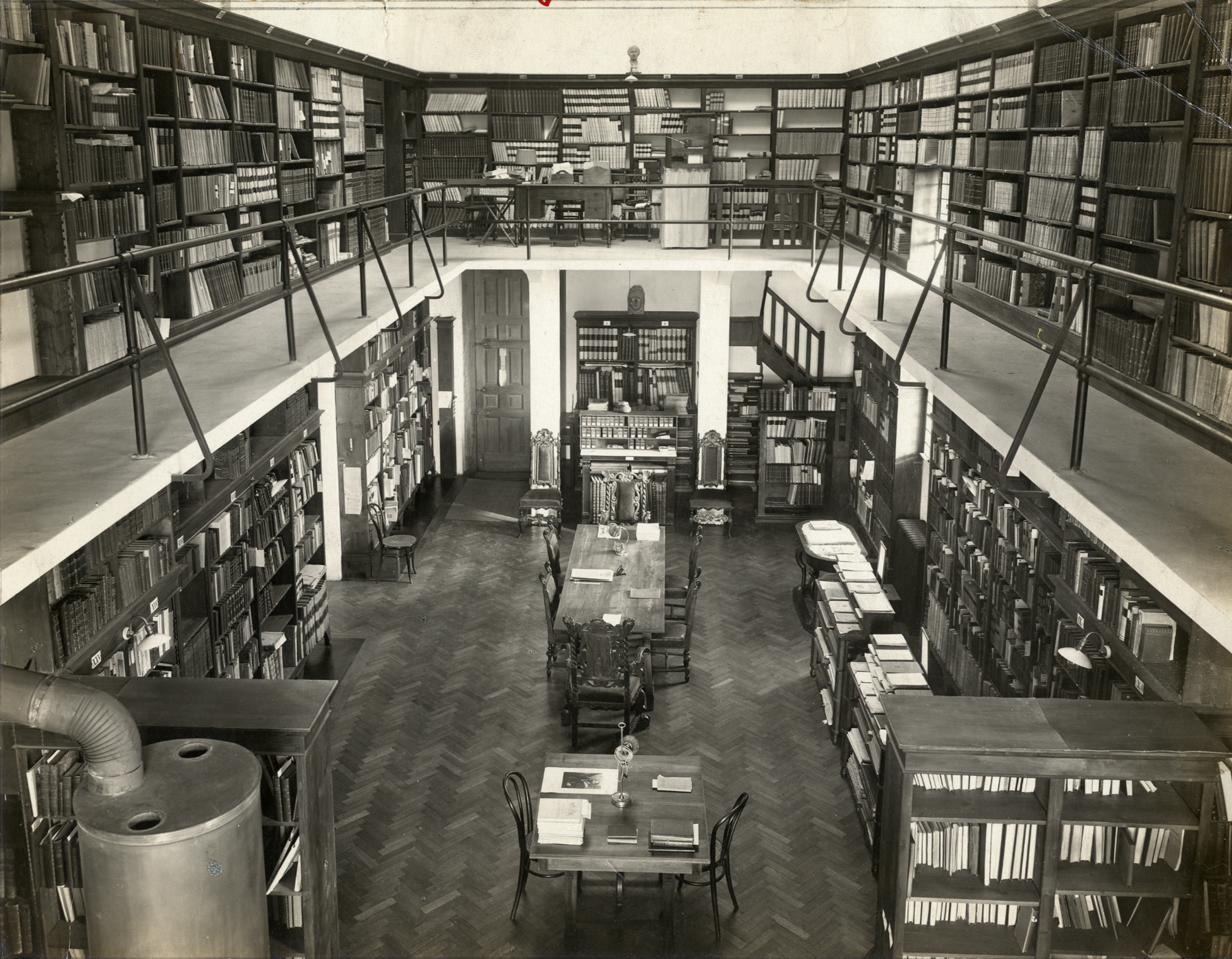
The BSR’s artists and scholars have left their mark on our library’s collections. We can discover in the stacks the kind of inspirations and sources readers could draw on in their studies from Classical to Renaissance art and culture to the contemporary era. Director, Thomas Ashby (1874-1931) and Librarian and then Assistant Director, Eugénie Sellers Strong (1860-1943) made considerable contributions to the library, purchasing and donating most of the books in the fields of classical studies and archeology. Yet it was also the responsibility of the scholars to add to the Library’s collections. In the 1920s, the Library Committee had a representative scholar from each of the BSR’s Faculties. Artists would make suggestions for the books they most wanted to read. As a result we can track the interests and influences of the administration and artists in this period.
The Library Main Reading Room, c. 1921-1922 (BSR Photographic Archive, BS Collection)
Committee notes from 1922-1923 give an indication of the tastes and values of the artists and scholars. Expressing their pleasure at new books arriving from London they take note of what is still lacking. In architecture, Stephen R. Pierce (1896–1966) notes with delight that books by Gauthier, Gromort and Racinet have been shipped but they are still in need of the important volume of Hauptmann’s Palast Architecture in Ober Italien in five volumes and the American periodicals. Winifred Knights (1899-1947) states that the illustrated biographies and Flemish section of the collection on paintings are now improved but requests works on Oriental (Chinese) Art and requests that a large facsimile edition of reproductions of illuminated MSS be sent from the British Museum. In Sculpture, Alfred Hardiman (1891-1947) reports that only the books on Rodin and Alfred Stevens have arrived. Lilian Whitehead (1894-1959) requests books on Legros, Muirhead Bone and Goya for the engraving and etching collection.
Other volumes readers appreciated include books on Piero della Francesca, Rembrandt, Romanesque and Lombardy Architecture, Town planning guides and volumes of drawings of the Greeks. Later, PK Baillie Reynolds (1896–1973) became committee member for archeology, history and letters.
It is notable that a number of important books were not purchased. One example is the lack of works on modernist architecture. The BSR’s administration was cautious of modernist ideas, wishing to maintain an interest in traditional methods and themes.
Committee meeting notes and a memo are available to read in the BSR’s Administrative Archive.
Where would you like to go next? Who would you like to meet?
Meet Alfred Hardiman (1891-1949)
Meet Winifred Knights (1899-1947)
Learn more about Architecture at the BSR, 1913-1930
Meet Eugénie Sellers Strong (1860-1943)
Meet Lillian Whitehead (1894-1959)
Meet Stephen Rowland Pierce (1986-1966)
For a full bibliography and further reading, see here.
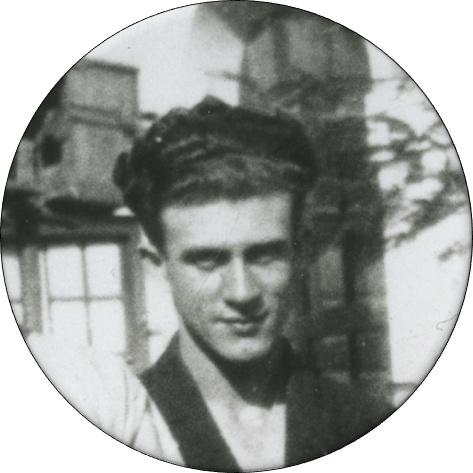
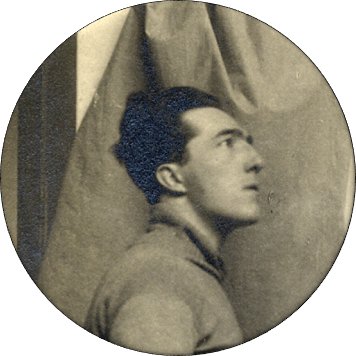
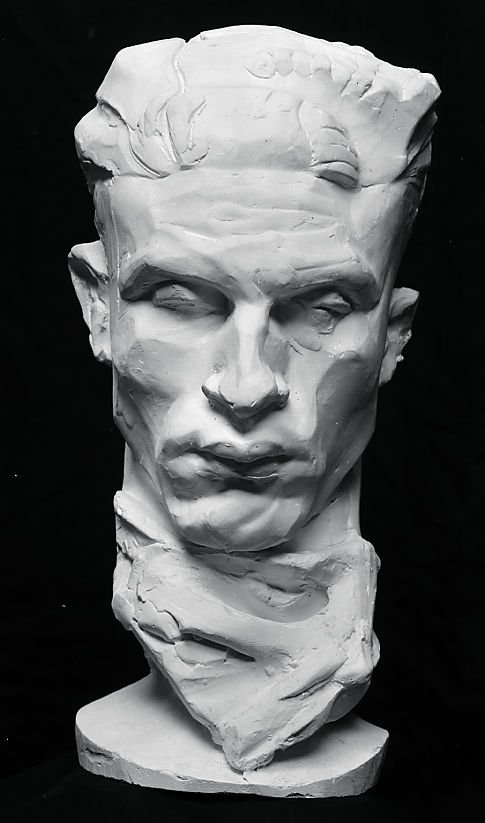
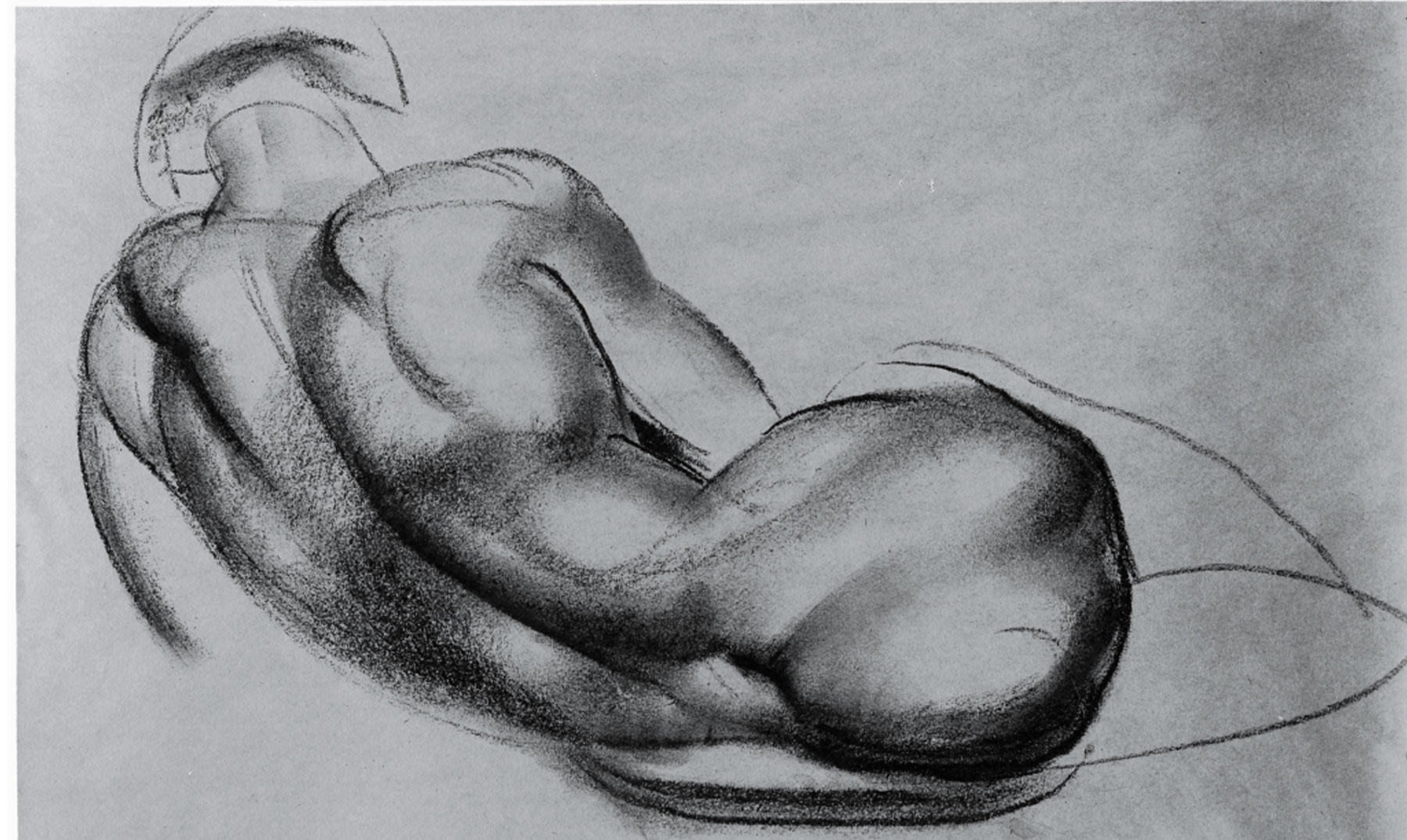
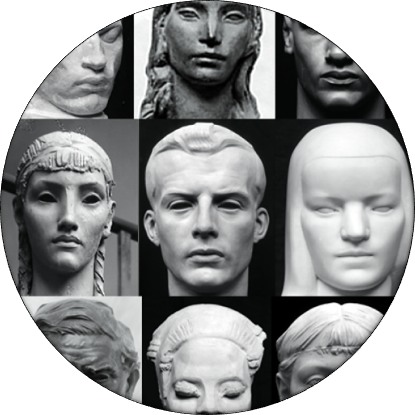
The BSR Photographic Archive contains photographs of the sculptures and studies made by John Skeaping (1901-1980). The images include a bust of Barbara Hepworth (1903-1975) and some self-portraits, as well as models and sketches of works in progress. The collection also holds correspondence and administrative documentation which detail some of what was valued in sculptural and artistic practice and education from the 1920s until after the Second World War. Several detailed letters to the BSR’s administrators reveal Skeaping’s process and reflections on his residency, detailing how he learnt and developed his practice whilst in Italy. Some of the correspondence reports on, negotiates and explains the reasons for the different processes he was adopting. They also reference his desire to make trips out of Rome to places such as Florence, as well as what had helped him to move on and become productive and informed.
John Skeaping collection 28 (BSR Fine Arts Archive)John Skeaping collection 27 (BSR Fine Arts Archive)John Skeaping collection 27 (BSR Fine Arts Archive)
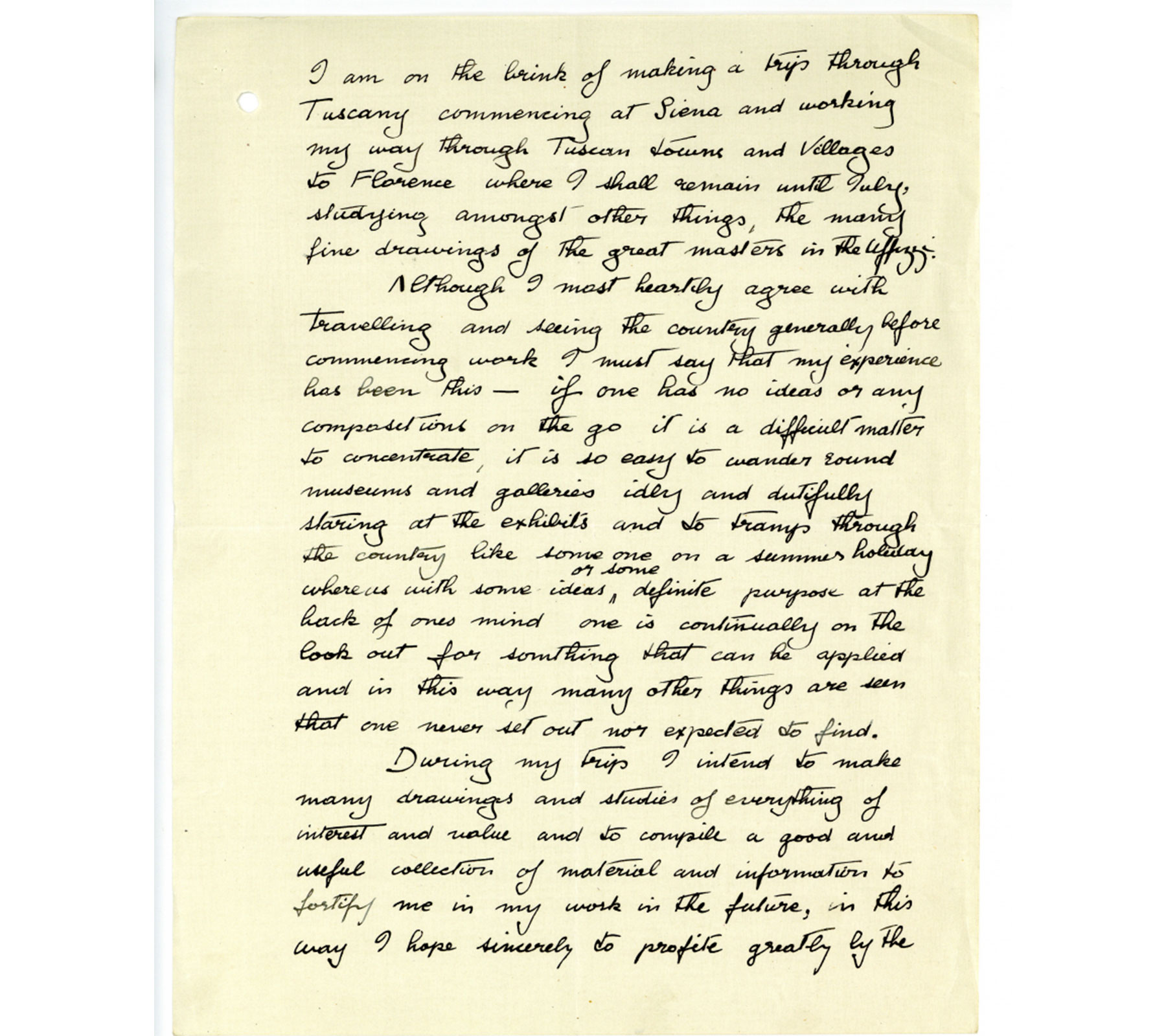
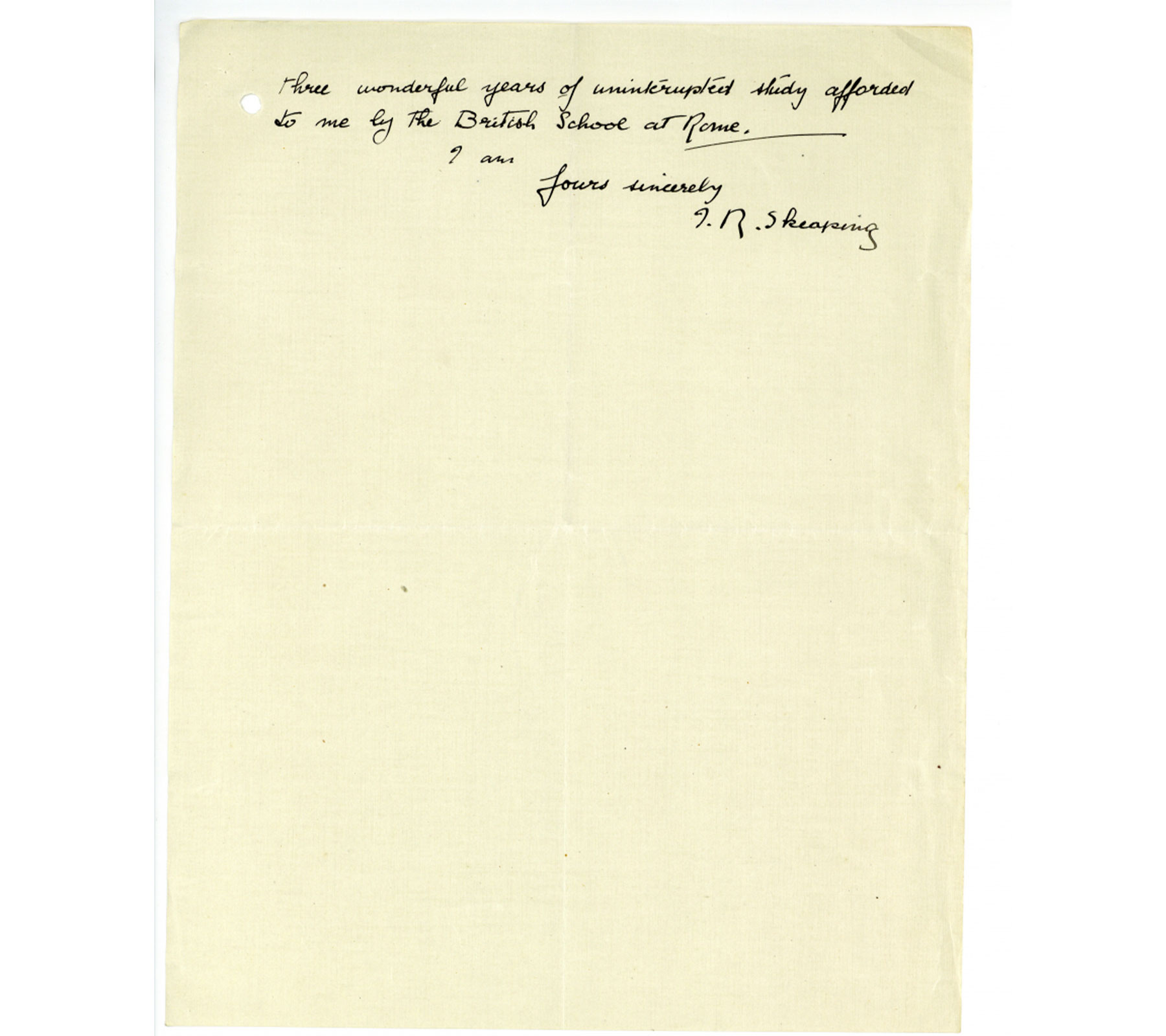
Skeaping’s request that he spend more time traveling and seeing art outside of the confines of the School and Rome were met with a reply from the BSR’s Honorary General Secretary, Evelyn Shaw. Shaw maintained that the BSR’s overseeing administrators would want to see students working at the School during their visits. These letters reveal some of the tensions and conflicting values between the students and the administration. Nevertheless, Skeaping did spend time in Florence, Siena, and elsewhere; his later letters to the BSR report on his time visiting museums, his sketches and studies of architecture, and the plans for his works. He mentions how he would like his work to be returned to England, and briefly talks about his marriage to Barbara Hepworth (which has “in no way impeded my course of study”). A Directors’ report, as well as Skeaping’s own re-application requests, detail the work that Skeaping did during his scholarship, listing his plans, studies and complete and incomplete pieces.
John Skeaping’s personal file, Letter to Shaw from Skeaping, 1924, p.1 (BSR Fine Arts Archive)
John Skeaping’s personal file, Letter to Shaw from Skeaping, 1924, p.2 (BSR Fine Arts Archive)
John Skeaping’s personal file, Letter to Shaw from Skeaping, 1924, p.3 (BSR Fine Arts Archive)
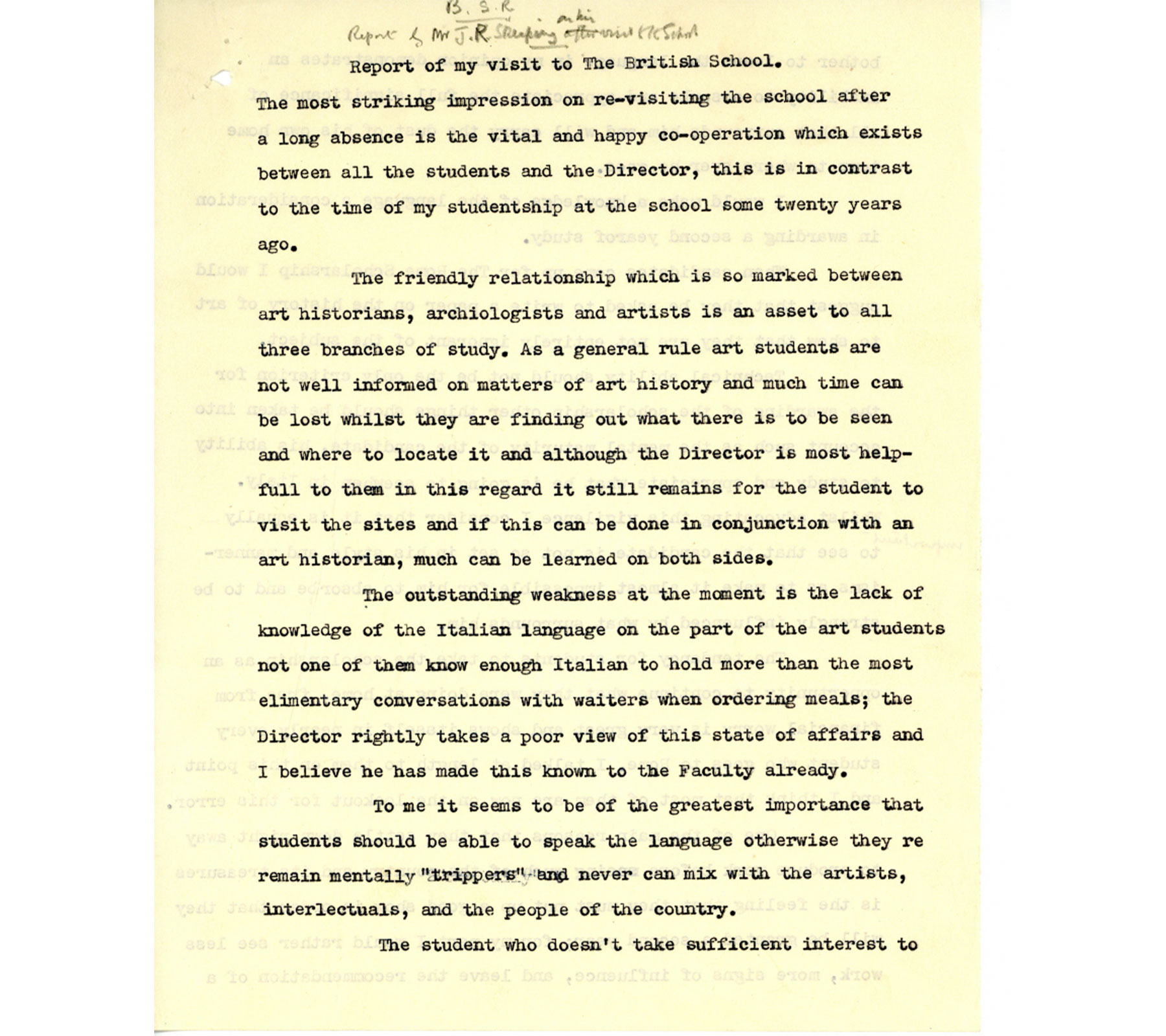
There is also an informative report Skeaping made after re-visiting the BSR in 1949. In it he made recommendations for how to create a good environment for emerging sculptors visiting Italy from Britain. This report tells us something of Skeaping’s time at the School in the 1920s, and what he felt would be conducive for students of art. Alongside training, he recommended that the BSR be more receptive to new ideas and intercultural exchange. He also noted what had changed in the period, and “the vital and happy co-operation which exists between all students and the Director”, which “is in contrast to the time of my studentship at the school some twenty years ago”.
John Skeaping collection 17 (BSR Fine Arts Archive)John Skeaping collection 08, Fountain BSR Courtyard (BSR Fine Arts Archive)
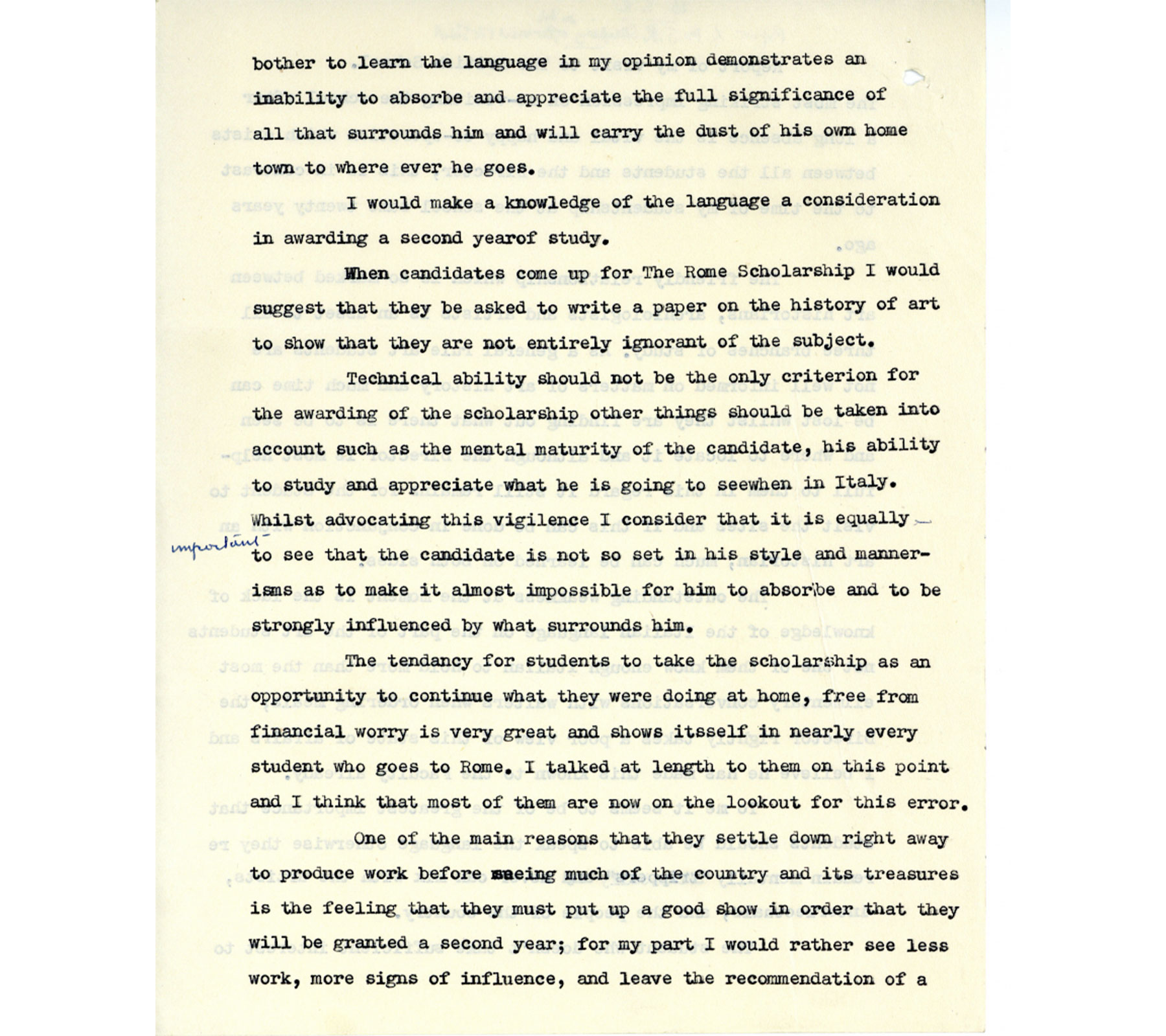
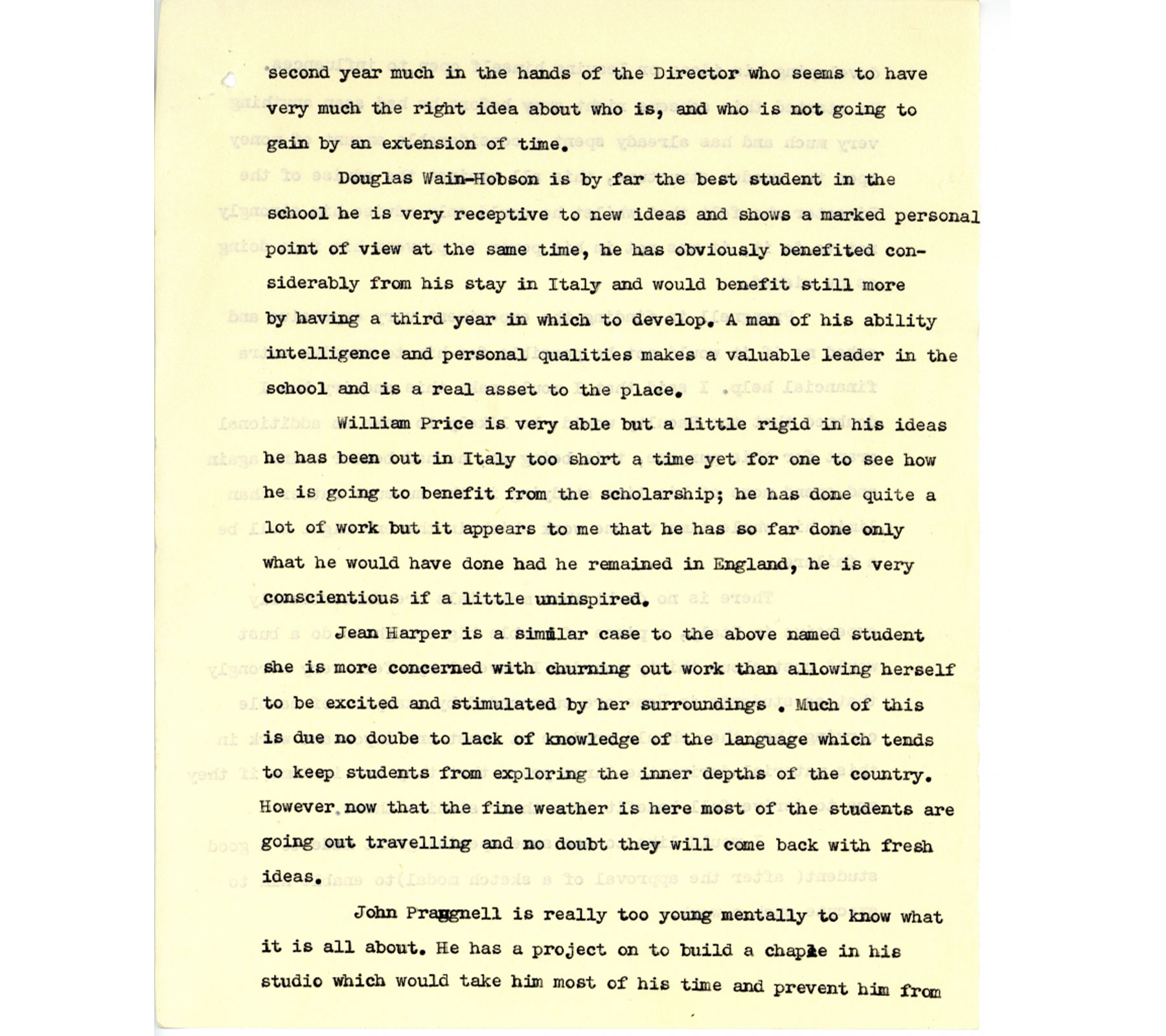
After speaking with those in residence at the BSR, Skeaping reported that the main weakness of art students at the BSR was their lack of Italian which prevented them from conversing and interacting outside the School. He also noted the importance of art history tutelage and recommended that they resist the temptation to simply continue their previous practice or produce work straight away without absorbing the influences around them.
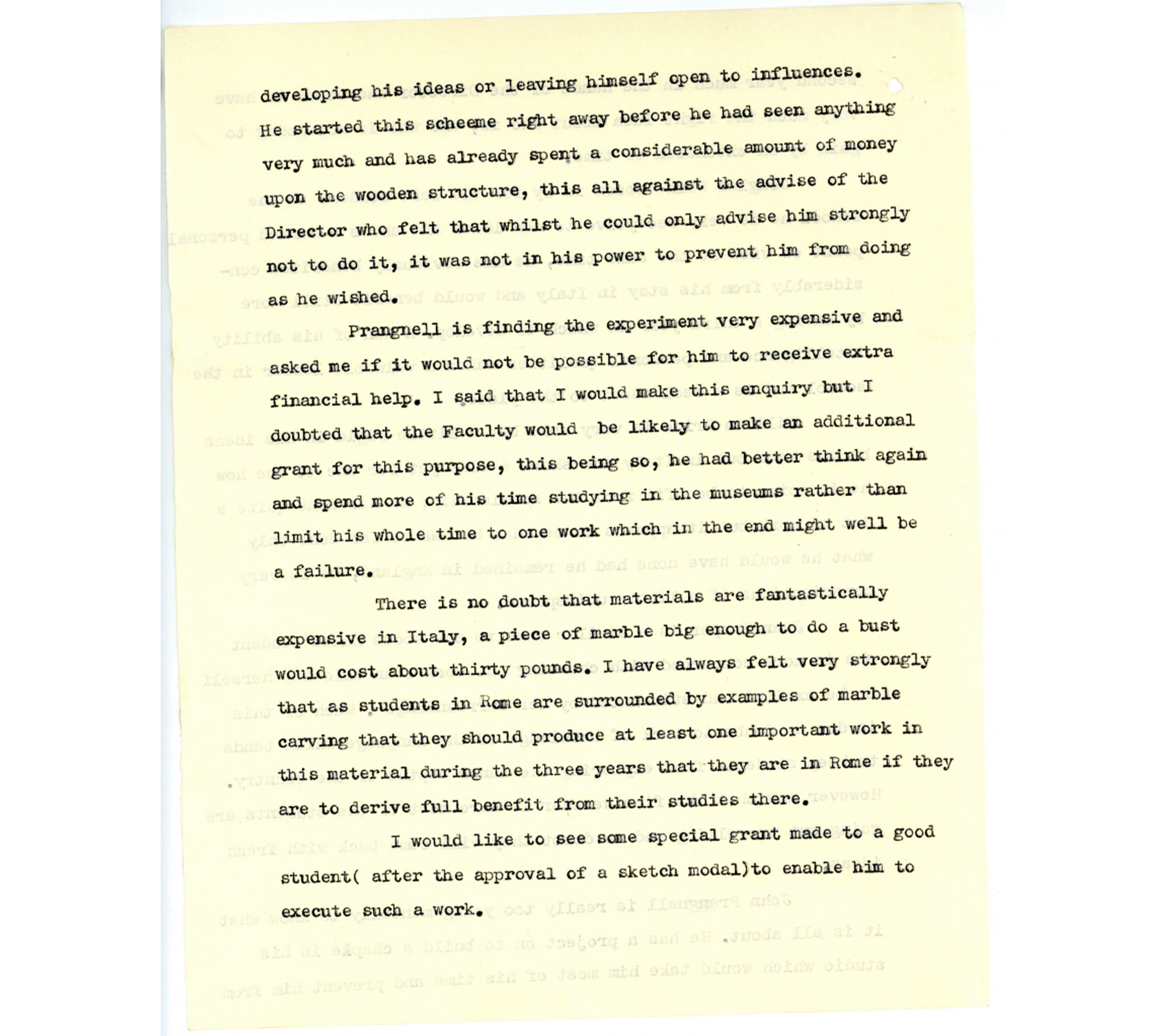
He stressed the importance for students to learn from the art and culture of Italy, and also made recommendations on materials and facilities: marble is expensive and should be funded, while “direct terra-cottas (not squeezes or casts)” should be encouraged so that the students “better appreciate the Etruscan terra-cottas in the museums that one of the chief treasures of the Roman district”. He noted, however, that the BSR “is still very badly equipped for sculpture”, and made recommendations for the purchase of new equipment.
The collection also contains news cuttings relating to Skeaping’s later activity, such as a review of his book written after a trip to Mexico in the 1950s, as well as his obituary in The Times (1980). The latter gives an overview of how his work was assessed at the end of his life.
John Skeaping’s personal file, Report, 1949, p.1 (BSR Fine Arts Archive)
John Skeaping’s personal file, Report, 1949, p.2 (BSR Fine Arts Archive)
John Skeaping’s personal file, Report, 1949, p.3 (BSR Fine Arts Archive)
John Skeaping’s personal file, Report, 1949, p.4 (BSR Fine Arts Archive)
John Skeaping collection (BSR Fine Arts Archive)
John Skeaping collection (BSR Fine Arts Archive)
John Skeaping collection , Bust of Barbara Hepworth (BSR Fine Arts Archive)
John Skeaping collection (BSR Fine Arts Archive)
John Skeaping collection (BSR Fine Arts Archive)
John Skeaping collection (BSR Fine Arts Archive)
John Skeaping collection (BSR Fine Arts Archive)
John Skeaping collection (BSR Fine Arts Archive)
John Skeaping collection (BSR Fine Arts Archive)
John Skeaping collection, Bust of Barbara Hepworth (BSR Fine Arts Archive)
Where would you like to go next? Who would you like to meet?
Meet John R. Skeaping (1901-1980)
Learn more about Sculpture at the BSR, 1913-1930
Learn more about Photography at the BSR, 1913-1930
For a full bibliography and further reading, see here.
This page gives a brief history of the period the Fine Arts at the BSR in the 1910s and 1920s. You can find out more about the people, places, themes and objects by clicking on the bold links in the article.
From the outset the BSR has been a place where researchers, artists and practitioners from different fields have come together in the midst of Rome’s Classical, Renaissance and Baroque culture. Having been founded as an institution to consolidate the strength of British classical studies and archaeology in 1901, in parallel with the British School at Athens, the fine arts faculties were established to bolster British art, design and scholarship by building connections to Roman culture and heritage, in a similar way that the academies of other European nations were also doing in Rome.
The BSR grew in part out of the tradition of classical studies and the Beaux-Artes academy approach to fine arts education. The desire for a centre for the Fine Arts in Rome also has its roots in the history the Grand Tours of the eighteenth and nineteenth centuries and the BSR’s predecessor the British Academy of Arts at the Spanish Steps. British artists, writers and aristocratic and wealthy travellers had been joining European visitors in the cultural hub of Rome for some time. This culminated in the creation of the prizes for the Fine Arts at the BSR which began in 1913.
The Fine Arts Faculties and prizes for decorative painting, engraving, sculpture and architecture were established in order to encourage a new generation of artists and architects in Britain, particularly those who could produce monumental work in the classical tradition, as demonstrated by the Roman environment. Another aim was to compete with other European nations and to establish and consolidate the work that British classicists and artists had begun in previous periods.
The Rome Prize winners were able to take up residence at the BSR for up to three years, though they had to re-apply to extend their scholarships after each year. After 1916, the young artists and practitioners lived and worked in the newly erected building, the British pavilion designed by Lutyens and still under construction for a number of years into this period. They were met by Thomas Ashby (1874-1931), the BSR’s director from 1906 to 1925 and assistant director and librarianEugénie Sellers Strong (1860-1943) from 1909 to 1925, both formidable scholars of the classics, art history and archaeology in their own right. Subsequent directors in this period included Bernard Ashmole (1894-1988) from 1925 to 1928 and Arthur Smith (1860-1941) from 1928 to 1930. The community formed at the BSR then included archaeologists, art historians, architects, sculptors, mural painters, engravers and printmakers and administrators.
The Fine Arts archive contains the traces and stories of a network of talented people who came together in the BSR courtyard, library and around its dinner table. These artists set to work in new studios, visited Rome and its surrounding areas and attended museums, lectures and parties. This was an environment for new relationships to spark up and several scholars went on to form professional collaborations, personal friendships and in several cases, marriages (for example between Winifred Knights (1899-1947) and Tom Monnington (1902-1976)).
The early BSR community included people of different artistic disciplines, divergent ideas, colourful temperaments and ambitious personalities. Together with a traditional and strict bureaucratic structure, this created a complex environment for young artists newly arrived from art school to encounter. The directors could not always please everyone and friction seems to have emerged from competing ideas around who should lead the school. Thomas Ashby, for example, though a respected archaeologist and scholar, had little interest in the social work of running student accommodation. Meanwhile, the School’s overseers attempted to ensure that the students did not get distracted by new ideas. In discussion around the appointment of a new director in 1930, one committee member Sir William Rothenstein, wrote that
“Up to now the head of the British School at Rome has been an archaeologist… One or two of us have felt that archaeologists are not the best people to look after the studies of painters, sculptors and engravers, especially in these days when all sorts of extreme ‘abstract’ ideas are about, which settle like microbes in the students’ brains…”
In the earliest years, this conservative traditionalism was embedded into the structure of the institution: to win a Rome Prize, artists had to adhere to precisely determined criteria that governed size, style and subject of works submitted. Students had to ask for permission from London for trips made out of Rome. Artists themselves were also sticking with tradition: the traumatisation of the World War One lead to a “return to order” in the early 1920s when artists pulled back from aggressive or outlandish styles and ideas.
And yet in the archive and the artistic works produced in these years at the BSR, one can still trace new ideas and approaches beginning to flourish alongside a reaffirmation of love for Classical, Renaissance and Baroque aesthetics. The allure and energy of the modernist movements emerging in France, Russia, USA and Germany, and indeed in Italy, at this time meant that artists could not help but be pulled between different ideas, aesthetics and methodologies. Sculptors John Skeaping (1901-1980) and Barbara Hepworth (1903-1975) for example, studied traditional direct marble carving whilst in Italy but went on to use these techniques in distinctively inventive and modernist ways. There was also a growing influence of Futurism, Vorticism and Surrealism emerging in Britain and Europe.
In architecture a new interest in functionalism was emerging in contrast to the Beaux-Artes approach of beautiful facades and hand-drawn methods favoured by the BSR. The work of architecture award-holder Frederick Lawrence (1893-1971) for example, contrasted with the modernist leanings of Amyas Connell (1901-1980), who went on to design modernist house High and Over of BSR director Bernard Ashmole.
There are several other elements which influenced the environment the artists worked in: Lutyens’ building and the surrounding Villa Borghese gardens, the library, the classical research interests of the directors such as Ashby and Strong, Ashby’s collection of imagery including unique Renaissance engravings and equipment from the school’s longstanding tradition of photographic innovation. Materials and facilities could be quite limited, sculptors such as Alfred Hardiman (1891-1947),for example, often found themselves fundraising for more expensive materials.
Imperialist power relations had an impact on the early years of the school. Several award holders left their studentships to be drafted into military service in World War One. Then, as the 1920s unfolded, the School tried to stay amelioratory or apolitical towards the growing fascist politics which reached a head in the early 1930s. Artists often left the metropolitan centre of Rome, under the growing power of Mussolini, to work in the countryside in villages such as Anticoli Corrado. Here they could focus their attention on what they saw as the primitive romance of the peasantry, following the tradition of the European artists and imperial travellers of previous decades.
As well as volatile political conditions, other trends and tensions can be traced in this pivotal moment. The artists were also often torn between functional commercialism and art for art’s sake and between rebellion, social conformism and patriarchal expectations of gender roles. Artistic and design education and culture was changing; British municipalities required artists to make monumental art for the public and new buildings to demonstrate their wealth and power.
The idea of what an artist should be was also changing in this period. Technical training institutes were beginning to verse artisans in aesthetics and working class arts were developing and changing British culture. Winifred Knights, Lilian Whitehead (1894-1959) and Eugénie Sellers Strong were just three of several women artists and researchers making their mark at the BSR and beginning to carve out their practice on their own terms, despite numerous challenges.
The BSR archive holds correspondence and other materials that attest to these histories. Letters, application forms and works in process hint at the conversations over how new methods and ideas in education and professionalism would develop. New artistic approaches, subjects and relationships are found in these collections and one can find several stories and insights into how British artists and cultural leaders interacted with the rest of the world and made their work.
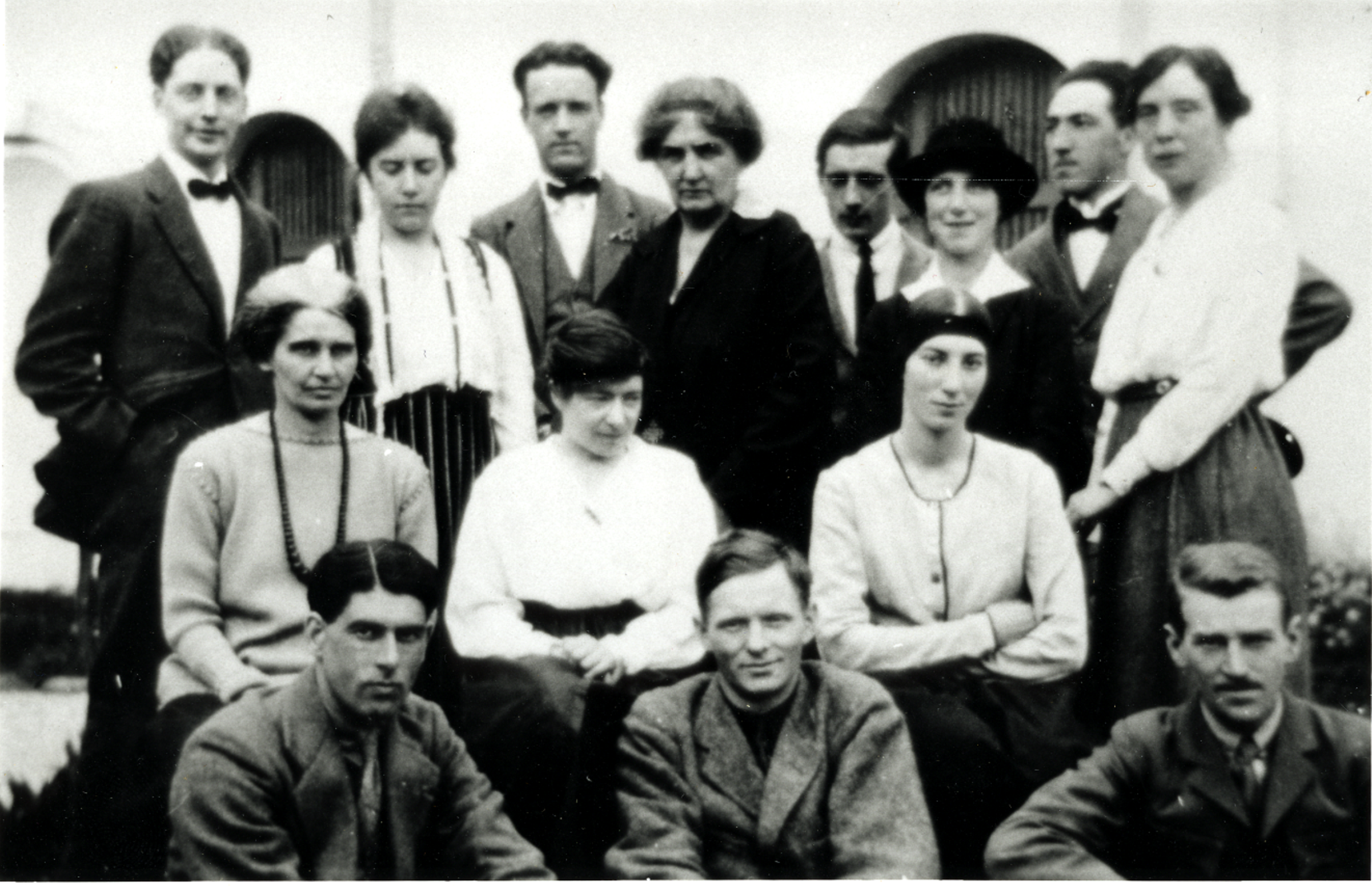
BSR scholars, artists and staff in the early 1920s. Back row: Unknown, Unknown, Unknown, Eugénie Strong, Colin Gill (Rome Scholar in Painting), Mrs Hardiman, Alfred Hardiman (Rome Scholar in Sculpture), Unknown. Middle row: Miss Jamison, Miss Makin, Winifred Knights (Rome Scholar in Painting). Front row: F.O. Lawrence (Rome Scholar in Architecture), Job Nixon (Rome Scholar in Engraving), Unknown. BSR Fine Arts Archive
Sources and Further Reading
Wiseman, T.P. (1990) A Short History of the British School at Rome. Rome: BSR.
Wallace-Hadrill, A. (Ed). (2001). The British School at Rome: One Hundred Years. Rome: BSR.
Life at the British School Rome: blogs https://britishschoolatrome.wordpress.com/category/library-archive/
For a full bibliography and further reading, see here.
We use cookies to ensure that we give you the best experience on our website. If you continue to use this site we will assume that you are happy with it.